12 Most Common Findings In A Home Inspection
Podcast Overview
12 Most Common Findings In A Home Inspection
A home inspection report is one of the most critical documents in a real estate transaction, yet it's often the most misunderstood. For a homebuyer, receiving a lengthy report filled with technical terms, photos of defects, and cautionary language can be overwhelming. It is in this pivotal moment that the real estate agent's role evolves from facilitator to interpreter, counselor, and strategist.
This guide is designed to equip you with the nuanced understanding required to navigate this phase with confidence, transforming a client's potential panic into an empowered, informed decision. Remember, no home is perfect. The goal of the inspection is not a "pass/fail" grade but an education on the home's condition. Your value lies in providing the crucial context to differentiate between a major defect that could alter the transaction and a minor issue that falls under routine home maintenance.
This field guide will dissect the most common and confusing findings uncovered in home inspections, empowering you to translate an inspector's cautious observations into clear, actionable advice for your clients.
Foundation & Water Management: The Root of Home Health
The long-term health of any home is inextricably linked to how it manages water. Issues in this area are often a chain reaction—poor drainage leads to foundation pressure, which causes cracks, leading to water intrusion. Understanding this causality is key to advising clients effectively.
Improper Grading & Drainage
- The Finding: An inspector notes "negative slope," "improper grading," or "downspouts discharging too close to the foundation." This means surface water is flowing toward the house instead of away from it.
- Why It Matters: This isn't just a landscaping issue; it's a critical threat to the foundation. Constant water saturation creates immense hydrostatic pressure, which can crack, bow, and compromise foundation walls over time. It's the root cause of many more severe and expensive problems.
- Next Steps: Simple issues may be fixed with downspout extenders. For more significant slope problems, recommend consultation with a professional landscaping or drainage contractor to explore solutions like regrading or installing a French drain.
Foundation Cracks (Vertical vs. Horizontal)
- The Finding: The report shows photos of cracks in the basement or crawlspace walls, noting their orientation and width.
- Why It Matters: Not all cracks are equal. Vertical and diagonal cracks are often the result of concrete curing or minor settlement and are typically less concerning, though they should be sealed to prevent moisture entry. A horizontal crack, however, is a major red flag. It is almost always caused by external pressure (like from poor drainage) forcing the wall inward and indicates a potential structural failure.
- Next Steps: For minor vertical cracks, sealing them with epoxy or polyurethane injection is a common recommendation. For any horizontal crack or a vertical crack wider than a quarter-inch, the only responsible advice is to recommend further evaluation by a licensed structural engineer for an unbiased diagnosis.
Water Intrusion & Mold
- The Finding: The report notes "active moisture intrusion," "elevated moisture readings," "efflorescence" (white, chalky mineral deposits), or visible "suspected microbial growth."
- Why It Matters: The words "water" and "mold" can cause panic. Your job is to help the client distinguish between a resolved historical issue (a dry stain) and an active, ongoing problem (a high moisture meter reading). Active moisture can lead to wood rot, structural damage, and potential health concerns from mold.
- Next Steps: If an active leak is detected, the priority is to find and stop the source, which may require a plumber, roofer, or drainage specialist. If significant mold is suspected, recommend hiring a professional mold remediation company for a formal assessment.
The Building Envelope: Roof, Attic, & Windows
A home's "building envelope" is the system that separates the interior from the exterior. A failure in one part, like the roof or windows, can have cascading effects on energy efficiency and structural integrity.
The "End of Serviceable Life" Roof
- The Finding: The inspector reports that the roof is "nearing the end of its serviceable life," documenting widespread granule loss, curling shingles, or other signs of advanced age, even if it isn't actively leaking.
- Why It Matters: This is a major financial finding. While not an emergency, it represents a significant and unavoidable future expense. Delaying replacement risks a catastrophic failure during a storm, leading to extensive interior water damage.
- Next Steps: Recommend a comprehensive evaluation by a qualified and licensed roofing contractor. They can provide a detailed assessment of the roof's remaining life and a written quote for replacement, which becomes a powerful, data-driven tool for negotiations.
Defective Roof Flashing
- The Finding: The report notes "damaged," "corroded," or "improperly installed" flashing around chimneys, skylights, vents, or where the roof meets a wall.
- Why It Matters: Flashing is the thin metal that protects the most vulnerable points on a roof. While shingles cover the open fields, flashing seals the gaps. A flaw in this small component is a leading cause of roof leaks and can allow water to rot the roof deck and framing long before a stain appears on the ceiling.
- Next Steps: Any noted defect in flashing should be evaluated and repaired by a qualified roofing contractor. This is often a straightforward but critical repair to prevent significant water damage.
Poor Attic Insulation & Ventilation
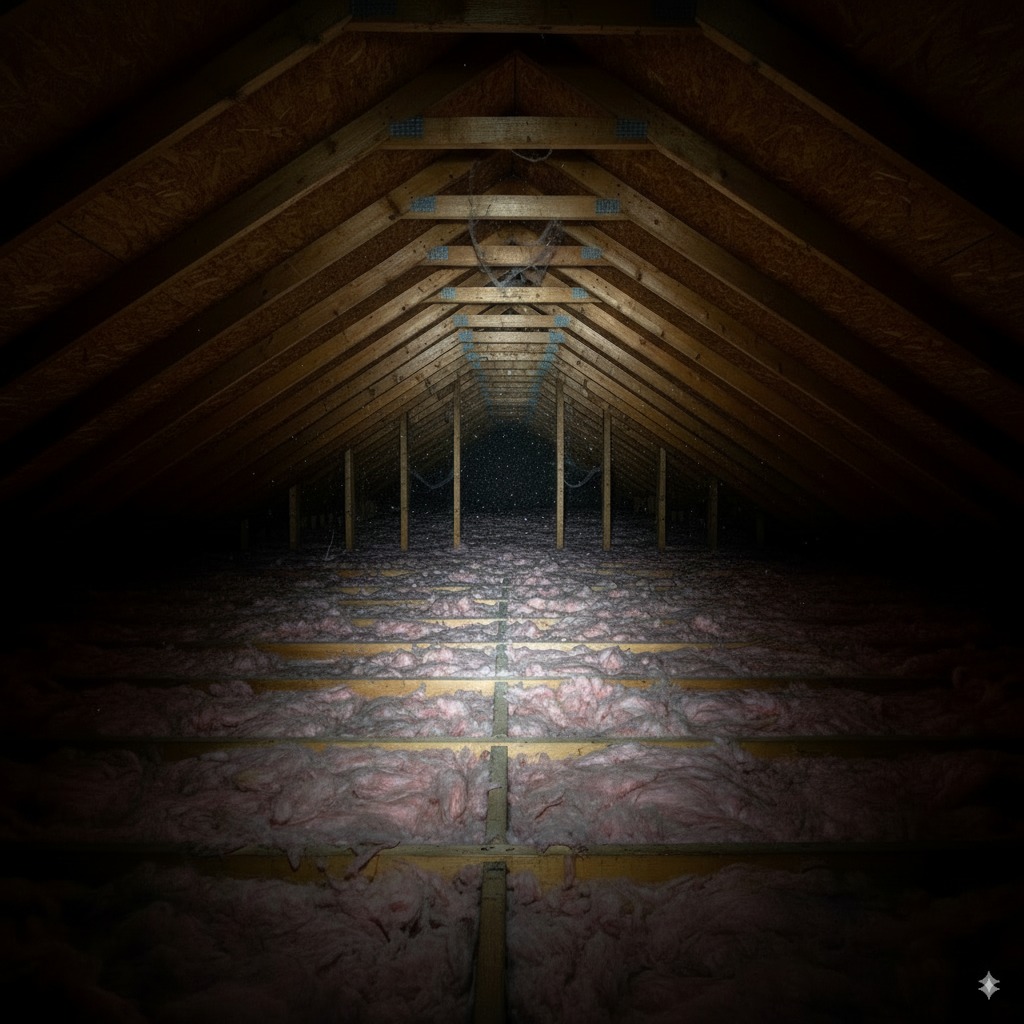
- The Finding: The inspector notes "insufficient insulation," "blocked soffit vents," or an unbalanced ventilation system.
- Why It Matters: Insulation and ventilation are two halves of a single system. In winter, a poorly ventilated attic gets warm from escaping house heat, melting snow on the roof and causing ice dams at the eaves, which leads to leaks. In summer, an overheated attic bakes the roof shingles from below, shortening their lifespan, and drives up cooling costs.
- Next Steps: Recommend consultation with an insulation and ventilation contractor. They can ensure proper R-value, clear soffit vents, and balance the intake/exhaust ventilation for a healthy, efficient system.
Mechanical & Plumbing Systems
The operational heart of the home, these systems provide comfort and sanitation. Findings here often relate to safety, efficiency, and impending failure.
The Aging HVAC System
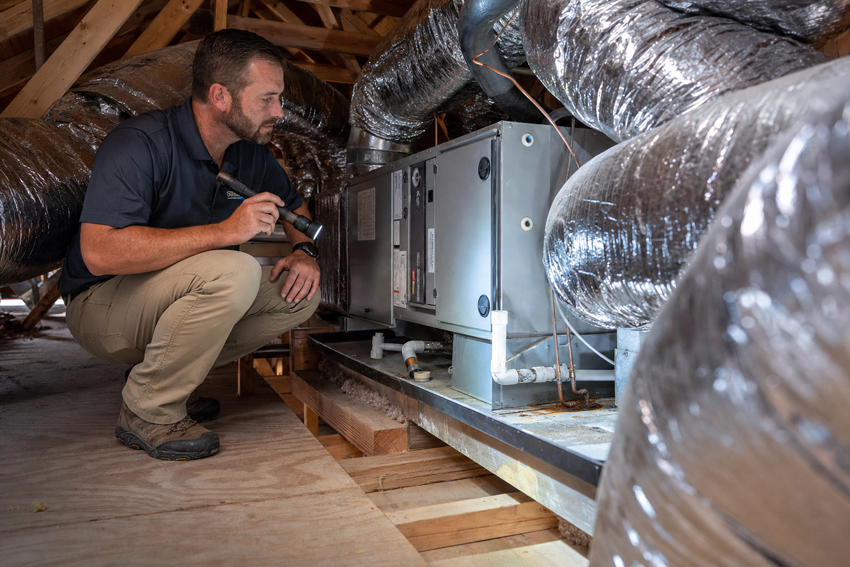
- The Finding: The system is "operational" but also noted to be "nearing or past its typical service life," with its age clearly documented.
- Why It Matters: An old HVAC system represents a significant potential liability. It is likely operating inefficiently (leading to higher utility bills) and is at a much higher risk of a major, costly failure. A cracked heat exchanger on an old furnace, for example, can be a serious carbon monoxide hazard.
- Next Steps: If the system is old, recommend an evaluation by a licensed HVAC technician. They can perform a diagnostic, assess the health of critical components, and provide a professional opinion on its remaining life and potential replacement needs, informing your negotiation strategy.
Sewer Line Issues & The Need for a Scope
- The Finding: A standard inspection can't see the underground sewer line. The inspector may recommend a "further evaluation of the main sewer line" due to the home's age, the presence of large trees, or slow drains.
- Why It Matters: A main sewer line failure is one of the most disruptive and expensive issues a homeowner can face, potentially causing a sewage backup into the home. Common causes include tree root intrusion, collapsed old pipes (clay or cast iron), or blockages.
- Next Steps: Strongly advise the client to heed the inspector's recommendation and hire a plumbing company to perform a sewer camera inspection (a "scope"). This small investment can uncover a massive potential liability, providing definitive information about the pipe's condition.
Water Heater Safety: The TPR Valve
- The Finding: The inspector flags a defect with the Temperature and Pressure Relief (TPR) valve, such as a missing discharge pipe, corrosion, or improper installation.
- Why It Matters: This is a critical, non-negotiable safety issue. The TPR valve is the primary safety device that prevents a water heater tank from exploding if it malfunctions and overheats. A missing or improperly installed discharge pipe means that if the valve activates, it will release a blast of scalding steam and water into the room, posing a severe injury risk.
- Next Steps: This is not a suggestion; it is a mandatory safety repair. Any defect with the TPR valve or its discharge pipe must be corrected immediately by a licensed plumber.
Electrical Systems & Safety Hazards
Electrical findings can be alarming due to the risk of shock and fire. Some issues can also create significant hurdles for obtaining homeowner's insurance and, therefore, mortgage approval.
Outdated Wiring (Knob & Tube or Aluminum)
- The Finding: The inspector identifies the presence of Knob-and-Tube (K&T) wiring (common pre-1940s) or solid conductor aluminum branch wiring (common mid-1960s to late-1970s).
- Why It Matters: Beyond the inherent safety risks (brittle K&T insulation, fire hazard at aluminum connections), the biggest immediate hurdle is insurability. Many insurance companies will refuse to write a policy on a home with these wiring systems, or will charge prohibitively high premiums. Without insurance, a buyer cannot get a mortgage.
- Next Steps: This finding requires immediate evaluation by a licensed electrician. Frame the conversation with your client around insurability. This isn't just a repair request; it's a fundamental condition for the transaction to proceed. The seller may need to replace the wiring or provide a significant credit.
Double-Tapped Breakers
- The Finding: A photo from inside the electrical panel shows two wires connected to a single circuit breaker terminal that is only designed for one.
- Why It Matters: This is a common but serious fire hazard. The terminal screw cannot apply proper pressure to both wires, creating a loose connection. A loose connection generates heat and can lead to electrical arcing—a primary cause of panel fires.
- Next Steps: This must be corrected by a licensed electrician. Fortunately, the fix is typically straightforward, often involving pigtailing the wires or adding another breaker if space allows.
Missing GFCI Protection
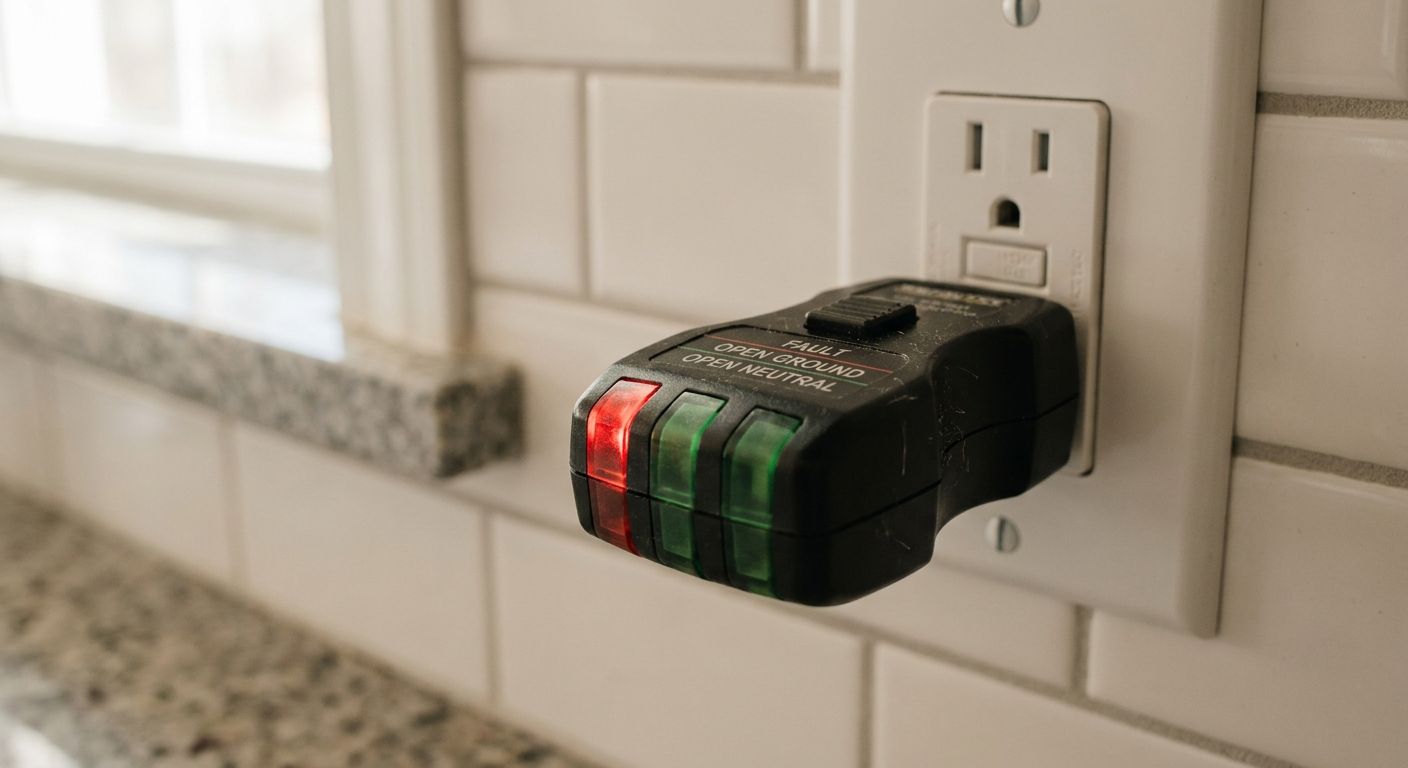
- The Finding: The report notes a lack of Ground Fault Circuit Interrupter (GFCI) protection on outlets in required areas like bathrooms, kitchens, garages, and outdoors.
- Why It Matters: This is a critical safety upgrade. A GFCI is a life-saving device that quickly shuts off power if it detects a current leak, preventing severe electrical shock. Its absence in wet locations is a significant safety hazard.
- Next Steps: Explain that this is a localized safety upgrade, not a sign of a bad electrical system. A licensed electrician can easily replace the necessary outlets or install a GFCI breaker in the panel. This is a reasonable and low-cost safety repair to request.
How InspectionResponse.com Transforms This Process
Navigating the dozens of findings in a typical inspection report, prioritizing them, and drafting a clear repair request is a time-consuming and stressful process. This is where InspectionResponse.com becomes an indispensable tool for the modern real estate agent. Instead of spending hours manually deciphering technical jargon and typing up addendums, you can simply upload the PDF report.
Our AI-powered platform provides a smart analysis of all findings, instantly categorizing them by severity and system. It helps you cut through the noise and focus on what truly matters for your client's negotiation. For each item, you can see a clear explanation, which simplifies your communication and builds client confidence.
When it's time to negotiate, our system streamlines the creation of your repair request addendum. With just a few clicks, you can generate a professional, well-organized document that clearly outlines your requests for repairs, replacements, or credits. This not only saves you hours of administrative work on every transaction but also enhances your professionalism and strengthens your negotiating position.
Empower your clients and reclaim your time. Try InspectionResponse.com today and turn complex inspection reports into your competitive advantage.
Conclusion: Empowering Clients Through Expert Guidance
The home inspection is a moment where your expertise shines. By understanding the principles behind common findings, you can transform a daunting list of problems into a structured, prioritized action plan. Your role as a calm, knowledgeable interpreter builds a foundation of trust that solidifies your reputation as an indispensable advisor. By leveraging your knowledge and tools like InspectionResponse.com, you can guide clients to make confident decisions, ensuring a smoother transaction and a successful closing.
Additional Resources
Briefing Document & Key Takeaways
Home Inspection Findings: A Detailed Briefing for Real Estate Agents
This briefing document distills the most common and critical findings encountered during home inspections, equipping real estate agents with the knowledge to interpret reports, advise clients, and navigate potential transaction challenges. The core principle is that "no home is perfect," and the inspection's purpose is "an education on the home's condition," rather than a simple pass/fail. Agents must provide "crucial context to differentiate between a major defect that could alter the transaction and a minor issue that falls under routine home maintenance."
I. Foundation & Water Management: The Root of Home Health
The long-term integrity of a home is directly tied to its water management. Issues in this category often represent a "chain reaction—poor drainage leads to foundation pressure, which causes cracks, leading to water intrusion."
- Improper Grading & Drainage:
- Finding: "Negative slope," "improper grading," or "downspouts discharging too close to the foundation." This indicates surface water flowing towards the house.
- Why It Matters: This is a "critical threat to the foundation." Constant water saturation creates "immense hydrostatic pressure, which can crack, bow, and compromise foundation walls over time." It's "the root cause of many more severe and expensive problems."
- Next Steps: Simple fixes may involve downspout extenders. More significant issues require a professional landscaping or drainage contractor to explore solutions like regrading or installing a French drain.
- Foundation Cracks (Vertical vs. Horizontal):
- Finding: Photos of cracks in basement or crawlspace walls, with notes on orientation and width.
- Why It Matters: "Not all cracks are equal."
- Vertical and diagonal cracks are typically less concerning, often due to concrete curing or minor settlement, but should be sealed to prevent moisture.
- Horizontal cracks are "a major red flag," almost always caused by "external pressure (like from poor drainage) forcing the wall inward" and indicating "a potential structural failure."
- Next Steps: Minor vertical cracks can be sealed. "For any horizontal crack or a vertical crack wider than a quarter-inch, the only responsible advice is to recommend further evaluation by a licensed structural engineer for an unbiased diagnosis."
- Water Intrusion & Mold:
- Finding: "Active moisture intrusion," "elevated moisture readings," "efflorescence" (white mineral deposits), or visible "suspected microbial growth."
- Why It Matters: These terms can cause panic. Agents must help clients distinguish between a resolved historical issue (dry stain) and an "active, ongoing problem." Active moisture leads to "wood rot, structural damage, and potential health concerns from mold."
- Next Steps: For active leaks, the priority is to "find and stop the source." For significant mold, "recommend hiring a professional mold remediation company for a formal assessment."
II. The Building Envelope: Roof, Attic, & Windows
The "building envelope" is the system separating the interior from the exterior, where failures can have "cascading effects on energy efficiency and structural integrity."
- The "End of Serviceable Life" Roof:
- Finding: Roof "nearing the end of its serviceable life," with widespread granule loss, curling shingles, or advanced age signs, even without active leaks.
- Why It Matters: This is "a major financial finding." It represents "a significant and unavoidable future expense," with delayed replacement risking "catastrophic failure during a storm, leading to extensive interior water damage."
- Next Steps: Recommend "a comprehensive evaluation by a qualified and licensed roofing contractor" for a detailed assessment and quote, which is "a powerful, data-driven tool for negotiations."
- Defective Roof Flashing:
- Finding: "Damaged," "corroded," or "improperly installed" flashing around vulnerable roof points (chimneys, skylights, vents).
- Why It Matters: Flashing is thin metal that "protects the most vulnerable points on a roof" and is a "leading cause of roof leaks." Flaws can cause "water to rot the roof deck and framing long before a stain appears."
- Next Steps: Evaluation and repair by a qualified roofing contractor are "often a straightforward but critical repair to prevent significant water damage."
- Poor Attic Insulation & Ventilation:
- Finding: "Insufficient insulation," "blocked soffit vents," or an unbalanced ventilation system.
- Why It Matters: Insulation and ventilation are interconnected. Poor ventilation in winter causes "ice dams at the eaves, which leads to leaks." In summer, an overheated attic "bakes the roof shingles from below, shortening their lifespan, and drives up cooling costs."
- Next Steps: Recommend consultation with an insulation and ventilation contractor to ensure "proper R-value, clear soffit vents, and balance the intake/exhaust ventilation for a healthy, efficient system."
III. Mechanical & Plumbing Systems
These are the "operational heart of the home," with findings often related to safety, efficiency, and impending failure.
- The Aging HVAC System:
- Finding: System is "operational" but "nearing or past its typical service life," with age documented.
- Why It Matters: An old HVAC system is "a significant potential liability." It's likely inefficient and at "a much higher risk of a major, costly failure." A "cracked heat exchanger on an old furnace, for example, can be a serious carbon monoxide hazard."
- Next Steps: If old, recommend "an evaluation by a licensed HVAC technician" for diagnosis, component health assessment, and professional opinion on remaining life/replacement needs to inform negotiation.
- Sewer Line Issues & The Need for a Scope:
- Finding: Inspector recommends "further evaluation of the main sewer line" due to home age, large trees, or slow drains, as standard inspections cannot see underground.
- Why It Matters: "A main sewer line failure is one of the most disruptive and expensive issues a homeowner can face," potentially causing sewage backup. Common causes include tree roots, collapsed old pipes, or blockages.
- Next Steps: "Strongly advise the client to heed the inspector's recommendation and hire a plumbing company to perform a sewer camera inspection (a 'scope')." This "small investment can uncover a massive potential liability."
- Water Heater Safety: The TPR Valve:
- Finding: Defect with the Temperature and Pressure Relief (TPR) valve, such as a missing discharge pipe, corrosion, or improper installation.
- Why It Matters: This is a "critical, non-negotiable safety issue." The TPR valve is the "primary safety device that prevents a water heater tank from exploding." A missing or improper discharge pipe means "a blast of scalding steam and water into the room, posing a severe injury risk."
- Next Steps: "This is not a suggestion; it is a mandatory safety repair. Any defect with the TPR valve or its discharge pipe must be corrected immediately by a licensed plumber."
IV. Electrical Systems & Safety Hazards
Electrical findings are alarming due to shock and fire risk, and some can create "significant hurdles for obtaining homeowner's insurance and, therefore, mortgage approval."
- Outdated Wiring (Knob & Tube or Aluminum):
- Finding: Presence of Knob-and-Tube (K&T) wiring (pre-1940s) or solid conductor aluminum branch wiring (mid-1960s to late-1970s).
- Why It Matters: Beyond inherent safety risks (brittle K&T insulation, fire hazard at aluminum connections), the "biggest immediate hurdle is insurability." "Many insurance companies will refuse to write a policy on a home with these wiring systems, or will charge prohibitively high premiums. Without insurance, a buyer cannot get a mortgage."
- Next Steps: Requires "immediate evaluation by a licensed electrician." Frame the conversation around insurability, as "this isn't just a repair request; it's a fundamental condition for the transaction to proceed." The seller may need to replace wiring or provide a significant credit.
- Double-Tapped Breakers:
- Finding: Photo from inside the electrical panel showing two wires connected to a single circuit breaker terminal designed for one.
- Why It Matters: This is "a common but serious fire hazard." The terminal cannot apply proper pressure, creating a loose connection that "generates heat and can lead to electrical arcing—a primary cause of panel fires."
- Next Steps: "This must be corrected by a licensed electrician." The fix is typically straightforward, involving pigtailing wires or adding another breaker.
- Missing GFCI Protection:
- Finding: Lack of Ground Fault Circuit Interrupter (GFCI) protection on outlets in required areas (bathrooms, kitchens, garages, outdoors).
- Why It Matters: This is a "critical safety upgrade." A GFCI is a "life-saving device that quickly shuts off power if it detects a current leak, preventing severe electrical shock." Its absence in wet locations is "a significant safety hazard."
- Next Steps: Explain this is a "localized safety upgrade, not a sign of a bad electrical system." A licensed electrician can easily replace outlets or install a GFCI breaker. This is a "reasonable and low-cost safety repair to request."
Study Guide
Navigating Home Inspections: A Guide for Real Estate Agents
Study Guide
This guide is designed to equip real estate agents with a nuanced understanding of common home inspection findings, enabling them to confidently interpret reports, counsel clients, and strategize negotiations. The core objective is not to achieve a "pass/fail" grade for a home, but rather to educate clients on its condition and differentiate between major defects and routine maintenance issues.
I. The Agent's Evolving Role in Home Inspections
- From Facilitator to Interpreter, Counselor, and Strategist: Understand how an agent's responsibilities expand during the inspection phase.
- Context is Key: Learn to provide crucial context to help clients differentiate between significant transactional issues and minor maintenance.
- Empowering Informed Decisions: The ultimate goal is to transform potential client panic into empowered, informed decision-making.
II. Foundation & Water Management: The Root of Home Health
- Causality of Water Issues: Grasp the chain reaction: poor drainage → foundation pressure → cracks → water intrusion.
- Improper Grading & Drainage:Finding: "Negative slope," "improper grading," "downspouts discharging too close to the foundation."
- Why It Matters: Critical threat due to hydrostatic pressure, leading to foundation compromise.
- Next Steps: Downspout extenders, professional landscaping/drainage contractor (regrading, French drain).
- Foundation Cracks (Vertical vs. Horizontal):Finding: Photos of cracks, noting orientation and width.
- Why It Matters:Vertical/Diagonal: Often minor (curing/settlement), seal to prevent moisture.
- Horizontal: Major red flag, indicates external pressure and potential structural failure.
- Next Steps:Minor Vertical: Seal with epoxy/polyurethane.
- Horizontal or Vertical > 1/4 inch: Evaluation by a licensed structural engineer.
- Water Intrusion & Mold:Finding: "Active moisture intrusion," "elevated moisture readings," "efflorescence," "suspected microbial growth."
- Why It Matters: Differentiate historical vs. active issues. Active moisture leads to rot, structural damage, health concerns.
- Next Steps: Find and stop source (plumber, roofer, drainage specialist), professional mold remediation for significant mold.
III. The Building Envelope: Roof, Attic, & Windows
- Cascading Effects: Understand how failures in one part of the envelope impact energy efficiency and structural integrity.
- "End of Serviceable Life" Roof:Finding: Widespread granule loss, curling shingles, advanced age.
- Why It Matters: Major financial finding, significant unavoidable future expense, risk of catastrophic failure.
- Next Steps: Comprehensive evaluation by a licensed roofing contractor for assessment and quotes.
- Defective Roof Flashing:Finding: Damaged, corroded, or improperly installed flashing around vulnerable points (chimneys, skylights, etc.).
- Why It Matters: Leading cause of roof leaks, allows water to rot roof deck/framing.
- Next Steps: Evaluation and repair by a qualified roofing contractor.
- Poor Attic Insulation & Ventilation:Finding: Insufficient insulation, blocked soffit vents, unbalanced ventilation.
- Why It Matters:Winter: Ice dams, leaks due to heat escape.
- Summer: Shortened shingle lifespan, increased cooling costs.
- Next Steps: Consultation with insulation and ventilation contractor for proper R-value, clear vents, balanced system.
IV. Mechanical & Plumbing Systems
- Focus: Safety, efficiency, and impending failure of operational systems.
- Aging HVAC System:Finding: "Operational" but "nearing or past typical service life," age documented.
- Why It Matters: Significant liability, inefficient operation, high risk of major failure (e.g., cracked heat exchanger = carbon monoxide hazard).
- Next Steps: Evaluation by a licensed HVAC technician for diagnostics, component health, and professional opinion on remaining life.
- Sewer Line Issues & The Need for a Scope:Finding: Recommendation for "further evaluation of the main sewer line" (due to age, trees, slow drains).
- Why It Matters: One of the most disruptive and expensive issues (sewage backup, tree root intrusion, collapsed pipes).
- Next Steps: Strongly advise a sewer camera inspection ("scope") by a plumbing company.
- Water Heater Safety: The TPR Valve:Finding: Defect with TPR valve (missing discharge pipe, corrosion, improper installation).
- Why It Matters: Critical, non-negotiable safety issue; prevents tank explosion; risk of scalding steam/water.
- Next Steps: Mandatory safety repair by a licensed plumber immediately.
V. Electrical Systems & Safety Hazards
- Risks: Shock, fire, hurdles for homeowner's insurance and mortgage approval.
- Outdated Wiring (Knob & Tube or Aluminum):Finding: Presence of K&T (pre-1940s) or solid conductor aluminum branch wiring (mid-1960s to late-1970s).
- Why It Matters: Safety risks, but primarily insurability issue; many insurers refuse or charge high premiums. No insurance = no mortgage.
- Next Steps: Immediate evaluation by a licensed electrician, frame as fundamental condition for transaction. Seller may need to replace or credit.
- Double-Tapped Breakers:Finding: Two wires connected to a single circuit breaker terminal.
- Why It Matters: Common but serious fire hazard; loose connection generates heat, can lead to electrical arcing.
- Next Steps: Must be corrected by a licensed electrician (pigtailing, adding breaker).
- Missing GFCI Protection:Finding: Lack of GFCI protection in required areas (bathrooms, kitchens, garages, outdoors).
- Why It Matters: Critical safety upgrade; GFCI prevents severe electrical shock in wet locations.
- Next Steps: Explain as localized safety upgrade; easily replaced by licensed electrician (outlets or breaker). Reasonable, low-cost repair.
Quiz: Home Inspection Findings for Agents
Instructions: Answer each question in 2-3 sentences.
- Explain why improper grading and drainage are not just "landscaping issues" but a critical threat to a home's foundation.
- What is the key difference between a vertical foundation crack and a horizontal foundation crack, and why does this distinction matter for a homebuyer?
- How should a real estate agent help a client distinguish between a historical water intrusion issue and an active, ongoing problem in a home inspection report?
- Why is a roof reported as being "nearing the end of its serviceable life" considered a major financial finding, even if it isn't actively leaking?
- Describe the critical role of roof flashing and explain why defects in this component can lead to significant problems, even if the main shingles appear intact.
- How do poor attic insulation and ventilation contribute to both ice damming in winter and accelerated shingle aging in summer?
- Beyond operational status, what are the primary concerns an agent should discuss with a client regarding an aging HVAC system?
- Why is a sewer camera inspection (a "scope") highly recommended by inspectors, particularly for older homes or those with large trees nearby?
- Explain why a defect with the Temperature and Pressure Relief (TPR) valve on a water heater is considered a "mandatory safety repair" and not just a suggestion.
- What is the biggest immediate hurdle for a homebuyer when outdated wiring, such as Knob & Tube or aluminum, is identified in a home inspection?
Quiz Answer Key
- Improper grading and drainage allow surface water to flow towards the house, leading to constant water saturation around the foundation. This creates immense hydrostatic pressure, which can crack, bow, and compromise the foundation walls over time, making it a root cause of severe and expensive structural problems.
- Vertical and diagonal cracks typically result from minor settlement or concrete curing and are generally less concerning, though they should be sealed. Horizontal cracks, however, are almost always caused by external pressure forcing the wall inward and indicate a potential structural failure, requiring immediate expert evaluation.
- An agent should help the client differentiate by focusing on indicators like "active moisture intrusion" or "elevated moisture readings," which signal an ongoing problem, versus a "dry stain," which might represent a resolved historical issue. The priority is to address active moisture to prevent further damage and potential health concerns.
- A roof nearing the end of its serviceable life represents a significant and unavoidable future expense for the homebuyer. While not an immediate emergency, delaying replacement risks catastrophic failure during a storm, leading to extensive interior water damage and higher overall costs down the line.
- Roof flashing is thin metal installed at vulnerable points like chimneys, skylights, and vents, sealing gaps where shingles cannot. Defects in flashing are a leading cause of roof leaks, allowing water to penetrate and rot the roof deck and framing underneath the shingles, often before visible interior damage appears.
- In winter, poor attic insulation allows heat to escape into the attic, melting snow on the roof which then refreezes at the colder eaves, forming ice dams and causing leaks. In summer, inadequate ventilation traps hot air, baking the roof shingles from below, shortening their lifespan, and increasing cooling costs.
- For an aging HVAC system, agents should discuss the significant potential liability due to likely inefficient operation, leading to higher utility bills. More critically, an old system is at a much higher risk of major, costly failure and can pose safety hazards, such as a cracked heat exchanger creating a carbon monoxide risk.
- A sewer camera inspection is strongly recommended because a standard inspection cannot view underground sewer lines, which are prone to expensive and disruptive failures. Issues like tree root intrusion, collapsed old pipes, or blockages can cause sewage backups into the home, making early detection a valuable investment.
- The TPR valve is a critical safety device designed to prevent a water heater tank from exploding if it malfunctions and overheats. A missing or improperly installed discharge pipe means that if the valve activates, it will release scalding steam and water directly into the room, posing a severe injury risk, thus requiring immediate correction.
- The biggest immediate hurdle for a homebuyer with outdated Knob & Tube or aluminum wiring is insurability. Many insurance companies will refuse to provide a policy or will charge prohibitively high premiums, and without homeowner's insurance, a buyer cannot obtain a mortgage, effectively halting the transaction.
Essay Questions
- Discuss the multi-faceted role of a real estate agent during the home inspection phase, particularly how they can transform a client's potential panic into an empowered decision. Provide specific examples of major findings where this guidance is crucial.
- Compare and contrast two categories of home inspection findings – Foundation & Water Management and The Building Envelope – highlighting the long-term implications and financial significance of issues within each.
- Analyze the safety implications of electrical system findings such as outdated wiring (Knob & Tube or aluminum), double-tapped breakers, and missing GFCI protection. Explain how each poses a unique risk and the necessary steps to mitigate these hazards.
- When an inspector notes that an HVAC system or roof is "nearing the end of its serviceable life," how should a real estate agent strategically approach this information during negotiations? Consider the balance between the home's current functionality and future financial liabilities.
- The text emphasizes that "no home is perfect" and the inspection's goal is "education, not a pass/fail grade." Elaborate on this philosophy and explain how an agent can effectively communicate this perspective to clients, helping them differentiate between minor maintenance and major defects that could alter a transaction.
Glossary of Key Terms
- Building Envelope: The system of components (roof, walls, windows, foundation) that separates the interior of a home from the exterior environment, controlling moisture, air, and heat transfer.
- Double-Tapped Breaker: An electrical wiring defect where two wires are connected to a single circuit breaker terminal that is designed for only one. This creates a loose connection and a significant fire hazard.
- Efflorescence: A white, chalky, powdery mineral deposit found on the surface of concrete or masonry, indicating that water has been present and has evaporated, leaving behind soluble salts.
- End of Serviceable Life: A term used to describe a component or system (e.g., roof, HVAC) that is still operational but is nearing or has exceeded its typical expected lifespan, signaling an impending need for replacement.
- Flashing: Thin, waterproof material (usually metal) installed around vulnerable areas on a roof (e.g., chimneys, skylights, vents) to prevent water intrusion.
- French Drain: A trench filled with gravel or rock, containing a perforated pipe, that redirects surface and groundwater away from an area, often used to protect foundations from hydrostatic pressure.
- GFCI (Ground Fault Circuit Interrupter): A safety device designed to protect against electric shock by quickly shutting off electrical power if it detects an imbalance in the current flow, often required in wet locations like bathrooms and kitchens.
- Hydrostatic Pressure: The pressure exerted by a fluid (like water) at rest, often referring to water pressing against foundation walls, which can lead to cracks and leaks.
- Knob-and-Tube (K&T) Wiring: An outdated electrical wiring method common in homes built before the 1940s, characterized by individual insulated wires run through ceramic "knobs" and "tubes," posing safety and insurability challenges.
- Microbial Growth: General term for the growth of microorganisms, commonly referring to mold or mildew, which can occur in areas with active moisture and pose health concerns.
- Negative Slope (Improper Grading): A condition where the ground around a home slopes towards the foundation rather than away from it, directing surface water towards the house.
- Pigtailing: An electrical wiring technique used to correct double-tapped breakers by joining the two wires with a short third wire (pigtail) that then connects to the breaker, ensuring a secure connection.
- R-value: A measure of thermal resistance, indicating the effectiveness of insulation in preventing heat transfer. A higher R-value means better insulation.
- Sewer Scope: A process involving a specialized camera inserted into a home's main sewer line to inspect its condition, identify blockages, cracks, root intrusion, or collapses.
- Soffit Vents: Openings located in the soffit (the underside of the eaves) that allow fresh air to enter the attic, contributing to proper attic ventilation.
- Structural Engineer: A licensed professional who specializes in the structural integrity of buildings, often called upon to evaluate significant foundation cracks or other potential structural defects.
- TPR (Temperature and Pressure Relief) Valve: A critical safety device on a water heater that automatically opens to release hot water and steam if the temperature or pressure inside the tank exceeds safe limits, preventing an explosion.
Frequently Asked Questions
1. What is the primary purpose of a home inspection report, and how should it be interpreted by homebuyers?
A home inspection report is a critical document in a real estate transaction, but its purpose is often misunderstood. It's not a "pass/fail" grade for a house, but rather an educational tool designed to inform the buyer about the home's current condition. The report details findings, both minor and major, to help buyers differentiate between routine maintenance items and more significant defects that could impact the transaction. It empowers buyers to make informed decisions by providing crucial context and allowing them to understand potential future expenses or immediate safety concerns.
2. Why is proper foundation and water management considered the "root of home health," and what are key indicators of issues in this area?
Proper foundation and water management are fundamental to a home's long-term health because many structural issues originate from water-related problems. Key indicators include improper grading or drainage, where surface water flows towards the house, leading to hydrostatic pressure on the foundation. Foundation cracks, particularly horizontal ones, are a significant red flag, often indicating external pressure from poor drainage. Active water intrusion, elevated moisture readings, efflorescence (white mineral deposits), and visible suspected mold are also critical signs that water is actively compromising the home's structure and potentially creating health hazards.
3. What constitutes a home's "building envelope," and what common issues can affect its integrity?
The "building envelope" refers to the system that separates a home's interior from its exterior, primarily including the roof, attic, and windows. Its integrity is crucial for energy efficiency and structural soundness. Common issues include a roof nearing the end of its serviceable life, indicated by widespread granule loss or curling shingles, which represents a significant future expense. Defective roof flashing around chimneys, skylights, or vents is another frequent problem, as it's a leading cause of leaks and can lead to hidden structural damage. Additionally, poor attic insulation and ventilation can cause issues like ice dams in winter and increased cooling costs and shortened shingle lifespan in summer.
4. What are some major concerns related to a home's mechanical and plumbing systems, and how can buyers proactively address them?
Major concerns in mechanical and plumbing systems often relate to safety, efficiency, and impending failure. An aging HVAC system, even if operational, can be inefficient, lead to higher utility bills, and pose safety risks like carbon monoxide leaks from a cracked heat exchanger. Buyers can address this by recommending an evaluation by a licensed HVAC technician. Sewer line issues, which can cause disruptive and expensive backups, are a concern, especially in older homes or those with large trees; a sewer camera inspection is strongly advised. Finally, a defective Temperature and Pressure Relief (TPR) valve on a water heater is a critical safety hazard that must be immediately corrected by a licensed plumber to prevent explosions.
5. What are the most significant electrical safety hazards identified during home inspections, and why are they so critical?
Electrical findings are critical due to the risks of shock and fire, and some can even hinder mortgage approval by making the home uninsurable. Outdated wiring types like Knob-and-Tube (pre-1940s) or aluminum branch wiring (1960s-1970s) are major concerns due to inherent safety risks and, more immediately, the difficulty in obtaining homeowner's insurance. Double-tapped breakers, where two wires share a single terminal, create a fire hazard due to loose connections and arcing. Lastly, the absence of Ground Fault Circuit Interrupter (GFCI) protection in wet areas like bathrooms and kitchens is a significant safety hazard, as GFCIs are crucial for preventing severe electrical shocks.
6. How do the "next steps" recommendations in an inspection report help a homebuyer, and what role does a real estate agent play in this process?
The "next steps" recommendations in an inspection report provide clear, actionable advice for homebuyers. They specify whether an issue requires further evaluation by a specialist (like a structural engineer or roofing contractor), a simple repair, or an immediate safety correction. The real estate agent's role is crucial in interpreting these findings, acting as a counselor and strategist. They help clients understand the severity of each issue, differentiate between minor maintenance and major defects that could impact the transaction, and guide them in utilizing the report to inform negotiation strategies with the seller.
7. Why are horizontal foundation cracks considered a "major red flag" compared to vertical cracks?
Horizontal foundation cracks are considered a major red flag because they almost always indicate a serious structural issue caused by external pressure. This pressure, often from poor drainage and saturated soil, forces the foundation wall inward, signifying a potential structural failure. In contrast, vertical and diagonal cracks are typically less concerning, often resulting from concrete curing or minor settlement, and usually just require sealing to prevent moisture intrusion. A horizontal crack necessitates immediate evaluation by a licensed structural engineer due to its implications for the home's integrity.
8. What is the importance of attic insulation and ventilation, and what happens if this system is unbalanced?
Attic insulation and ventilation are two interconnected components that form a single crucial system for a home's efficiency and longevity. Proper insulation maintains temperature, while ventilation helps manage moisture and heat. If this system is unbalanced or insufficient, problems arise. In winter, inadequate ventilation combined with escaping house heat can warm the attic, melting snow on the roof, and leading to ice dam formation at the eaves, which causes leaks. In summer, an overheated attic bakes the roof shingles from below, drastically shortening their lifespan, and significantly increases cooling costs for the home.