12 Common Roof Issues in Home Inspections
Podcast Overview
Don't Let These 12 Common Roof Issues Kill Your Deal: A Guide for Agents
You've just received the home inspection report. As you scroll through the PDF, your eyes catch the one section that can make any agent's heart skip a beat: the roof. Suddenly, terms like "improper flashing," "granule loss," and "end of service life" are threatening to complicate your transaction, confuse your client, and derail negotiations.
The roof is one of the most critical and expensive components of a home. When issues arise on an inspection report, they can quickly become a major point of contention. As a real estate agent, your ability to understand these findings, explain them clearly to your clients, and strategically negotiate repairs is paramount.
This guide will demystify the 12 most common roof issues found in home inspections. We’ll break down the jargon, explain the risks, and provide the knowledge you need to turn a potential deal-breaker into a manageable negotiation point, ensuring you can guide your clients with confidence.
The 12 Most Common Roof Issues Uncovered in Home Inspections
A home inspector’s job is to identify visual defects and potential problems. When it comes to the roof, they’re looking for anything that compromises its ability to protect the home from the elements. Here are the issues that appear most frequently on their reports.
1. Damaged, Missing, or Broken Shingles
This is one of the most straightforward findings. A shingle might be cracked from hail, broken by a falling branch, or simply blown off in a storm.
- Why it's a concern: Each shingle is part of an interconnected water-shedding system. A single missing or damaged shingle exposes the underlayment (and potentially the roof decking) to moisture, creating a direct path for water to enter the home.
- What to do: For a few isolated shingles, this is often a simple and inexpensive repair for a qualified roofer. However, if the report notes widespread damage, it could indicate a more systemic problem or an aging roof.
2. Curled or Buckling Shingles
Inspectors will note if shingle edges are curling upwards or if they appear to be buckling and forming wavy distortions across the roof surface.
- Why it's a concern: Curling and buckling are classic signs that a roof is nearing the end of its service life. It can be caused by improper installation, poor attic ventilation leading to moisture buildup, or simply old age. These shingles are highly susceptible to wind damage and no longer provide adequate protection.
- What to do: This is rarely a spot-repair situation. Widespread curling is a strong indicator that a full roof replacement is on the horizon, a significant negotiation point.
3. Granule Loss
Asphalt shingles are covered in a top layer of crushed stone granules. An inspector may note excessive granules in the gutters or at the base of downspouts.
- Why it's a concern: Those granules are the shingle's primary defense against UV rays and weathering. As they wear away, the underlying asphalt is exposed, becomes brittle, and deteriorates much faster. Significant granule loss is another key sign of an aging roof.
- What to do: While all roofs lose some granules over time, a large accumulation is a red flag. This finding, especially when combined with other issues, strengthens the case for a seller credit or roof replacement.
4. Improper or Failing Flashing
Flashing is the thin metal material installed wherever the roof plane is interrupted—around chimneys, vents, skylights, and in roof valleys.
- Why it's a concern: This is a critical point of failure. Improperly installed, rusted, or deteriorated flashing is one of the most common sources of roof leaks. An inspector will look for gaps, rust, and reliance on caulk or sealant as a primary water barrier, which is a temporary fix at best.
- What to do: Repairing or replacing flashing is a job for a professional roofer. It's a crucial repair request because it directly addresses a high-risk area for water intrusion.
5. Soft Spots or Damaged Decking
During the inspection, the inspector may walk the roof (if safe) and feel for "spongy" or soft spots underfoot.
- Why it's a concern: A soft spot indicates that the underlying wood sheathing (or decking) is likely rotted from a persistent, slow leak. This compromises the structural integrity of the roof system and is a much bigger issue than a few missing shingles.
- What to do: This finding almost always requires further evaluation by a licensed roofer to determine the extent of the rot. Repairs will involve removing shingles, cutting out and replacing the damaged decking, and addressing the source of the leak.
6. Poor Attic Ventilation
An inspector will check for adequate ventilation, such as soffit, ridge, and gable vents. Blocked or insufficient vents will be noted in the report.
- Why it's a concern: A poorly ventilated attic traps heat and moisture. In the summer, this super-heats the shingles from below, shortening their lifespan. In the winter, it can lead to condensation and moisture buildup that rots the decking and encourages mold growth.
- What to do: Improving ventilation can sometimes be as simple as clearing blocked vents or as complex as installing new ones. It’s an important issue to address for the long-term health of the entire home.
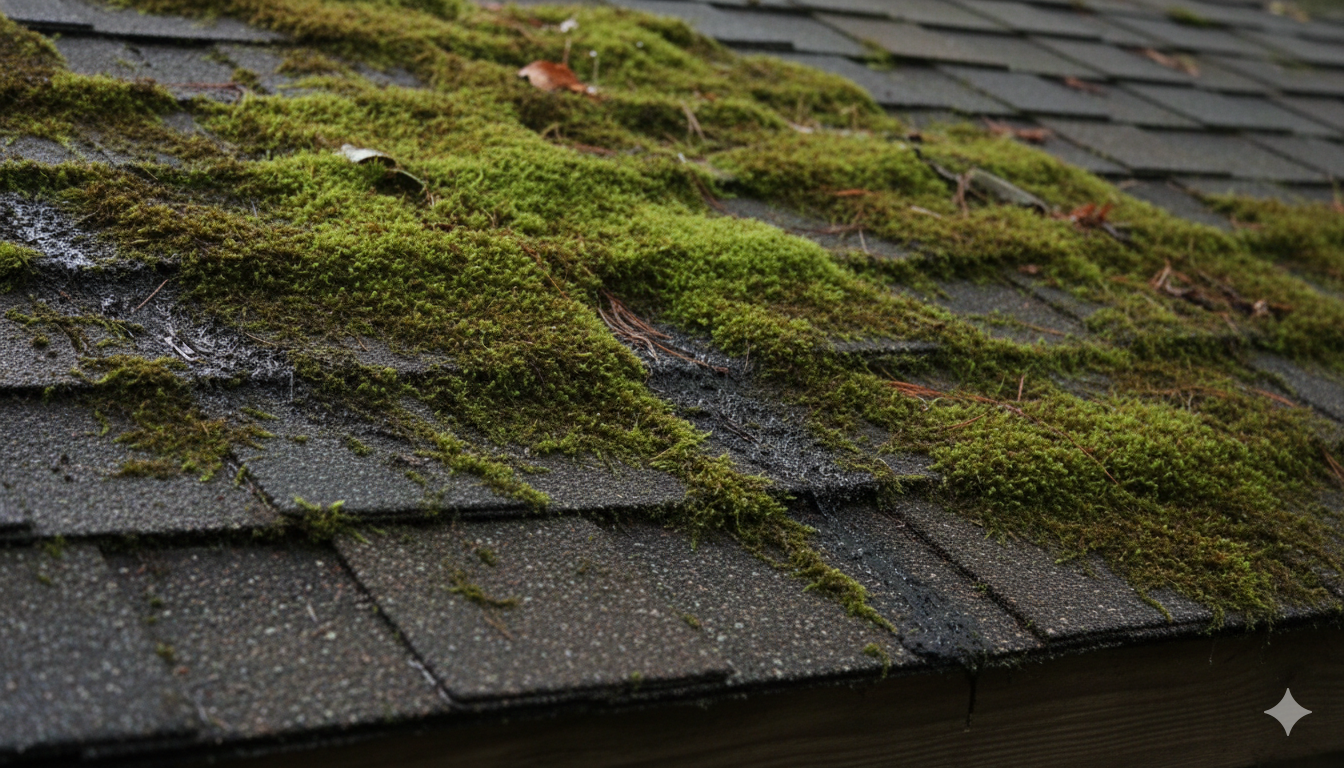
7. Moss, Algae, or Debris
The report may note organic growth (green moss, black algae streaks) or an accumulation of leaves and branches on the roof.
- Why it's a concern: Moss holds moisture against the roof surface like a sponge, leading to shingle deterioration and rot. Piles of debris can block water from draining properly, causing it to back up under shingles. While black streaks (algae) are often cosmetic, they can be a sign of a moisture-prone area.
- What to do: Basic cleaning can often resolve this, but heavy moss growth may have already caused underlying damage. It’s a maintenance item that should be addressed promptly.
8. Damaged Gutters and Downspouts
Inspectors will check to see if gutters are clogged, sagging, leaking, or detached from the house.
- Why it's a concern: The gutter system is integral to roof health. Its job is to move water away from the house. When it fails, water can pour down the siding, pool around the foundation, and back up onto the roof's edge, rotting the fascia boards and decking.
- What to do: Cleaning and minor gutter repairs are typically low-cost fixes but are essential for protecting both the roof and the foundation.
9. Failing Seals and Caulk
Inspectors will check the sealant around vent pipes, flashing, and other penetrations. Dried, cracked, or missing caulk is a common finding.
- Why it's a concern: Caulk and sealants are temporary solutions with a limited lifespan. When they fail, they leave small but direct openings for water to seep in, often leading to slow leaks that go unnoticed for years.
- What to do: Resealing these areas is a routine maintenance task, but it’s an important one to request as it prevents future problems.
10. Chimney Cracks or Damage
The inspection will include a visual assessment of the chimney structure, looking for cracked mortar joints, spalling (flaking) bricks, or a damaged chimney cap.
- Why it's a concern: A damaged chimney is a major water entry point. Water can seep through failing mortar joints and run down into the attic and walls. A cracked crown allows water into the very structure of the chimney, where freeze-thaw cycles can cause significant damage.
- What to do: This often requires a masonry expert or chimney sweep to evaluate and repair. It’s a valid repair request that protects the integrity of both the roof and the chimney.
11. Active Leaks and Water Stains
The clearest sign of a problem. The inspector will note any active leaks or visible water staining on the ceilings or in the attic.
- Why it's a concern: This is direct evidence that the roof system has failed in some capacity. The challenge is tracing the stain back to the source of the leak, as water can travel a long way from its entry point.
- What to do: This is a high-priority issue. A professional roofer must be called to perform a leak detection and recommend a specific repair. This is a non-negotiable item for repair or credit.
12. Roof is at or Near the End of its Service Life
This isn't a single defect but an overall assessment. Based on the material type, visible condition (granule loss, curling), and known age, an inspector may state that the roof has little to no functional life remaining.
- Why it's a concern: This means a full, expensive roof replacement is imminent. It can also create major hurdles with obtaining homeowner's insurance for the buyer.
- What to do: This is the most significant negotiating point. The conversation immediately shifts to a full roof replacement. Your negotiation strategy will likely focus on a substantial seller credit or a price reduction to cover the cost.
How InspectionResponse.com Streamlines Roof Issue Negotiations
Navigating these 12 issues can be overwhelming. Deciphering technical descriptions, explaining the risks to anxious clients, and drafting a precise repair addendum takes hours of work and deep expertise. This is where InspectionResponse.com becomes an agent's most valuable tool.
Instead of manually typing out requests, you can simply upload the inspection report PDF. Our smart analysis technology instantly identifies every roof-related issue, from "missing shingles" to "deteriorated flashing." For each finding, the platform provides:
- Clear Explanations: Get AI-powered, client-friendly explanations of what each issue means and why it's a concern, helping you educate your buyers and manage their expectations.
- Cost & Time Estimates: InspectionResponse.com can generate preliminary estimates for repairs, giving you a data-driven starting point for negotiations, whether it's for a simple flashing repair or a full roof replacement.
- Professional Repair Requests: Transform a list of roof problems into a polished, professional repair request addendum in minutes. Choose whether to ask for a repair, a credit, or replacement, and our AI will generate the appropriate legal-style language, saving you time and reducing liability.
Don't let roof issues sink your next deal. Empower yourself with the knowledge to understand the problems and the technology to solve them efficiently.
Conclusion
A roof is more than just shingles; it's a complex system that protects your client's biggest investment. By understanding these common inspection findings, you can provide immense value, build trust, and navigate negotiations with the skill of a seasoned expert. With tools like InspectionResponse.com, you can further elevate your service, ensuring a smoother, faster, and more successful transaction for everyone involved.
Try InspectionResponse.com today and see how easy it is to turn complex inspection reports into simple, actionable solutions.
Additional Resources
Briefing Document & Key Takeaways
Briefing: Common Roof Issues in Real Estate Transactions
Executive Summary
Roof-related defects are among the most critical and contentious findings in home inspection reports, frequently threatening to derail real estate transactions. An agent's ability to interpret these issues, communicate their significance to clients, and formulate a clear negotiation strategy is paramount. The source material identifies 12 common roof problems that consistently appear on inspection reports, ranging from minor maintenance items to indicators of systemic failure requiring a full replacement.
Key takeaways include the distinction between simple repairs, such as replacing a few damaged shingles, and significant red flags like widespread granule loss or curled shingles, which signal a roof is at the end of its service life. Critical points of failure often involve improper flashing around chimneys and vents, which are primary sources of leaks. The discovery of soft spots on the roof decking is a serious concern, indicating probable rot from a persistent leak that compromises the roof's structural integrity. The overall assessment by an inspector that a roof is at or near the end of its service life becomes the most significant negotiating point, shifting the discussion toward a substantial seller credit or price reduction to cover an imminent replacement. The emergence of technology platforms is also noted as a key tool for agents to streamline the analysis of these reports and the generation of professional repair requests.
Detailed Analysis of Common Roof Inspection Findings
A home inspector's primary role regarding the roof is to identify visual defects that compromise its ability to protect the home. The following twelve issues are the most frequently documented findings that real estate professionals must be prepared to address.
1. Damaged, Missing, or Broken Shingles
• Description: This straightforward finding refers to individual shingles that are cracked, broken, or have been blown off the roof, often due to storm damage or impact from falling debris.
• Identified Risks: Each shingle is a component of an interconnected water-shedding system. A single compromised shingle breaks this barrier, exposing the underlayment and potentially the roof decking to moisture and creating a direct path for water intrusion.
• Recommended Action & Negotiation Strategy: If the damage is limited to a few isolated shingles, the repair is typically simple and inexpensive for a qualified roofer. However, widespread damage should be treated as an indicator of a larger systemic problem or an advanced state of deterioration across the entire roof.
2. Curled or Buckling Shingles
• Description: This issue is noted when the edges of shingles begin to curl upwards or when shingles form wavy, distorted patterns across the roof surface.
• Identified Risks: Curling and buckling are classic signs that a roof is approaching the end of its functional lifespan. The causes include old age, poor attic ventilation leading to moisture buildup from below, or improper installation. These distorted shingles are highly vulnerable to wind damage and no longer provide an adequate protective seal.
• Recommended Action & Negotiation Strategy: This condition is rarely suitable for spot repairs. Widespread curling or buckling is a strong indicator that a full roof replacement will be necessary in the near future, making it a significant point of negotiation.
3. Granule Loss
• Description: Inspectors will note an excessive accumulation of crushed stone granules, the protective top layer of asphalt shingles, in the gutters or at the base of downspouts.
• Identified Risks: These granules serve as the primary defense against UV radiation and weathering. As they erode, the underlying asphalt is exposed, causing it to become brittle and deteriorate at an accelerated rate. Significant granule loss is another key indicator of an aging roof.
• Recommended Action & Negotiation Strategy: While all roofs shed some granules over time, a large accumulation is a red flag. This finding, particularly when combined with other signs of wear, strengthens the case for negotiating a seller credit or a full roof replacement.
4. Improper or Failing Flashing
• Description: Flashing is the thin metal material used to seal intersections where the roof is penetrated by structures like chimneys, vents, and skylights, or where roof planes meet in a valley. This finding notes flashing that is rusted, deteriorated, improperly installed, or gapped.
• Identified Risks: Flashing is a critical point of failure and is one of the most common sources of roof leaks. An inspector will flag any reliance on caulk or sealant as a primary water barrier, as this is considered a temporary fix.
• Recommended Action & Negotiation Strategy: Repairing or replacing flashing is a crucial repair that must be performed by a professional roofer. Because it directly addresses a high-risk area for water intrusion, it is an essential repair request.
5. Soft Spots or Damaged Decking
• Description: If it is safe to do so, an inspector will walk the roof surface. Soft or "spongy" spots felt underfoot will be noted in the report.
• Identified Risks: A soft spot is a strong indication that the underlying wood sheathing (decking) has rotted due to a persistent, slow leak. This compromises the roof's structural integrity and represents a much more severe problem than surface-level shingle damage.
• Recommended Action & Negotiation Strategy: This finding requires immediate, further evaluation by a licensed roofer to determine the full extent of the rot. The necessary repair involves removing shingles and replacing the damaged section of decking, which can be costly.
6. Poor Attic Ventilation
• Description: The inspection report will note if the attic's ventilation system (e.g., soffit, ridge, or gable vents) is blocked, insufficient, or absent.
• Identified Risks: Inadequate ventilation traps heat and moisture in the attic. This damages the roof system from the inside out, super-heating shingles in the summer to shorten their lifespan and causing condensation in the winter that can lead to decking rot and mold growth.
• Recommended Action & Negotiation Strategy: Addressing ventilation issues is critical for the long-term health of the roof and the home. Solutions can range from simply clearing blocked vents to installing new ones.
7. Moss, Algae, or Debris
• Description: This finding includes the presence of organic growth, such as green moss or black algae streaks, or a significant accumulation of leaves, branches, and other debris.
• Identified Risks: Moss acts like a sponge, trapping moisture against the shingles and leading to their rapid deterioration and rot. Debris can create dams that prevent proper water drainage, causing water to back up under shingles. While black streaks from algae are often cosmetic, they can indicate areas prone to moisture.
• Recommended Action & Negotiation Strategy: This is primarily a maintenance issue that should be addressed promptly. While basic cleaning can resolve it, heavy moss growth may have already caused underlying damage that needs to be assessed.
8. Damaged Gutters and Downspouts
• Description: An inspector will report on gutters that are clogged with debris, sagging, leaking at the seams, or detached from the fascia boards.
• Identified Risks: The gutter system is integral to the roof's function of water management. A failing gutter system allows water to damage siding, pool around the foundation, and back up onto the roof edge, which can rot the fascia and decking.
• Recommended Action & Negotiation Strategy: Cleaning and minor repairs are typically low-cost but are essential for protecting both the roof and the foundation from water damage.
9. Failing Seals and Caulk
• Description: This common finding refers to dried, cracked, or missing sealant around roof penetrations such as vent pipes and flashing.
• Identified Risks: Caulk and sealants have a limited lifespan and are not permanent solutions. When they fail, they create small but direct pathways for water to seep into the roof system, often resulting in slow leaks that may go undetected for years.
• Recommended Action & Negotiation Strategy: Resealing these areas is a routine but important maintenance task to request in order to prevent future water intrusion.
10. Chimney Cracks or Damage
• Description: A visual inspection of the chimney may reveal cracked mortar joints, spalling (flaking) bricks, or a damaged or cracked chimney cap (crown).
• Identified Risks: A compromised chimney structure is a major entry point for water. Water can penetrate failing mortar joints and run into the attic and walls. A cracked crown allows moisture into the chimney's core, where freeze-thaw cycles can cause severe structural damage.
• Recommended Action & Negotiation Strategy: This repair typically requires a masonry expert or a chimney sweep. It is a valid repair request that protects the integrity of both the chimney and the roof system.
11. Active Leaks and Water Stains
• Description: The inspector will note any clear evidence of water intrusion, such as visible water staining on ceilings or in the attic, or any actively dripping leaks.
• Identified Risks: This is direct proof that the roof system has failed. The primary challenge is that water can travel a significant distance from its entry point, making it difficult to pinpoint the source of the leak without a professional evaluation.
• Recommended Action & Negotiation Strategy: This is a high-priority, non-negotiable issue. A professional roofer must be engaged to perform a leak detection analysis and recommend a specific repair. This should be addressed via a repair or a seller credit.
12. Roof at or Near End of Service Life
• Description: This finding is not a single defect but a comprehensive assessment based on the roof's material, age, and overall condition (e.g., extensive granule loss, widespread curling). The inspector concludes that the roof has little to no functional life remaining.
• Identified Risks: This assessment means a full, expensive roof replacement is imminent. It can also present a significant obstacle for the buyer when attempting to secure homeowner's insurance.
• Recommended Action & Negotiation Strategy: This is the most significant roof-related finding from a negotiation standpoint. The conversation must shift to a full replacement, with the agent's strategy focusing on securing a substantial price reduction or seller credit to cover the cost.
Streamlining Negotiations with Technology
The complexity of deciphering technical roof issues and drafting precise repair requests can be a significant burden for agents. The source material highlights the role of platforms like InspectionResponse.com, which are designed to address this challenge. This technology provides a streamlined solution by using smart analysis to identify all roof-related issues directly from an inspection report PDF.
For each identified issue, such platforms can offer:
• Clear Explanations: AI-generated, client-friendly summaries explain what each defect means and why it is a concern, aiding in client education.
• Cost & Time Estimates: The system can generate preliminary estimates for repairs, providing a data-driven basis for negotiations.
• Professional Repair Requests: The platform automates the creation of a polished repair request addendum, allowing agents to select whether to ask for a repair, credit, or replacement and generating the appropriate language.
Study Guide
Study Guide: Common Roof Issues in Home Inspections
Quiz: Short-Answer Questions
Instructions: Answer the following questions in two to three sentences, based on the information provided in the source material.
1. What is the primary risk associated with a single missing or broken shingle on a roof?
2. What are the two main indicators that a roof is nearing the end of its service life, as it relates to the condition of its shingles?
3. Explain the function of granules on asphalt shingles and why significant granule loss is a major concern.
4. What is roof flashing, and why is its failure considered a critical point for potential leaks?
5. If a home inspector identifies a "soft spot" on a roof, what does this finding typically indicate about the underlying structure?
6. Describe how poor attic ventilation negatively impacts a roof system during both summer and winter months.
7. What is the primary function of a home's gutter and downspout system, and what are the consequences of its failure?
8. Why is failing caulk or sealant around roof penetrations a problem, even if it seems like a minor issue?
9. Besides active leaks, what damage can occur when a chimney's mortar joints or crown are cracked?
10. What does an inspector's assessment that a roof is at the "end of its service life" mean for a real estate transaction?
Quiz Answer Key
1. A single missing or broken shingle compromises the roof's interconnected water-shedding system. This exposes the underlayment and potentially the roof decking directly to moisture, creating a pathway for water to enter the home.
2. Curling or buckling shingles are classic signs that a roof is nearing the end of its service life. Curling occurs when shingle edges turn upwards, while buckling appears as wavy distortions; both conditions make shingles susceptible to wind damage.
3. Granules are a crushed stone layer that serves as the shingle's primary defense against UV rays and weathering. Significant loss exposes the underlying asphalt, causing it to become brittle and deteriorate much faster, indicating an aging roof.
4. Flashing is the thin metal material installed around chimneys, vents, skylights, and in roof valleys to prevent leaks where the roof plane is interrupted. Its failure is critical because these interruption points are common sources of water intrusion into the home.
5. A "soft spot" indicates that the underlying wood sheathing, or decking, has likely rotted due to a persistent, slow leak. This finding suggests a compromise in the roof's structural integrity, which is a more severe problem than surface-level shingle damage.
6. In the summer, poor ventilation traps heat that "super-heats" shingles from below, shortening their lifespan. In the winter, it allows moisture buildup and condensation that can rot the decking and encourage mold growth.
7. The gutter system's primary job is to collect water from the roof and move it away from the house. When it fails, water can back up onto the roof's edge, rotting fascia boards and decking, or pour down the siding and pool around the foundation.
8. Failing caulk and sealants are a problem because they create direct openings for water to seep into the home. These often lead to slow, unnoticed leaks that can cause significant damage over several years.
9. A cracked chimney allows water to seep through failing mortar joints and run down into the attic and walls. Water entering a damaged crown can get into the chimney's structure, where freeze-thaw cycles can cause significant structural damage.
10. This assessment means a full and expensive roof replacement is imminent. For the transaction, it becomes a major negotiating point and can create significant hurdles for the buyer in obtaining homeowner's insurance.
Essay Questions
Instructions: The following questions are designed for a more in-depth, essay-style response. Use the source material to construct a comprehensive argument for each prompt.
1. Analyze the difference between roof issues that signify a need for routine maintenance (e.g., failing caulk, algae growth) and those that indicate systemic failure (e.g., widespread buckling shingles, soft decking). How should a real estate agent’s negotiation strategy differ for each category?
2. Using the provided text, trace the potential chain of events that begins with improperly installed flashing around a chimney, detailing the subsequent problems that could be identified in a home inspection report.
3. Explain the concept of a roof as a "complex system" rather than just a layer of shingles. Discuss the interconnected roles of at least four distinct components mentioned in the guide (such as decking, ventilation, gutters, and flashing) in protecting a home.
4. Construct an argument that poor attic ventilation can be one of the most destructive long-term roof issues. Explain how it silently damages multiple components of the roof system and shortens its overall service life.
5. Based on the source material, describe the specific challenges a real estate agent faces when a home inspection report reveals multiple, complex roof issues. How does a tool like InspectionResponse.com propose to solve these specific problems and streamline the negotiation process?
Glossary of Key Terms
• Active Leak: Direct evidence that the roof system has failed, indicated by the presence of dripping water.
• Buckling Shingles: Wavy distortions that form across a roof's surface, indicating an aging roof, poor ventilation, or improper installation.
• Chimney Cap (or Crown): The top of the chimney structure that prevents water from entering the chimney itself. Damage here can lead to significant water intrusion and freeze-thaw damage.
• Curling Shingles: A condition where the edges of shingles curl upwards, indicating the end of their service life and making them highly susceptible to wind damage.
• Decking (or Sheathing): The underlying wood panels that form the structural base of the roof, onto which the underlayment and shingles are attached.
• End of Service Life: An overall assessment by an inspector that a roof has little to no functional life remaining, meaning a full replacement is imminent.
• Fascia Boards: The boards attached to the edge of the roof where gutters are typically mounted. They are prone to rot if the gutter system fails.
• Flashing: Thin metal material installed at intersections on a roof—such as around chimneys, vents, and in valleys—to direct water away and prevent leaks.
• Granule Loss: The erosion of the crushed stone granules from the surface of asphalt shingles, which exposes the underlying asphalt to UV rays and speeds up deterioration.
• Soft Spot: A "spongy" area on the roof indicating that the underlying wood decking is likely rotted from a persistent leak.
• Spalling: The flaking or chipping of brick or mortar, often found on chimneys, which can allow water to penetrate the structure.
• Underlayment: The layer of material between the roof decking and the shingles that provides a secondary barrier against moisture.
• Ventilation Vents (Soffit, Ridge, Gable): Components of the attic ventilation system designed to allow air to circulate, preventing the buildup of heat and moisture.
Frequently Asked Questions
1. Why should I, as a real estate agent, be so concerned about roof issues on an inspection report?v
Mastering the nuances of a roof inspection report is a key professional skill that directly impacts your ability to serve your clients effectively. From a transaction standpoint, the roof is the gatekeeper. An agent who can speak confidently about its condition provides immense value. The primary concerns can be broken down into three key areas:
• Financial Impact: The roof is one of the single most expensive components of a home to replace. An unexpected "end of service life" assessment can represent a five-figure expense that neither the buyer nor seller was prepared to address.
• Transaction Risk: Vague or technical roof issues on an inspection report can quickly complicate a transaction. They become major points of contention that confuse clients, stall progress, and can ultimately derail the entire negotiation process if not handled with clarity and expertise.
• Professional Credibility: Your ability to understand an inspector's findings, explain the risks to your clients in clear terms, and negotiate strategically is paramount. This knowledge allows you to guide clients with confidence, reinforcing your role as a trusted advisor.
Understanding these findings allows you to differentiate between minor maintenance items and critical problems that demand immediate attention.
2. What are the most common signs of an aging roof that signal a potential replacement?
Identifying a roof that is nearing the end of its functional life is crucial, as this represents a significant impending expense for a buyer and becomes a critical negotiation point. Inspectors look for several key indicators that, when viewed together, paint a picture of a system that is failing due to age.
• Curled or Buckling Shingles When the edges of asphalt shingles begin to curl upwards or develop wavy distortions, it is a classic sign of old age. This condition is often accelerated by improper installation or poor attic ventilation, but the result is the same: the shingles are no longer sealed properly, making them highly susceptible to being lifted or torn off by wind. Widespread curling is a strong indicator that a full replacement is on the horizon.
• Significant Granule Loss The crushed stone granules covering an asphalt shingle serve as its primary shield against damaging UV rays. While all roofs shed some granules over time, an inspector will note when excessive amounts are found in the gutters. This finding means the underlying asphalt is now exposed to the elements, causing it to become brittle and deteriorate rapidly. It is another key sign that the roof is at the end of its service life.
• Overall "End of Service Life" Assessment This is not a single defect but a comprehensive conclusion an inspector reaches based on the roof's material type, its known age, and the combination of visible conditions like granule loss and curling. This assessment is the most significant negotiating point, as it signals that a full, expensive replacement is imminent. Furthermore, this finding can create major hurdles for the buyer when attempting to obtain homeowner's insurance, shifting the negotiation directly to the cost of a new roof.
While these issues point to a roof's inevitable decline, other problems can indicate immediate water intrusion risks, even on a much newer roof.
3. Which roof issues point to an immediate and active leak risk?
It is essential to distinguish between general signs of aging and direct evidence of a system failure. The following issues represent high-priority risks for water intrusion that compromise the home's primary defense against the elements and must be addressed immediately.
1. Improper or Failing Flashing Flashing is the metal material installed at points where the roof is penetrated or changes direction, such as around chimneys, vents, and in valleys. Deteriorated, rusted, or improperly installed flashing is one of the most common sources of active leaks. Because this is a critical point of failure, repairing or replacing it is a crucial request that directly addresses a high-risk area.
2. Soft Spots or Damaged Decking If an inspector notes a "spongy" or soft spot while walking the roof, it signifies a serious problem. This indicates that the underlying wood sheathing has likely rotted due to a persistent, slow leak. This compromises the roof's structural integrity and is far more severe than a few missing shingles. The finding requires a professional roofer to evaluate the extent of the damage and identify the leak's source.
3. Active Leaks and Water Stains This is the most direct evidence of a roof system failure. While visible stains on a ceiling or in the attic confirm a problem, tracing the water back to its entry point can be challenging. An active leak is a non-negotiable item that requires immediate attention from a professional roofer to perform leak detection and make necessary repairs.
4. Chimney Cracks or Damage A visual inspection of the chimney can reveal cracked mortar joints or a damaged cap. These flaws act as a direct entry point for water, which can seep into the chimney structure and run down into the attic and walls. This damage requires a masonry expert or chimney sweep to evaluate and repair to protect both the roof and the home's interior.
While these issues demand immediate action, many other findings on a report are less severe and fall into the category of routine maintenance.
4. Are some roof problems considered minor or related to routine maintenance?
Absolutely. Not every roof-related finding on an inspection report is a deal-breaker. Many common issues are related to standard upkeep and, while important to address to prevent larger problems, they typically do not involve the high costs associated with major repairs or replacement.
• Isolated Damaged or Missing Shingles: A few shingles cracked by hail or blown off in a storm can expose the underlayment. For a qualified roofer, replacing these is often a simple and inexpensive repair.
• Moss, Algae, or Debris: Moss can trap moisture against shingles and cause them to deteriorate over time, while debris can block proper drainage. While the black streaks caused by algae are often cosmetic, they can signal a moisture-prone area. These issues can often be resolved with basic cleaning, which should be done promptly to avoid underlying damage.
• Failing Seals and Caulk: The sealant used around vents and flashing has a limited lifespan and can dry out and crack. Resealing these gaps is a routine maintenance task that is essential for preventing future leaks.
• Damaged Gutters and Downspouts: A home's gutter system is vital for directing water away from the roof and foundation. Clogged or leaking gutters can cause water to back up, but cleaning and minor repairs are typically low-cost and essential fixes.
Addressing these maintenance items is key to roof longevity, as is ensuring the proper function of a less visible component: attic ventilation.
5. An inspector noted issues with "flashing." What is it and why is it so important?
"Flashing" is a technical term that appears frequently in inspection reports, and one that agents must be able to explain to their clients. Its integrity is absolutely critical to preventing water intrusion at the roof's most vulnerable points.
• What is Flashing? Flashing is the thin metal material—typically aluminum, steel, or copper—installed wherever the roof plane is interrupted. You will find it around chimneys, roof vents, skylights, and where two roof slopes meet to form a valley. Its sole purpose is to create a waterproof seal at these joints.
• Why is it a Critical Point of Failure? Improperly installed, rusted, or deteriorated flashing is one of the most common sources of roof leaks. Inspectors pay close attention to these areas, looking for gaps, signs of rust, or an over-reliance on temporary fixes like caulk or roof cement. Because flashing is a primary barrier against water, any noted defects are a high priority, and repairs should be handled by a professional roofer.
Just as failed flashing can lead to hidden damage, an inspector may find direct evidence of that damage in the roof's underlying structure.
6. How serious is a "soft spot" on the roof?
An inspector reporting "soft" or "spongy" spots on a roof is a finding that should be treated with the highest level of concern. It is not a minor flaw but a clear signal of a significant, underlying structural problem.
1. The Cause: A soft spot indicates that the wood sheathing (or decking) that forms the foundation of the roof has likely rotted. This is the material to which the shingles are attached.
2. The Source: This type of rot is caused by a persistent, slow leak that has gone undetected long enough to compromise the roof's structural integrity. The source could be a failed shingle, faulty flashing, or another defect located uphill from the soft spot.
3. The Solution: This is a much bigger issue than a few missing shingles. It requires professional intervention to determine the full scope of work. The necessary repairs almost always involve removing shingles in the affected area, cutting out and replacing the damaged decking, and addressing the source of the leak to prevent a recurrence.
Identifying and understanding these problems is the first step; the next is managing the negotiation process effectively, where modern tools can provide a distinct advantage.
7. How can modern tools help me manage roof issue negotiations more effectively?
Deciphering a technical inspection report, clearly explaining the risks to an anxious client, and drafting a precise repair request addendum is a complex and time-consuming process. Leveraging technology designed for this purpose can transform this challenge into a streamlined, professional experience. A tool like InspectionResponse.com provides several key advantages:
• Instantly Extract Every Roof Issue: Scan the inspection report PDF and the technology instantly identifies and pulls every roof-related problem, ensuring no detail is overlooked.
• Translate Technical Jargon for Your Clients: Generate AI-powered, client-friendly descriptions of each issue and its associated risks. This equips you to educate your clients on why a finding is a concern, empowering them to make informed decisions.
• Create Data-Driven Repair Estimates: The platform provides preliminary cost and time estimates, giving you a powerful, data-driven starting point for negotiations—whether you're discussing a minor flashing repair or a full replacement.
• Generate Professional Repair Requests in Minutes: Transform a simple list of problems into a polished and professional repair request addendum. This allows you to generate a polished, professional repair addendum in minutes, eliminating administrative headaches and reducing your liability with precise, effective language.
By combining your expert knowledge with modern technology, you can provide immense value, build client trust, and navigate even the most challenging negotiations to ensure smoother, more successful transactions.