Top 50 Electrical Terms in Home Inspection Reports | Agent Guide
Podcast Overview
The Ultimate Cheat Sheet: Top 50 Electrical Terms Every Real Estate Agent Should Know from Inspection Reports
As a real estate agent, you're constantly deciphering home inspection reports filled with technical jargon. The electrical section, in particular, can be a minefield of unfamiliar terms that leave both you and your clients scratching your heads. Understanding this terminology isn't just about sounding knowledgeable; it's about recognizing potential safety hazards, identifying negotiation points, and ensuring your clients make informed decisions.
This "cheat sheet" breaks down 50 of the most common electrical terms you're likely to encounter in a home inspection report. Keep this guide handy to quickly understand findings and advise your clients effectively.
Top 50 Electrical Terms & Their Meanings
Here's your quick reference guide:
- AFCI (Arc Fault Circuit Interrupter): A device that detects dangerous electrical arcs (sparks) a common cause of fires and disconnects power. Often required in bedrooms and living areas.
- Abandoned Wiring: Unused electrical wires that have not been properly terminated or removed, potentially posing a safety risk.
- Aluminum Wiring (Solid Conductor): Wiring used in some homes from the mid-1960s to mid-1970s. Prone to issues at connection points, increasing fire risk if not properly remediated.
- Amps (Amperage): The measure of electrical current flow. Breakers are rated in amps.
- Bonding: Connecting all metallic, non-current-carrying parts of an electrical system (and often gas/water pipes) to the grounding system to ensure they are at the same electrical potential, reducing shock risk.
- Bootleg Ground: An improper and unsafe wiring method where the ground terminal of an outlet is connected to the neutral terminal, creating a false appearance of a grounded outlet.
- Branch Circuit: The wiring, overcurrent protection (breaker/fuse), and devices (outlets, lights) that extend from the panel to supply power to a specific area or appliance.
- BX Cable (Armored Cable - AC): Electrical cable with a flexible metal armor sheath, providing physical protection to the wires inside.
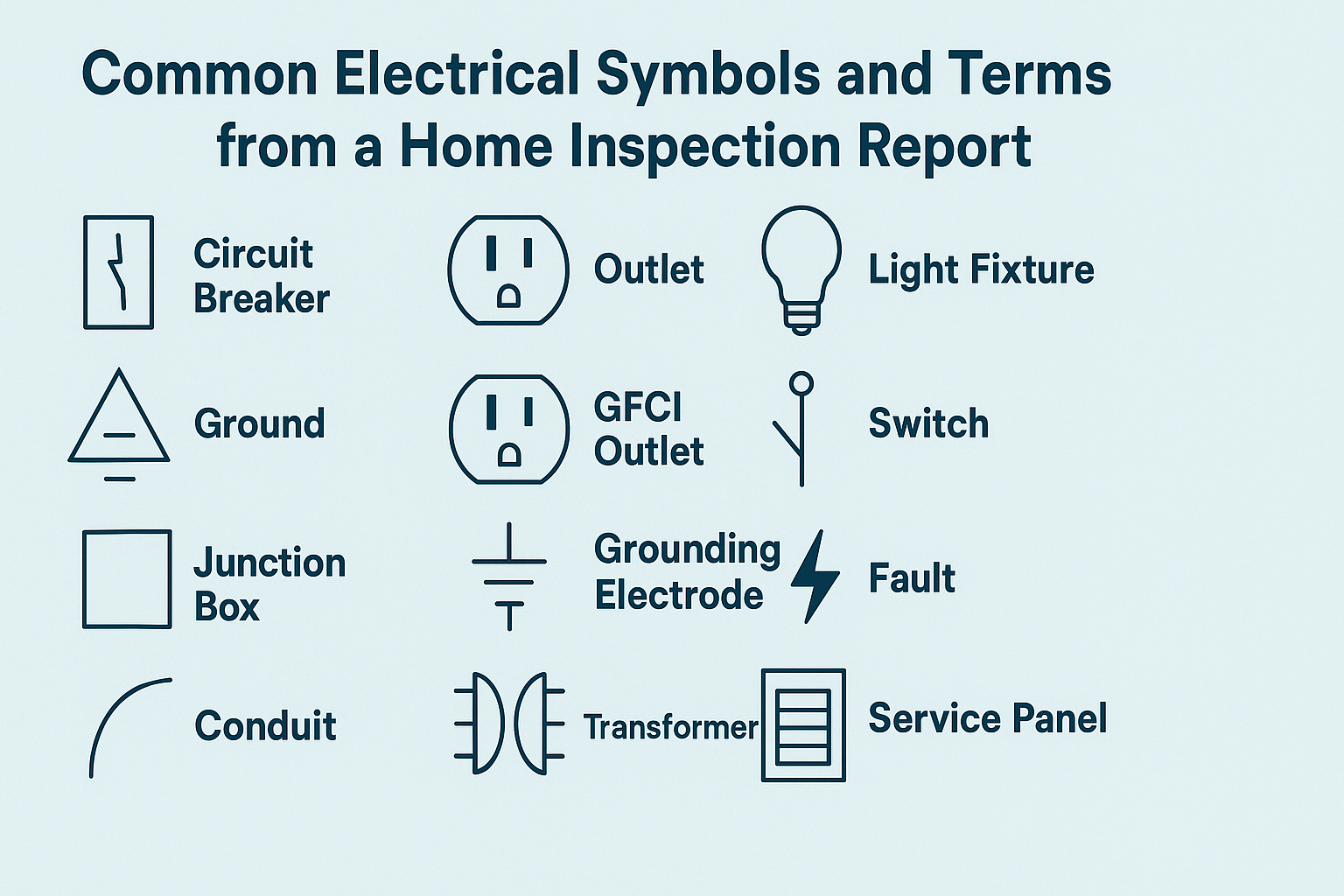
- Circuit Breaker: A safety device in the electrical panel that automatically stops the flow of electricity if it detects an overload or short circuit.
- Conduit: A tube (metal or plastic) used to protect and route electrical wiring.
- Copper Wiring: The most common and preferred type of electrical wiring in modern homes due to its conductivity and stability.
- Corrosion: Deterioration of metal parts (e.g., in panels, at connections) due to chemical reactions, often caused by moisture, which can lead to poor connections and overheating.
- Damaged Insulation/Sheathing: The protective covering on wires is cut, cracked, or frayed, exposing live conductors and creating shock or fire hazards.
- Dedicated Circuit: A circuit that serves only one appliance or piece of equipment (e.g., refrigerator, HVAC unit, electric range).
- Double-Tapped Breaker (Multiple Wires on Lug): When two or more wires are connected to a single terminal screw on a circuit breaker that is only designed for one. This can cause loose connections, overheating, and arcing.
- Drip Loop: A loop formed in overhead service entrance conductors just before they enter the weatherhead, designed to prevent water from traveling along the wires into the service mast or meter base.
- Exposed Wires/Splices: Electrical wires or connections that are not enclosed in a proper junction box or fixture, posing a shock or fire hazard.
- Federal Pacific Electric (FPE) Panel / Stab-Lok Breakers: A brand of electrical panel and breakers known for a high failure rate (failing to trip), making them a significant fire hazard. Replacement is often recommended.
- Fuse: An older type of overcurrent protection device that contains a wire that melts and breaks the circuit if current exceeds a safe level. Found in older fuse boxes.
- GFCI (Ground Fault Circuit Interrupter): A safety device that protects against electrical shock by detecting imbalances in current flow (ground faults) and quickly shutting off power. Required in wet locations like bathrooms, kitchens, garages, outdoors.
- Ground Rod: A metal rod driven into the earth, connected to the electrical system's grounding conductor to provide a path for fault currents.
- Ground Wire (Grounding Conductor): A wire that provides a path for electrical current to safely flow to the earth in the event of a fault, preventing shock.
- Grounding (or Earthed): The system of connecting electrical equipment to the earth for safety.
- Hot Wire (Ungrounded Conductor): The wire that carries electrical current from the power source to the device. Usually black or red.
- Junction Box: An enclosure used to house and protect electrical connections (splices).
- Knob and Tube Wiring (K&T): An early electrical wiring system (pre 1940s) using single conductors supported by porcelain knobs and passed through joists via porcelain tubes. Lacks a ground wire and can be a hazard if disturbed or covered with insulation.
- Main Breaker: The primary breaker in the service panel that can shut off power to the entire house.
- Meter Base/Socket: The enclosure that houses the electric utility meter.
- Neutral Wire: The wire that completes the circuit by returning current to the power source. Usually white or gray.
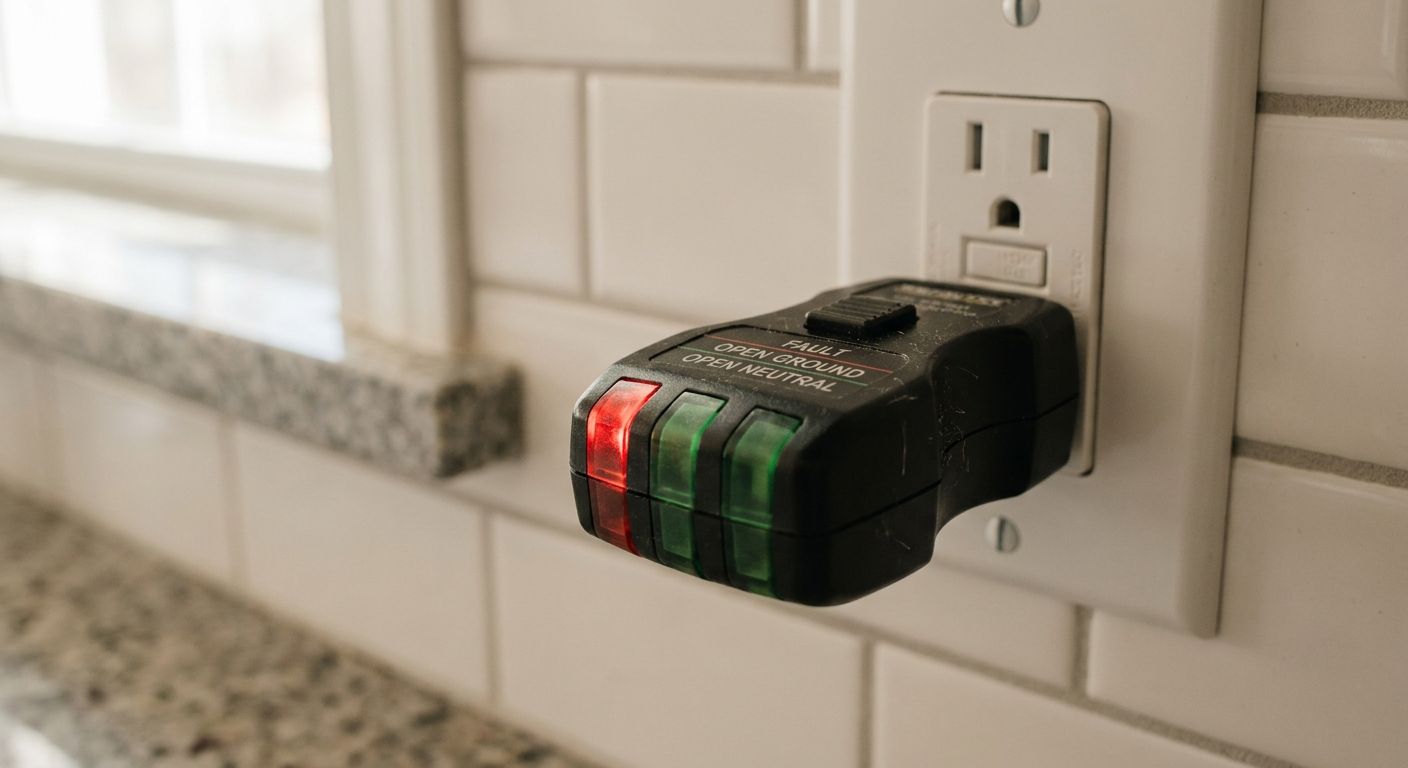
- Open Ground: A three-prong outlet is installed, but the ground terminal is not connected to the grounding system, creating a shock hazard.
- Open Neutral: A break in the neutral wire, which can cause unpredictable voltage fluctuations and damage appliances or create shock hazards.
- Outdated Wiring: Wiring methods or materials that are no longer considered safe or up to current standards (e.g., K&T, some older aluminum).
- Overamping/Overcurrent Protection: The system (breakers or fuses) designed to protect circuits from drawing more current than they can safely handle.
- Overcrowded Panel: Too many circuits or wires in an electrical panel, which can lead to overheating and difficulty working safely.
- Overheating (evidence of): Signs like melted insulation, discolored components, or burning smells, indicating excessive current or poor connections. A serious fire hazard.
- Oversized Breaker/Fuse: A breaker or fuse with a higher amperage rating than the wire it protects can handle, leading to wire overheating and fire risk.
- Panel Schedule/Directory: A label inside the panel door that should identify what each circuit breaker controls. Often missing, inaccurate, or illegible.
- Receptacle (Outlet): A device installed in an outlet box to provide a point where electrical equipment can be connected to the power supply.
- Reverse Polarity: The hot and neutral wires are incorrectly connected to an outlet's terminals. Can pose a shock risk with some appliances.
- Romex (NM Cable - Non-Metallic Sheathed Cable): A common type of modern electrical cable with plastic sheathing, containing hot, neutral, and often ground wires.
- Service Drop: The overhead electrical wires running from the utility pole to the customer's building.
- Service Entrance Conductors: The wires that bring power from the utility connection (service drop or lateral) into the main service panel.
- Service Lateral: Underground electrical wires running from the utility transformer to the customer's building.
- Service Mast/Riser: The metal pipe that brings overhead electrical service into the building, often extending through the roof.
- Service Panel (Breaker Box / Fuse Box): The main distribution point for electricity in a home, containing circuit breakers or fuses.
- Subpanel: A smaller electrical panel that gets its power from the main service panel and distributes it to a specific area or for a group of circuits (e.g., a workshop, addition, or kitchen).
- Tamper-Resistant Receptacle (TRR): Outlets with internal shutters that prevent foreign objects (like a child's toy) from being inserted into a single slot, reducing shock risk. Required in new construction and renovations.
- Three-Prong Receptacle: An outlet with three openings: two for hot and neutral, and one for ground.
- Two-Prong Receptacle: An older outlet with only two openings (hot and neutral), indicating an ungrounded circuit.
- Weather-Resistant Receptacle: Outlets designed for outdoor or damp locations, built with materials that resist corrosion and weather exposure. Often required with an "in-use" cover.
- Weatherhead: A weatherproof cap on top of a service mast that protects the service entrance conductors from rain and snow.
- Zinsco Panel / Sylvania-Zinsco Breakers: Another brand of electrical panel and breakers with a history of malfunctioning and creating fire hazards. Replacement is usually recommended.
Why These Terms Matter in Your Transactions
Knowing these terms helps you:
- Identify Safety Issues: Recognize red flags like "FPE Panel," "Exposed Wires," or "Open Ground."
- Understand Repair Needs: Grasp the implications of findings like "Double-Tapped Breaker" or "Aluminum Wiring."
- Facilitate Negotiations: Clearly articulate concerns and potential costs to your clients and the other party.
- Advise Clients: Help buyers understand what they're taking on and sellers understand necessary pre-listing repairs or disclosures.
Dealing with a long list of electrical findings and trying to estimate their repair costs can be incredibly time-consuming and prone to error. This is where leveraging technology can be a game-changer for busy agents.
How InspectionResponse.com Helps You Conquer Electrical Jargon
Imagine receiving an inspection report with 10, 15, or even more of these electrical terms flagged. Manually researching each one, explaining it to your client, and then trying to figure out repair costs and draft an addendum is a significant time drain.
InspectionResponse.com is specifically designed to tackle this challenge:
- AI-Powered Report Analysis: Upload the PDF inspection report, and our AI intelligently identifies and categorizes electrical (and other) findings. It can often provide simplified explanations for many of these common terms directly within the platform.
- Quick Identification of Critical Issues: Our system can help highlight potentially serious electrical concerns, such as problematic panel brands (FPE, Zinsco) or safety hazards like exposed wiring, allowing you to prioritize these with your client.
- Streamlined Repair Request Generation: Instead of sifting through a dense report and manually typing each electrical item into a repair addendum, InspectionResponse.com allows you to select findings, add notes, and generate a professional request document efficiently. This is invaluable when dealing with numerous technical terms.
- Cost & Time Estimates: For many common electrical repairs (like replacing a GFCI, correcting double-taps, or even panel upgrades), our platform can provide AI-driven cost and time estimates, giving you and your clients a solid basis for negotiation without waiting days for contractor quotes.
- Improved Client Communication: Share organized summaries of electrical issues with your clients, complete with explanations they can understand. This empowers them to make informed decisions and appreciate your expertise.
With InspectionResponse.com, you don't need to be an electrical expert to handle the electrical section of an inspection report like a pro. Our tools help you quickly understand, estimate, and respond to even a long list of electrical terms, saving you hours and enhancing your client service.
Conclusion: Speak the Language of Electrical Safety
While this list of 50+ terms might seem extensive, familiarizing yourself with them will significantly boost your confidence and effectiveness when dealing with home inspection reports. By understanding the language of electrical systems, you can better protect your clients' interests and navigate transactions with greater ease.
Always recommend that your clients consult with a qualified, licensed electrician for any concerns or repairs related to the electrical system.
Ready to turn complex inspection reports into clear, actionable responses? Discover how InspectionResponse.com can simplify your workflow and empower your negotiations. Visit https://inspectionresponse.com/ today!
Additional Resources
Briefing Document & Key Takeaways
Briefing Document: Key Electrical Terminology for Real Estate Agents
Source: Excerpts from "Real Estate Agent's Electrical Terminology Guide" ("The Ultimate Cheat Sheet: Top 50 Electrical Terms Every Real Estate Agent Should Know from Inspection Reports")
Purpose: This briefing document summarizes the key concepts and terminology related to electrical systems encountered in home inspection reports, specifically for real estate agents. The source emphasizes the importance of understanding these terms for identifying safety hazards, informing clients, and facilitating negotiations.
Main Themes:
- The Importance of Electrical Terminology for Real Estate Agents: The source strongly argues that understanding electrical jargon is crucial for agents to effectively decipher home inspection reports, protect clients, and navigate transactions. It's not just about sounding knowledgeable but recognizing safety risks and negotiation points.
- Common Electrical Terms and Their Significance: The bulk of the source is a comprehensive list of 50+ key electrical terms, defining each one and explaining its relevance in a home inspection context. These terms cover various aspects of electrical systems, including safety devices, wiring types, components, and common issues.
- Leveraging Technology for Efficiency: The source highlights the value of using tools like InspectionResponse.com to manage the technical information in inspection reports, particularly the electrical section. These tools can assist with identifying issues, explaining findings, estimating costs, and generating repair requests.
Most Important Ideas/Facts:
- Electrical safety is paramount: Many of the terms listed, such as "AFCI," "GFCI," "Abandoned Wiring," "Bootleg Ground," "Exposed Wires/Splices," and problematic panel brands (FPE, Zinsco), directly relate to significant safety hazards like fire and electrical shock. Recognizing these terms is critical for protecting clients.
- Understanding wiring types and their risks: The guide details different wiring materials and systems, including "Aluminum Wiring," "Copper Wiring," and "Knob and Tube Wiring." It specifically calls out the potential fire risks associated with older or improperly installed wiring like aluminum and the lack of grounding in Knob and Tube systems.
- Identifying improper installations and repairs: Terms like "Double-Tapped Breaker," "Bootleg Ground," "Open Ground," and "Reverse Polarity" indicate faulty wiring or connections that can lead to dangerous situations or equipment damage.
- The significance of overcurrent protection: The source explains the function of "Circuit Breaker" and "Fuse" as safety devices. It also emphasizes the danger of "Oversized Breaker/Fuse," which can prevent the system from tripping and protect the wiring from overheating.
- Common signs of electrical problems: The guide mentions terms like "Corrosion" and "Overheating (evidence of)" as indicators of potential issues within the electrical system.
- Modern safety requirements: The source notes terms like "AFCI," "GFCI," and "Tamper-Resistant Receptacle (TRR)," which represent current safety standards and are often required in new construction or renovations. The absence of these in older homes may be a point of concern.
- The role of the service panel: Terms related to the "Service Panel," "Main Breaker," and "Subpanel" are crucial for understanding the distribution of electricity in a home. Issues like an "Overcrowded Panel" can be problematic.
- Technology can significantly streamline the process: The source explicitly states that tools like InspectionResponse.com can alleviate the burden of manually processing complex inspection reports by using AI to analyze findings, highlight critical issues, provide cost estimates, and generate repair requests.
Key Quotes:
- "Understanding this terminology isn't just about sounding knowledgeable; it's about recognizing potential safety hazards, identifying negotiation points, and ensuring your clients make informed decisions."
- "This 'cheat sheet' breaks down 50 of the most common electrical terms you're likely to encounter in a home inspection report."
- "Recognize red flags like 'FPE Panel,' 'Exposed Wires,' or 'Open Ground.'"
- "Grasp the implications of findings like 'Double-Tapped Breaker' or 'Aluminum Wiring.'"
- "With InspectionResponse.com, you don't need to be an electrical expert to handle the electrical section of an inspection report like a pro."
- "By understanding the language of electrical systems, you can better protect your clients' interests and navigate transactions with greater ease."
Implications for Real Estate Agents:
Agents should familiarize themselves with the terms listed in the guide to better understand home inspection reports and effectively communicate findings to their clients. This knowledge will empower them to identify potential safety concerns, negotiate repairs, and advise clients on the implications of electrical issues. Utilizing technology like InspectionResponse.com can significantly improve efficiency in handling complex electrical findings. Always recommend that clients consult with a qualified electrician for professional assessment and repairs.
Study Guide
Home Inspection Electrical Terminology Study Guide
Quiz
- What is the primary safety function of an AFCI device?
- Explain why aluminum wiring used in the mid-1960s to mid-1970s is considered a potential fire risk.
- Describe a "bootleg ground" and explain why it is dangerous.
- Where are GFCI outlets typically required and why?
- What is the difference between a "hot wire" and a "neutral wire"?
- Why is Knob and Tube (K&T) wiring considered outdated and potentially hazardous?
- What is the purpose of a "dedicated circuit"?
- What is a "double-tapped breaker" and what issues can it cause?
- Explain the function of a "drip loop."
- Why are Federal Pacific Electric (FPE) and Zinsco panels often recommended for replacement?
Quiz Answer Key
- An AFCI device detects dangerous electrical arcs (sparks) and quickly disconnects power to prevent fires.
- Aluminum wiring from that era is prone to issues at connection points, which can lead to loose connections, overheating, and increased fire risk if not properly remediated.
- A bootleg ground is an unsafe method where the ground terminal is connected to the neutral terminal. This falsely indicates a grounded outlet but does not provide a safe path for fault current, creating a shock hazard.
- GFCI outlets are typically required in wet or damp locations such as bathrooms, kitchens, garages, and outdoors because they detect ground faults and quickly shut off power to prevent electrical shock.
- The hot wire carries electrical current from the power source to the device (usually black or red), while the neutral wire completes the circuit by returning current to the source (usually white or gray).
- Knob and Tube (K&T) wiring is considered outdated and hazardous because it lacks a ground wire for safety and can become a fire hazard if disturbed or covered with insulation.
- A dedicated circuit is a circuit designed to serve only one specific appliance or piece of equipment, ensuring it receives adequate power and preventing overloads on other circuits.
- A double-tapped breaker occurs when two or more wires are connected to a single breaker terminal designed for only one wire. This can cause loose connections, overheating, and arcing.
- A drip loop is a loop formed in overhead service entrance conductors to prevent water from traveling along the wires and entering the service mast or meter base.
- Federal Pacific Electric (FPE) and Zinsco panels are often recommended for replacement due to a known history of high failure rates, specifically their breakers failing to trip when they should, which creates a significant fire hazard.
Essay Format Questions
- Discuss the importance of understanding key electrical terminology in home inspection reports for real estate agents. How does this knowledge impact safety, negotiation, and client communication?
- Compare and contrast the function and application of AFCI and GFCI devices. Explain where each is typically required and why these requirements contribute to electrical safety.
- Describe the potential hazards associated with outdated wiring systems like Knob and Tube and older Aluminum wiring. What recommendations would typically be made in an inspection report regarding these systems?
- Explain the concept of grounding in an electrical system and its significance for safety. Discuss the role of the ground wire, bonding, and ground rods in providing a safe path for fault currents.
- Analyze the role of the service panel (breaker box/fuse box) in a home's electrical system. Discuss the functions of the main breaker, individual circuit breakers, and the importance of an accurate panel schedule.
Glossary of Key Terms
- Abandoned Wiring: Unused electrical wires that have not been properly terminated or removed.
- AFCI (Arc Fault Circuit Interrupter): A device that detects dangerous electrical arcs and disconnects power.
- Aluminum Wiring: Wiring material used in some older homes, prone to issues at connections.
- Amps (Amperage): Measure of electrical current flow.
- Bonding: Connecting metallic parts of an electrical system to the grounding system to ensure same electrical potential.
- Bootleg Ground: Improper wiring where the ground terminal is connected to the neutral terminal.
- Branch Circuit: Wiring and protection extending from the panel to supply power to an area or device.
- BX Cable (Armored Cable): Electrical cable with a flexible metal armor sheath.
- Circuit Breaker: Safety device in the electrical panel that stops current flow during overload/short circuit.
- Conduit: Tube used to protect and route electrical wiring.
- Copper Wiring: Common and preferred type of electrical wiring.
- Corrosion: Deterioration of metal parts due to chemical reactions, affecting connections.
- Damaged Insulation/Sheathing: Protective covering on wires is cut, cracked, or frayed.
- Dedicated Circuit: A circuit serving only one appliance or piece of equipment.
- Double-Tapped Breaker: Two or more wires connected to a single breaker terminal designed for one.
- Drip Loop: Loop in overhead service conductors to prevent water entry.
- Exposed Wires/Splices: Wires or connections not enclosed in a junction box or fixture.
- Federal Pacific Electric (FPE) Panel / Stab-Lok Breakers: Brand of electrical panel known for high failure rate and fire hazard.
- Fuse: Older overcurrent protection device with a wire that melts to break the circuit.
- GFCI (Ground Fault Circuit Interrupter): Safety device that protects against electrical shock by detecting ground faults.
- Ground Rod: Metal rod driven into the earth, connected to the grounding system.
- Ground Wire (Grounding Conductor): Wire providing a path for fault current to safely flow to earth.
- Grounding (or Earthed): Connecting electrical equipment to the earth for safety.
- Hot Wire (Ungrounded Conductor): Wire carrying current from the power source (usually black/red).
- Junction Box: Enclosure used to house and protect electrical connections.
- Knob and Tube Wiring (K&T): Early wiring system (pre-1940s) lacking a ground wire.
- Main Breaker: Primary breaker in the service panel that shuts off power to the entire house.
- Meter Base/Socket: Enclosure housing the electric utility meter.
- Neutral Wire: Wire that completes the circuit by returning current to the source (usually white/gray).
- Open Ground: A three-prong outlet where the ground terminal is not connected to the grounding system.
- Open Neutral: A break in the neutral wire, causing voltage fluctuations.
- Outdated Wiring: Wiring methods or materials no longer considered safe or up to current standards.
- Overamping/Overcurrent Protection: System (breakers/fuses) protecting circuits from drawing excessive current.
- Overcrowded Panel: Too many circuits or wires in an electrical panel.
- Overheating (evidence of): Signs like melted insulation or discoloration indicating excessive current/poor connections.
- Oversized Breaker/Fuse: Breaker/fuse with a higher amperage rating than the wire it protects can handle.
- Panel Schedule/Directory: Label inside the panel door identifying what each breaker controls.
- Receptacle (Outlet): Device providing a point to connect electrical equipment to power.
- Reverse Polarity: Hot and neutral wires incorrectly connected to an outlet's terminals.
- Romex (NM Cable - Non-Metallic Sheathed Cable): Common type of modern electrical cable with plastic sheathing.
- Service Drop: Overhead electrical wires from the utility pole to the building.
- Service Entrance Conductors: Wires bringing power from the utility connection into the main service panel.
- Service Lateral: Underground electrical wires from the utility transformer to the building.
- Service Mast/Riser: Metal pipe bringing overhead electrical service into the building.
- Service Panel (Breaker Box / Fuse Box): Main distribution point for electricity in a home.
- Subpanel: Smaller electrical panel powered by the main panel.
- Tamper-Resistant Receptacle (TRR): Outlets with internal shutters to prevent foreign objects from being inserted into a single slot.
- Three-Prong Receptacle: Outlet with three openings: hot, neutral, and ground.
- Two-Prong Receptacle: Older outlet with only two openings (hot and neutral).
- Weather-Resistant Receptacle: Outlets designed for outdoor or damp locations.
- Weatherhead: Weatherproof cap on top of a service mast.
- Zinsco Panel / Sylvania-Zinsco Breakers: Brand of electrical panel known for malfunctioning and creating fire hazards.
FAQ's
What are some common electrical terms real estate agents should understand from home inspection reports?
Home inspection reports often contain technical electrical terms. Some common ones include:
- AFCI (Arc Fault Circuit Interrupter): A device that detects dangerous electrical arcs (sparks) and cuts off power to prevent fires.
- GFCI (Ground Fault Circuit Interrupter): A device that protects against electrical shock by detecting imbalances in current flow and quickly shutting off power, often found in wet locations.
- Circuit Breaker: A safety device in the electrical panel that automatically stops the flow of electricity if there's an overload or short circuit.
- Aluminum Wiring: An older type of wiring used in some homes prone to issues at connection points, increasing fire risk if not properly addressed.
- Knob and Tube Wiring (K&T): A very old wiring system lacking a ground wire, potentially hazardous if disturbed or covered with insulation.
Why is it important for real estate agents to understand electrical terminology?
Understanding electrical terminology is crucial for real estate agents for several reasons:
- Identifying Safety Issues: Recognizing terms like "Federal Pacific Panel," "Exposed Wires," or "Bootleg Ground" helps agents identify potential safety hazards for their clients.
- Understanding Repair Needs: Terms like "Double-Tapped Breaker" or "Damaged Insulation" indicate specific repair issues that need to be addressed.
- Facilitating Negotiations: Being able to clearly articulate electrical concerns based on inspection findings helps in negotiating repairs or concessions.
- Advising Clients: Agents can better inform their clients about potential issues, helping buyers understand what they are potentially purchasing and sellers understand necessary disclosures or pre-listing repairs.
What are some specific electrical issues considered significant safety hazards?
Several electrical issues highlighted in the sources are considered significant safety hazards:
- Federal Pacific Electric (FPE) Panels / Stab-Lok Breakers: These panels are known for a high failure rate, meaning breakers may not trip during overloads or short circuits, significantly increasing fire risk.
- Zinsco Panels / Sylvania-Zinsco Breakers: Similar to FPE panels, these are also known for malfunctioning and posing fire hazards.
- Exposed Wires/Splices: Electrical wires or connections that are not properly enclosed pose a direct shock and fire hazard.
- Bootleg Ground: An improper wiring method that makes an outlet appear grounded when it is not, creating a hidden shock risk.
- Damaged Insulation/Sheathing: Compromised wire insulation exposes live conductors, leading to shock or fire hazards.
What is the difference between a circuit breaker and a fuse?
Both circuit breakers and fuses are types of overcurrent protection devices designed to interrupt the flow of electricity when the current exceeds a safe level for the circuit wiring.
- Circuit Breakers: These are reusable switches located in a service panel. When an overload or short circuit occurs, the breaker "trips" and stops the flow of electricity. They can be reset manually.
- Fuses: These are older devices typically found in fuse boxes. They contain a wire that melts when the current exceeds its rating, permanently breaking the circuit. Once a fuse blows, it must be replaced.
What is "grounding" in an electrical system and why is it important?
Grounding (or earthing) is the system of connecting the non-current-carrying metallic parts of an electrical system and equipment to the earth. It is critically important for safety:
- It provides a safe path for fault currents to flow to the earth instead of through a person who might come into contact with a faulty appliance or wiring.
- This rapid flow of current to the ground helps to quickly trip a breaker or blow a fuse, disconnecting the power supply and preventing electrical shock or fire.
What are dedicated circuits and why are they needed for certain appliances?
A dedicated circuit is a branch circuit that serves only one appliance or piece of equipment, meaning that appliance has its own breaker in the service panel. Dedicated circuits are needed for high-power-consuming appliances or equipment like refrigerators, HVAC units, electric ranges, washing machines, and sometimes microwaves. This is because these appliances draw a significant amount of current. Putting them on a dedicated circuit ensures they have enough power without overloading a circuit shared with other devices, which could cause breakers to trip or, more dangerously, wires to overheat.
What does "double-tapped breaker" mean and why is it a concern?
A "double-tapped breaker" occurs when two or more wires are connected to a single terminal screw on a circuit breaker that is designed to hold only one wire.
This is a concern because:
- The connection point can become loose, leading to increased resistance, overheating, and potentially arcing (sparks).
- The breaker may not properly sense an overload or fault if multiple circuits are connected to one terminal, reducing its safety effectiveness.
- It is a violation of electrical code and increases the risk of fire.
How can technology assist real estate agents in understanding and addressing electrical findings in inspection reports?
Technology, such as platforms like InspectionResponse.com, can significantly help real estate agents manage electrical findings in inspection reports:
- AI Analysis: Artificial intelligence can quickly read and identify electrical findings within a PDF report, often providing simplified explanations of the terms.
- Highlighting Critical Issues: Technology can flag serious hazards like problematic panel brands (FPE, Zinsco) or exposed wiring, helping agents prioritize these findings.
- Streamlined Repair Requests: Agents can select findings from the report and automatically generate a professional repair request document, saving time and effort compared to manual drafting.
- Estimates: For common electrical repairs, some platforms can provide AI-driven cost and time estimates, aiding negotiation strategies.
- Improved Communication: Technology can help organize findings into clear, easily understandable summaries for clients, enhancing communication and demonstrating expertise.