Double Tapped Breakers: What Agents Should Know Before Writing the Repair Request
Podcast Overview
Electrical panel findings can make a clean inspection report feel more serious fast. A double tapped breaker is one of those findings: common enough that many agents see it often, but technical enough that the repair request should be written carefully.
What Is a Double Tapped Breaker?
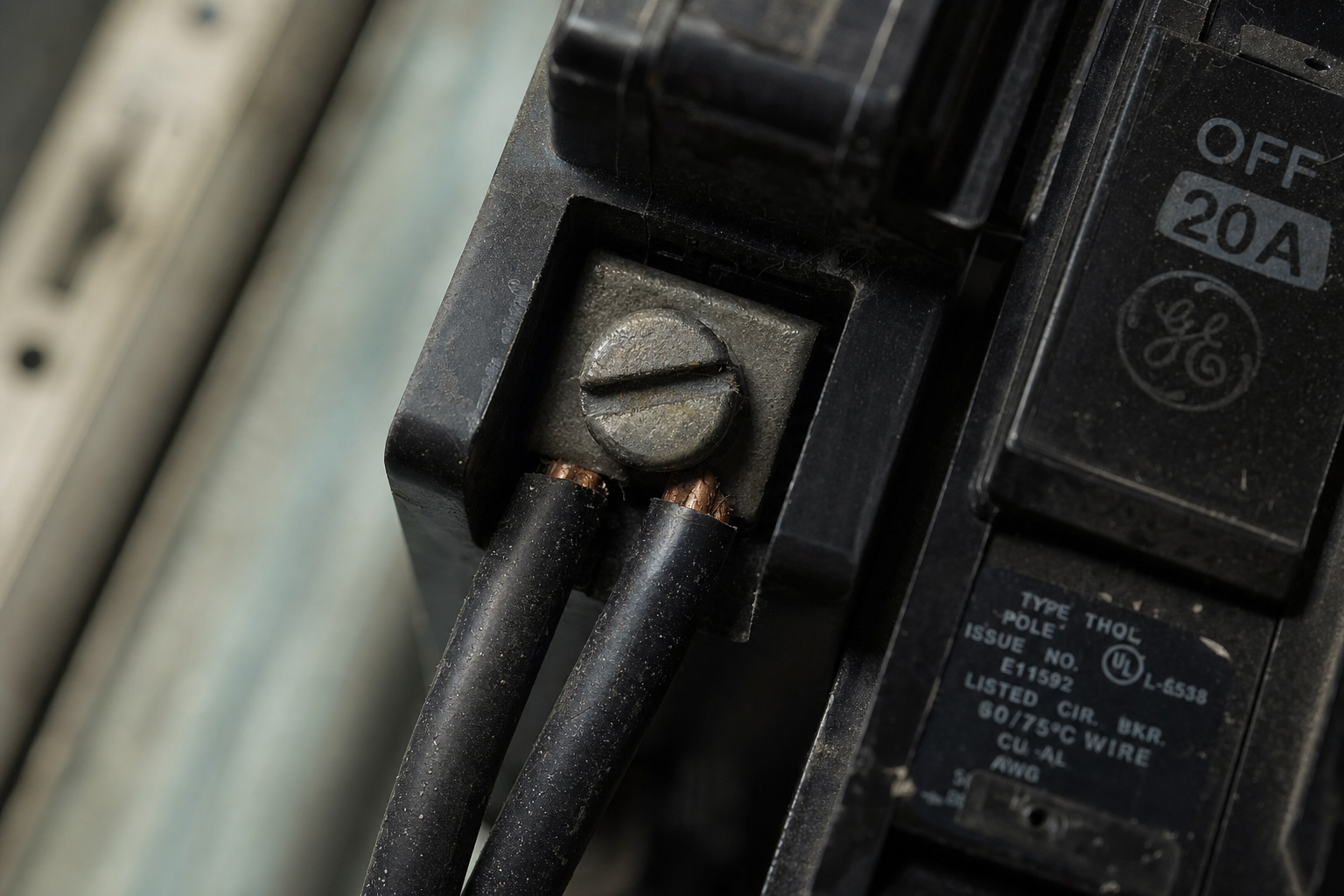
A double tapped breaker is a circuit breaker with two conductors connected under one breaker terminal. In plain language, two wires are landed where the breaker may only be designed to hold one.
The concern is not simply that two circuits exist. The concern is whether the breaker terminal is listed and shaped to secure both conductors properly. If a terminal is designed for one conductor, adding a second wire can prevent the clamp or screw from holding both wires with consistent pressure. One conductor may be tight while the other is loose, or the two wires may sit unevenly under the terminal.
That matters because loose electrical connections create resistance. Resistance can create heat. Heat inside an electrical panel is a safety concern, and it is exactly the kind of issue an inspector is expected to flag when visible.
Why Inspectors Call It Out
Most home inspectors do not dismantle electrical equipment or perform invasive testing, but they do remove the panel cover when standards of practice and site conditions allow it. Once the cover is removed, a double tapped breaker can be visible at the breaker terminal.
Inspectors usually report the condition because electrical terminals must be used according to their listing and manufacturer instructions. Some terminals are identified for more than one conductor, but many are not. When the panel shows two conductors under a terminal that is not identified for that use, the safest transaction language is to request evaluation and correction by a licensed electrician.
For agents, the key point is this: the report is not saying the home is unsafe to occupy at that exact moment. It is saying an electrical termination appears improper or potentially unsafe and should be corrected by a qualified professional.
When a Double Tap May Be Allowed
Not every two-wire breaker connection is automatically a defect. Some breakers are specifically listed for two conductors, typically with a terminal design that holds each conductor separately and labeling that identifies the allowed wire type and size.
This distinction is important in negotiation. If the inspector includes a photo, look for whether the report says "appears double tapped" or "breaker not listed for two conductors." A well-written report may also note that some breakers allow two conductors only when the breaker is marked for it.
Agents should avoid writing repair requests that assume every visible two-wire connection is wrong. Better language is usually conditional and professional: have a licensed electrician evaluate the double tapped breaker condition and correct any improper terminations in accordance with the manufacturer's listing and applicable electrical standards.
That wording protects the buyer without overstating the defect. It also gives the listing side a clear way to respond: verify that the breaker is listed for the installation, or correct it if it is not.
Common Causes
Double tapped breakers often show up after years of small electrical changes. A homeowner adds a basement receptacle, garage outlet, dishwasher circuit, lighting circuit, or exterior equipment, and there may not be an obvious open breaker space. Instead of installing the correct breaker, adding a proper subpanel, or using an approved pigtail where appropriate, someone lands the new conductor under an existing breaker terminal.
They can also appear in crowded panels where the home has outgrown the original electrical layout. Older homes may have added kitchens, finished basements, HVAC equipment, laundry upgrades, sump pumps, exterior lighting, or home office circuits. The double tap is often a symptom of a larger pattern: the electrical system has been modified over time without clean documentation.
That does not mean every double tap requires a panel replacement. Many are corrected with a straightforward repair. But it does mean the electrician should evaluate the specific panel, breaker type, conductor sizes, available spaces, and circuit load before deciding on the fix.
The Usual Repair Options
The right repair depends on the panel and the circuits involved. Common corrections include moving one conductor to an open breaker of the correct type and size, installing a tandem breaker if the panel allows that specific breaker style in that specific location, or using a proper pigtail splice so one conductor lands under the breaker terminal.
If the panel is full or the electrical needs of the home have grown beyond the current layout, the electrician may recommend a subpanel or panel upgrade. That is a broader scope than simply correcting a double tapped breaker, so agents should be careful not to jump there in the initial repair request unless the inspector or electrician has already supported it.
The repair should be performed by a licensed electrician because the fix involves live-service equipment, panel compatibility, conductor sizing, and overcurrent protection. This is not a handyman item, and it is not something a seller should casually "tighten up" before closing.
How to Explain It to Buyers
Buyers often react strongly to electrical findings because the words "panel" and "breaker" sound expensive. A calm explanation helps.
You can tell the buyer that a double tapped breaker means two wires appear to be connected where only one may be allowed. The concern is connection quality and overheating risk, not necessarily that the entire panel is failing. The appropriate next step is to have a licensed electrician evaluate and correct the condition.
It is also worth explaining that repair scope varies. If the panel has space and the wiring is otherwise appropriate, correction may be limited. If the panel is crowded, outdated, damaged, or poorly modified, the electrician may identify additional concerns. The repair request should focus first on the documented defect, then leave room for the electrician's professional findings.
How to Write the Repair Request
The strongest repair request is specific, neutral, and tied to the inspection report. It should not diagnose beyond the inspector's findings, and it should not demand a particular repair method unless that method is already recommended by a qualified professional.
Useful wording might look like this:
"Have a licensed electrician evaluate the double tapped breaker condition noted in the inspection report and correct any improper or non-listed conductor terminations at the electrical panel. Provide documentation of repairs before closing."
That language does several things well. It identifies the condition, names the correct trade, respects the possibility that the breaker may be listed for two conductors, and asks for documentation. It also avoids emotional terms such as "fire hazard" unless the inspector used that wording.
What Listing Agents May Push Back On
Listing agents may say the double tapped breaker has been that way for years, that the breaker still works, or that the issue is minor. Those responses are common, but they do not answer the core question: is the terminal listed and installed for the conductors present?
The buyer side does not need to argue theory. The practical response is to ask for evaluation by a licensed electrician. If the electrician verifies the breaker is listed for two conductors and the installation is proper, that may resolve the issue. If the electrician finds an improper termination, correction should be documented.
Another common pushback is a seller offering a credit instead of repair. That may be acceptable depending on the market, contract, lender, insurance concerns, and buyer comfort level. But agents should remind buyers that electrical repairs should be priced and scoped by an electrician, not guessed from a photo.
Related Panel Findings to Watch
Double tapped breakers sometimes appear alongside other electrical panel comments. Watch for double lugged neutrals, mismatched breakers, missing panel directory labels, open knockouts, damaged conductors, aluminum branch wiring, corrosion, overheating evidence, or obsolete panel equipment.
These related findings can change the tone of the request. A single double tap in an otherwise clean panel may be a focused repair item. Several panel defects together may support a broader request for licensed electrician evaluation of the panel and all visible deficiencies.
For agents, the inspection report photo matters. The clearer the photo and narrative, the easier it is to write a request that is both firm and fair.
A Practical Closing Workflow
When the inspection PDF includes a double tapped breaker, InspectionResponse can extract the relevant finding, turn it into prioritized repair request language, and help the agent review a clean version before sending it to the listing side. The goal is not to make the issue sound bigger than it is, but to ask for the right professional correction in the right tone.
Additional Resources
Briefing Document & Key Takeaways
Title: Double Tapped Breakers: Agent Briefing
Audience: Buyer agents, listing agents, transaction coordinators, and brokers reviewing home inspection reports with electrical panel findings.
Purpose: Help agents understand what a double tapped breaker means, why inspectors flag it, and how to write a repair request that is accurate, professional, and appropriately scoped.
Key takeaways:
- A double tapped breaker means two conductors are connected under one breaker terminal.
- The main issue is whether the breaker terminal is listed and designed for more than one conductor.
- Improper double taps can create loose connections, overheating risk, and code or manufacturer listing concerns.
- Some breakers are listed for two conductors, so repair language should allow for professional verification.
- The safest transaction request is evaluation and correction by a licensed electrician, with repair documentation before closing.
- A double tap may be a simple repair, but related panel defects can justify broader electrical evaluation.
Recommended use: Review this briefing before discussing an electrical panel finding with a buyer or before drafting the inspection response. Use it to keep the request focused on the documented condition and the qualified professional needed to resolve it.
Study Guide
Thematic Section 1: Identifying the Finding
- What is a double tapped breaker?
- Why does the number of conductors under a breaker terminal matter?
- What should an agent look for in the inspection photo or narrative?
Thematic Section 2: Safety and Standards
- Why can an improper double tap create a safety concern?
- What does it mean for a breaker terminal to be listed for two conductors?
- Why should agents avoid calling every two-wire breaker connection a defect?
Thematic Section 3: Repair Scope
- What are common ways an electrician may correct an improper double tap?
- When might a double tapped breaker point to a broader panel concern?
- Why is this typically a licensed electrician item rather than a handyman repair?
Thematic Section 4: Transaction Strategy
- What makes a repair request for a double tapped breaker strong?
- How should a buyer agent respond if the listing side says the breaker has worked for years?
- Why is documentation important after electrical panel repairs?
Application Exercise
Review an inspection report that shows two conductors under one breaker terminal. Draft a repair request that asks for proper evaluation and correction without assuming the breaker is definitely not listed for two conductors.
Answer Key
Thematic Section 1: Identifying the Finding
- A double tapped breaker is a breaker with two conductors connected under one terminal.
- It matters because many breaker terminals are designed to clamp only one conductor securely.
- The agent should look for clear photos, the inspector's wording, any note about listing, and whether related panel defects are also reported.
Thematic Section 2: Safety and Standards
- An improper double tap can create an uneven or loose connection, which can increase resistance and heat.
- It means the breaker manufacturer has identified that terminal as suitable for more than one conductor, usually within specific wire type and size limits.
- Some breakers are designed for two conductors, so assuming all two-wire connections are defective can overstate the issue.
Thematic Section 3: Repair Scope
- The electrician may move a conductor to a proper breaker, install an approved tandem breaker where allowed, or make a proper pigtail splice.
- It may suggest broader concern when the panel is crowded, has multiple defects, uses mismatched equipment, or shows signs of overheating or corrosion.
- The work involves panel equipment, conductor sizing, breaker compatibility, and overcurrent protection.
Thematic Section 4: Transaction Strategy
- A strong request is specific, neutral, tied to the report, and asks for licensed electrician evaluation and correction.
- The agent should return to the core question: whether the terminal is listed and properly installed for the conductors present.
- Documentation gives the buyer evidence that the condition was evaluated and corrected by a qualified professional before closing.
Application Exercise
Sample answer: "Have a licensed electrician evaluate the double tapped breaker condition noted in the inspection report and correct any improper or non-listed conductor terminations at the electrical panel. Provide documentation of completed repairs before closing."
Glossary of Key Terms
- Aluminum conductor: Electrical wiring made from aluminum, which has specific termination and compatibility requirements.
- Breaker terminal: The connection point on a circuit breaker where a branch circuit conductor is secured.
- Branch circuit: Wiring that runs from the electrical panel to outlets, lights, appliances, or equipment.
- Conductor: A wire that carries electrical current.
- Double lugged neutral: A neutral bar condition where more than one neutral conductor is placed under a terminal intended for one.
- Double tapped breaker: A breaker condition where two conductors are connected under one breaker terminal.
- Electrical panel: The enclosure containing breakers or fuses that distribute power to branch circuits.
- Ground bar: The terminal bar used for equipment grounding conductors in a panel.
- Listed equipment: Electrical equipment tested and identified by an approved listing organization for specific uses.
- Manufacturer instructions: Installation requirements provided by the equipment maker and tied to the product listing.
- Neutral bar: The terminal bar where grounded conductors, commonly called neutrals, terminate.
- Overcurrent protection: Breaker or fuse protection intended to interrupt excessive current before wiring overheats.
- Pigtail splice: A short conductor connected to two or more conductors with an approved connector, then landed at a terminal.
- Service equipment: Electrical equipment near the service entrance that controls and protects power distribution to the building.
- Subpanel: A secondary electrical panel fed from the main service panel.
- Tandem breaker: A breaker that provides two circuits in one panel space when the panel is listed to accept it.
- Terminal listing: The approved use of a terminal, including how many conductors and which wire sizes or materials it can accept.
- Thermal expansion: Expansion and contraction caused by heating and cooling, which can affect loose electrical connections over time.
Frequently Asked Questions
What is a double tapped breaker?
A double tapped breaker has two conductors connected under one breaker terminal. It becomes a concern when that terminal is designed or listed for only one conductor.
Are double tapped breakers always defective?
No. Some breakers are listed for two conductors, but many are not. The safest approach is to ask a licensed electrician to verify whether the connection is allowed and correct it if needed.
Why do inspectors flag double tapped breakers?
Inspectors flag them because an improper double tap can create a loose or uneven connection. Loose connections can overheat, damage insulation, and create a safety concern inside the panel.
Can a seller just tighten the breaker screw?
That is not an adequate repair unless a qualified electrician determines the terminal is listed for the conductors present. If the connection is improper, tightening the screw does not make the terminal approved for two wires.
What is the usual repair for a double tapped breaker?
Common repairs include moving one conductor to a proper breaker, using an approved pigtail splice, or installing an approved tandem breaker where the panel allows it. The correct repair depends on the panel, breaker, conductors, and available space.
Should a buyer request a full panel replacement?
Not automatically. A single double tapped breaker may be corrected without replacing the panel, but multiple defects, obsolete equipment, damage, or lack of capacity may justify broader electrician evaluation.
How should this be worded in a repair request?
Use neutral, professional language. Ask for a licensed electrician to evaluate the double tapped breaker condition and correct any improper or non-listed conductor terminations, with documentation before closing.
What if the listing agent says it has been working for years?
The length of time does not prove the terminal is listed or properly installed. The better question is whether the breaker is approved for the conductors present and whether the connection is secure.
Can a double tapped breaker affect insurance or lending?
It can, depending on the property, insurer, lender, and severity of the electrical findings. Agents should avoid guessing and should rely on the inspector, electrician, and transaction-specific requirements.
Is a double tapped breaker the same as a double lugged neutral?
No, but both involve multiple conductors under a terminal that may be intended for one. Double lugged neutrals are a related panel defect and should also be evaluated by a qualified electrical professional.