Top 50 Plumbing Terms in Inspection Reports
Podcast Overview
Decode Your Next Inspection: The Ultimate Glossary of the 50 Most Common Plumbing Terms
Introduction
You've just received the home inspection report. You flip past the structural and electrical sections and land on plumbing a page filled with terms like "insufficient slope," "TPR valve," and "cross-connection." For many real estate agents and their clients, this section can feel like reading a foreign language. What's a minor issue versus a deal-breaker? How do you explain to your client what a "P-trap" is, and why the inspector flagged it?
Confusion over technical jargon can stall negotiations, create unnecessary anxiety for buyers, and cost you valuable time translating the report.
This guide is your new go-to resource. We've compiled and explained the top 50 most common plumbing terms you'll encounter in home inspection reports. Bookmark this page, and you'll be equipped to navigate any plumbing section with confidence, advise your clients effectively, and draft more precise repair requests.
Pipes, Vents, and Materials
This category covers the network of pipes that bring water in and take waste out. The material and condition of these pipes are critical.
- PVC (Polyvinyl Chloride): A white plastic pipe commonly used for drain, waste, and vent (DWV) lines.
- ABS (Acrylonitrile Butadiene Styrene): A black plastic pipe, also used for DWV lines. It's often compared to PVC but is known for being more durable in cold temperatures.
- Copper: A durable, corrosion-resistant metal pipe used for water supply lines for decades. It's a high-quality material.
- PEX (Cross-linked Polyethylene): A flexible plastic tubing used for hot and cold water supply lines. It’s popular in modern construction for its flexibility and resistance to bursting in freezing temperatures.
- Galvanized Steel: Steel pipes coated with zinc to prevent rust. Common in homes built before the 1960s, these are prone to internal corrosion and blockages over time, often leading to low water pressure.
- Polybutylene (PB): A gray plastic tubing used for water supply from the late 1970s to the mid-1990s. It is notoriously prone to premature failure and leaking, and its presence is a significant red flag.
- Vent Stack: The vertical pipe that runs through the roof to regulate air pressure in the drain system, preventing sewer gases from entering the home and allowing waste to flow freely.
- Cleanout: An accessible opening in the drainage system that allows plumbers to clear blockages in the main sewer line.
- Main Drain/Sewer Line: The primary pipe that carries all wastewater from the house to the municipal sewer or septic system.
Drains and Traps
These components are essential for safely removing wastewater.
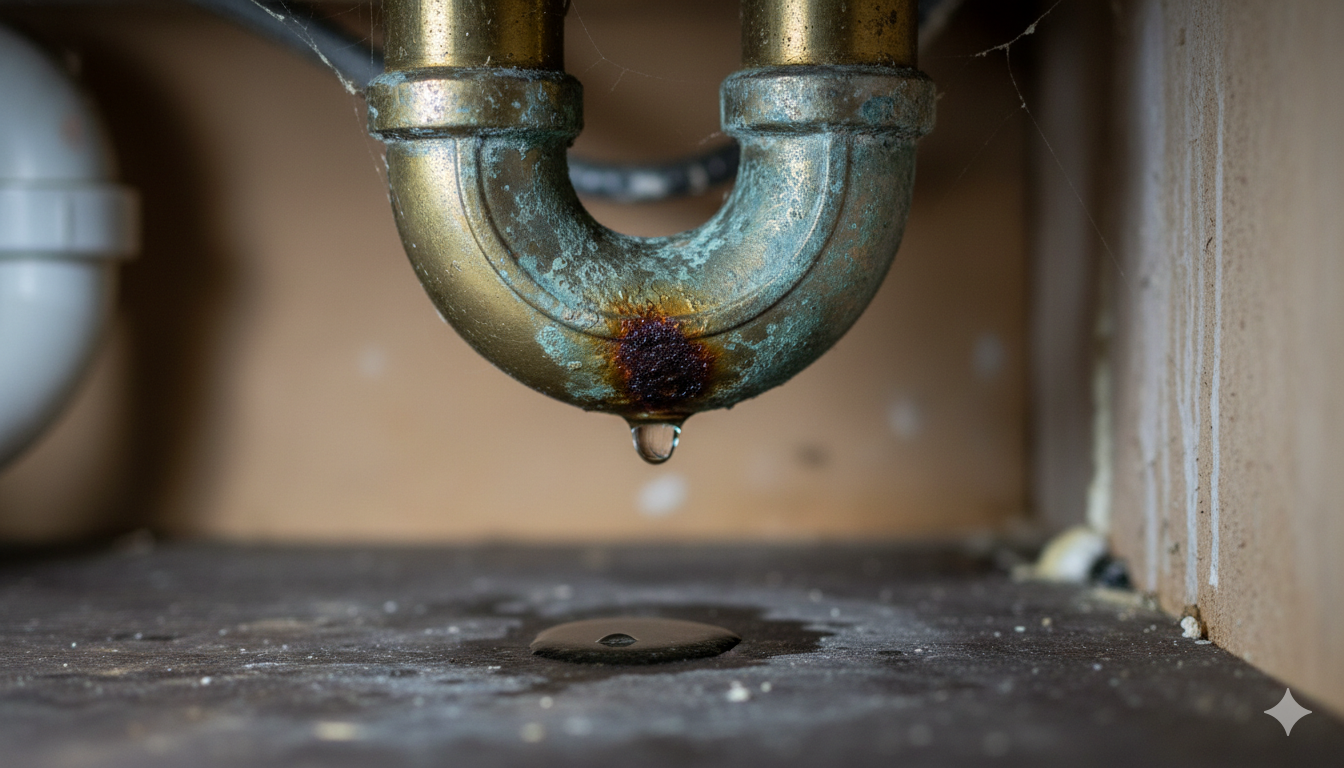
- P-Trap: A P-shaped pipe located under sinks and drains. It holds a small amount of water to block sewer gases from rising into the home.
- S-Trap: An older, S-shaped version of a drain trap that is no longer permitted by most plumbing codes because it can be easily siphoned dry, allowing sewer gas to enter.
- Insufficient Slope/Grade: A note indicating a drain pipe doesn't have enough downward angle for gravity to effectively carry waste away, leading to clogs.
- Standpipe: The vertical pipe and trap that a washing machine's drain hose empties into.
Water Supply and Pressure
These terms relate to how water enters the home and is distributed.
- Main Water Shut-Off Valve: The primary valve that controls the water supply to the entire house. Knowing its location is crucial.
- Fixture Shut-Off Valve (Angle Stop): Small valves under sinks and toilets that allow you to turn off the water to a single fixture without shutting it off to the whole house.
- PRV (Pressure Reducing Valve): A bell-shaped valve installed on the main water line to reduce high water pressure from the municipal supply to a safe level for the home's plumbing.
- Water Pressure: The force of the water moving through the pipes, measured in PSI (pounds per square inch). Ideal residential pressure is typically between 40-80 PSI.
- Water Hammer: A banging or knocking sound in pipes that occurs when a valve is closed suddenly, causing a shockwave. This can damage pipes and joints over time.
- Expansion Tank: A small tank connected to the water heater or boiler system. It’s designed to absorb excess pressure created when water is heated.
- Hose Bibb (or Spigot): An outdoor water faucet. Inspectors check for leaks and proper frost-proof installation in colder climates.
Fixtures and Appliances
Common household items that are always checked during an inspection.
- Water Heater: The appliance that heats domestic water. Inspectors check its age, condition, venting, and safety features.
- TPR Valve (Temperature & Pressure Relief Valve): A critical safety device on a water heater that automatically opens to release pressure if the temperature or pressure gets too high.
- Anode Rod: A metal rod inside the water heater tank that helps prevent corrosion by attracting corrosive elements in the water. It's a sacrificial part that needs periodic replacement.
- Sump Pump: A pump located in a basement or crawlspace sump pit that automatically removes groundwater to prevent flooding.
- Ejector Pump (or Sewage Ejector): A pump used in basements to move wastewater from below-grade bathrooms up to the main sewer line.
- Toilet Flange: The fitting that connects the toilet to the drainpipe and secures it to the floor. A broken flange can cause leaks and instability.
- Wax Ring: A seal between the base of the toilet and the toilet flange. A failing wax ring is a common cause of leaks at the toilet base.
- Garbage Disposal: A unit under the kitchen sink that shreds food waste. Inspectors check for leaks, proper installation, and function.
- Air Gap: A fitting on the countertop near the kitchen sink that prevents dishwasher wastewater from siphoning back into the fresh water supply.
Common Issues and Conditions
These are the findings you’ll most often see called out in the plumbing section.
- Active Leak: A current, visible drip or flow of water. This requires immediate attention.
- Evidence of Past Leak: Stains, water marks, or material damage indicating a previous leak that may or may not have been properly repaired.
- Corrosion: The deterioration of metal pipes (like galvanized steel or copper) due to chemical reactions. It can lead to leaks and restricted water flow.
- Cross-Connection: An improper plumbing connection where the potable (drinking) water supply could be contaminated by a non-potable source. This is a serious health and safety issue.
- Backflow: The reverse flow of dirty water into the clean water supply system. A backflow preventer is a device used to stop this.
- Sediment: Mineral deposits that can build up in pipes and water heaters, reducing efficiency and flow.
- Slow Drain: Water drains sluggishly, indicating a partial clog or venting issue.
- Gurgling Drain: Sounds from a drain often point to a blockage or a problem with the vent system.
- Improper Venting: When the plumbing vent system is incorrectly installed, missing, or blocked, causing poor drainage and allowing sewer gas into the home.
- Leaking Fixture: A dripping faucet, showerhead, or valve.
- Loose Toilet: When a toilet is not securely fastened to the floor, often due to a failed wax ring or broken flange.
- Galvanic Corrosion: Occurs when two different types of metal (e.g., copper and galvanized steel) are connected directly, causing one to corrode rapidly. A dielectric union is used to prevent this.
- Spalling: Flaking or chipping of concrete or masonry, often seen around pipes where moisture has been a long-term issue.
- Efflorescence: A white, powdery mineral deposit left on surfaces like concrete or brick after water evaporates. It's a sign of moisture intrusion.
- DIY Repairs: Non-professional or improper repairs that may not be up to code and could fail prematurely.
- CPVC (Chlorinated Polyvinyl Chloride): A type of plastic pipe similar to PVC but rated for hot water. It can become brittle with age.
- Bonding: Connecting all metal parts of the plumbing system (like gas lines) with a wire to create an electrical path, a key safety feature to prevent shocks.
- Trap Primer: A device that releases a small amount of water into a seldom-used drain (like a floor drain) to keep the P-trap from drying out.
- Double Trapping: The installation of two traps in a single drain line, which is against code and causes poor drainage.
- Flow Rate: The volume of water moving through a fixture over a given time. Low flow rate can indicate pipe blockage or pressure issues.
- Functional Flow: A subjective term an inspector might use to describe adequate (but not necessarily optimal) water flow from fixtures.
How InspectionResponse.com Turns Jargon into Action
Feeling like you just crammed for a plumbing exam? While knowing these terms is empowering, the real challenge is translating them into a clear, professional, and effective repair request—especially when you're on a tight deadline.
This is where InspectionResponse.com transforms your workflow.
Instead of manually typing out each plumbing issue, you simply upload the inspection report. Our AI-powered platform instantly identifies, categorizes, and explains findings from the plumbing section.
- Smart Analysis: Our tool recognizes terms like "polybutylene pipe observed" or "evidence of leak at toilet flange" and flags them for your attention. It provides simplified explanations you can share directly with your clients, demystifying the report for them.
- Cost & Time Estimates: Is a leaking TPR valve a $50 fix or a $500 one? InspectionResponse.com provides industry-standard cost and time estimates for repairs, giving you a powerful starting point for negotiations.
- AI-Powered Repair Requests: Move beyond simple copy-pasting. Select the plumbing issues you want to address, and our AI will help you draft a clear, concise, and professional repair request addendum. It ensures you're using the right terminology to ask for a "licensed plumber to correct the S-trap" or "replace the corroded galvanized pipes," saving you hours and elevating your professionalism.
Stop letting confusing plumbing terms slow down your deals. Let InspectionResponse.com handle the technical translation so you can focus on what you do best: closing the deal for your clients.
Conclusion
A home's plumbing system is its circulatory system—largely hidden but absolutely vital. By understanding this vocabulary, you are better equipped to protect your client's interests, negotiate effectively, and guide them with confidence. Use this glossary as your field guide, and remember that powerful tools are available to make the inspection response process smoother and more successful than ever before.
Additional Resources
Briefing Document & Key Takeaways
Briefing on Home Inspection Plumbing Terminology and Process Automation
Executive Summary
This briefing synthesizes an analysis of common plumbing terminology found in home inspection reports, highlighting the challenges this jargon poses for real estate professionals and their clients. Confusion over technical terms frequently stalls negotiations, creates unnecessary buyer anxiety, and consumes valuable time. The core solution presented is twofold: first, empowering professionals with a foundational understanding of critical plumbing concepts, and second, leveraging technology to automate the interpretation and response process.
Key takeaways include the identification of high-risk materials such as Polybutylene (PB) and aging Galvanized Steel pipes, which are significant red flags in an inspection. The document also distinguishes between code-compliant components like P-traps and prohibited ones like S-traps. Critical safety systems, including Temperature & Pressure Relief (TPR) valves on water heaters and measures to prevent cross-connections and backflow, are emphasized as non-negotiable inspection points. Finally, the analysis outlines how AI-powered tools like InspectionResponse.com can translate complex inspection findings into actionable, professional repair requests, complete with cost and time estimates, thereby streamlining the transaction process and enhancing professional effectiveness.
The Challenge of Technical Jargon in Real Estate Transactions
The plumbing section of a home inspection report is often a significant hurdle in real estate transactions. Filled with technical terms such as "insufficient slope," "cross-connection," or "TPR valve," these reports can feel like a foreign language to agents and their clients. This lack of clarity presents several core problems:
• Stalled Negotiations: An inability to distinguish a minor issue from a potential deal-breaker can lead to impasses between buyer and seller.
• Client Anxiety: Unfamiliar terms can cause undue stress and uncertainty for homebuyers, who may struggle to grasp the severity of reported issues.
• Inefficiency: Agents often spend considerable time translating technical findings into understandable language for their clients and drafting precise repair requests.
The goal of understanding this vocabulary is to navigate the plumbing section with confidence, advise clients effectively, and draft more accurate repair requests.
Core Plumbing Concepts for Home Inspections
A comprehensive understanding of the components and conditions of a home's plumbing system—described as its "circulatory system"—is vital. The following sections break down the most common terms and concepts found in inspection reports.
Pipes, Vents, and Materials
The network of pipes that supply fresh water and remove waste is foundational. The material composition of these pipes is a primary focus of inspections.
• Modern and Standard Materials:
◦ PVC (Polyvinyl Chloride): A white plastic pipe primarily used for drain, waste, and vent (DWV) lines.
◦ ABS (Acrylonitrile Butadiene Styrene): A black plastic pipe also used for DWV lines, noted for its durability in cold temperatures.
◦ Copper: A high-quality, corrosion-resistant metal that has been a long-standing choice for water supply lines.
◦ PEX (Cross-linked Polyethylene): A flexible plastic tubing for hot and cold water supply, valued for its resistance to bursting in freezing conditions.
• Problematic and Outdated Materials:
◦ Galvanized Steel: Zinc-coated steel pipes common in homes built before the 1960s. They are highly susceptible to internal corrosion and blockages, which often leads to low water pressure.
◦ Polybutylene (PB): A gray plastic tubing used from the late 1970s to the mid-1990s. It is described as "notoriously prone to premature failure and leaking," and its presence is considered a "significant red flag."
◦ CPVC (Chlorinated Polyvinyl Chloride): A plastic pipe rated for hot water, which can become brittle with age.
• System Infrastructure:
◦ Vent Stack: The vertical pipe extending through the roof that regulates air pressure in the drain system, allowing waste to flow properly and preventing sewer gases from entering the home.
◦ Cleanout: An access point in the drainage system that allows a plumber to clear blockages.
◦ Main Drain/Sewer Line: The principal pipe responsible for carrying all wastewater from the house to the municipal sewer or septic system.
Drains and Traps
These components are critical for the safe and effective removal of wastewater.
• P-Trap: A P-shaped pipe under sinks and drains that holds a small amount of water to create a seal, blocking sewer gases from entering the living space.
• S-Trap: An older, S-shaped trap no longer permitted by most plumbing codes because its design allows water to be siphoned out, breaking the seal and permitting sewer gas entry.
• Insufficient Slope/Grade: A common defect where a drain pipe lacks the necessary downward angle for gravity to effectively move waste, resulting in frequent clogs.
• Standpipe: The vertical pipe and trap assembly that serves the washing machine drain hose.
• Double Trapping: An incorrect installation featuring two traps on a single drain line. This practice is against code and causes poor drainage.
Water Supply and Pressure
This category covers how water enters and is distributed throughout the home.
• Control Valves:
◦ Main Water Shut-Off Valve: The primary valve that stops the water supply to the entire house. Locating this is crucial.
◦ Fixture Shut-Off Valve (Angle Stop): Small valves located under sinks and toilets to shut off water to a single fixture.
• Pressure Regulation:
◦ Water Pressure: Measured in PSI (pounds per square inch), the ideal residential pressure is between 40-80 PSI.
◦ PRV (Pressure Reducing Valve): A bell-shaped device on the main water line that reduces high pressure from the municipal supply to a safe level for the home's plumbing.
◦ Expansion Tank: A small tank connected to the water heater system to absorb the excess pressure created when water is heated.
◦ Water Hammer: A loud banging sound in pipes caused by the shockwave from a suddenly closed valve, which can damage pipes over time.
Fixtures and Appliances
Inspectors routinely check the function and safety of these common household items.
• Water Heater: Inspected for age, condition, proper venting, and safety features. A key component is the Anode Rod, a sacrificial metal rod that prevents tank corrosion.
• TPR Valve (Temperature & Pressure Relief Valve): A "critical safety device" on a water heater that automatically opens to release dangerously high temperature or pressure.
• Sump Pump: A pump in a basement or crawlspace pit that automatically expels groundwater to prevent flooding.
• Ejector Pump: A pump used to move wastewater from below-grade fixtures (like a basement bathroom) up to the main sewer line.
• Toilet Components: The Toilet Flange connects the toilet to the drainpipe, while the Wax Ring creates a seal between the toilet base and the flange. Failures in either can cause leaks and instability.
• Kitchen Sink Fixtures:
◦ Garbage Disposal: Inspected for leaks, proper installation, and function.
◦ Air Gap: A fitting on the countertop that prevents contaminated dishwasher water from siphoning back into the potable water supply.
Identifying and Interpreting Common Defects
Inspection reports frequently use specific terms to describe problems.
• Leaks and Moisture Intrusion:
◦ Active Leak: A currently visible drip or flow of water requiring immediate attention.
◦ Evidence of Past Leak: Water stains or material damage indicating a prior issue.
◦ Efflorescence: A white, powdery mineral deposit on surfaces like concrete, signaling moisture intrusion.
◦ Spalling: Chipping or flaking of masonry, also often a sign of long-term moisture problems.
• Corrosion, Blockages, and Flow Issues:
◦ Corrosion: The general deterioration of metal pipes.
◦ Galvanic Corrosion: A rapid corrosion that occurs when two dissimilar metals (e.g., copper and galvanized steel) are connected directly. A dielectric union is used to prevent this.
◦ Slow or Gurgling Drain: Indicates a partial clog or a problem with the vent system.
◦ Sediment: Mineral deposit buildup in pipes and water heaters that reduces efficiency and flow.
◦ Low Flow Rate: Inadequate volume of water from a fixture, suggesting a blockage or pressure problem.
• Major Health and Safety Hazards:
◦ Cross-Connection: An improper connection where the potable (drinking) water supply could be contaminated by a non-potable source. This is a "serious health and safety issue."
◦ Backflow: The reverse flow of contaminated water into the clean water supply system. A backflow preventer is the required solution.
◦ Improper Venting: A blocked, missing, or incorrectly installed vent system that causes poor drainage and can allow sewer gas into the home.
◦ Bonding: A key safety feature involving the connection of all metal plumbing parts with a wire to create an electrical path and prevent shocks.
• Other Common Red Flags:
◦ Loose Toilet: Indicates a potential failure of the wax ring or toilet flange.
◦ DIY Repairs: Non-professional repairs that may be against code and prone to failure.
Bridging Knowledge to Action: The Role of Automation
While understanding these terms is foundational, technology can "transform the workflow" of responding to an inspection report. The InspectionResponse.com platform is presented as a tool designed specifically for this purpose.
• Smart Analysis: The AI-powered platform automatically identifies, categorizes, and explains plumbing issues from an uploaded inspection report. It flags critical terms like "polybutylene pipe observed" and provides simplified explanations suitable for clients.
• Cost and Time Estimates: The tool provides industry-standard cost and time estimates for repairs, creating a data-driven starting point for negotiations.
• AI-Powered Repair Requests: The platform assists in drafting clear, concise, and professional repair request addendums. This ensures the use of correct terminology, elevating professionalism and saving significant time.
The stated goal of this technology is to handle the "technical translation," allowing agents to focus on client service and closing the transaction.
Conclusion
A home's plumbing system is a vital, though largely hidden, component of its overall health. By mastering the vocabulary of plumbing inspections, real estate professionals can more effectively protect their clients' interests, negotiate repairs, and guide them through the transaction with confidence. This glossary serves as a field guide for that purpose. Furthermore, the availability of advanced tools to automate the inspection response process represents a significant step forward, enabling smoother, more efficient, and more successful outcomes for all parties involved.
Study Guide
Study Guide: Common Plumbing Terms for Home Inspections
Short Answer Quiz
Instructions: Answer the following questions in two to three sentences based on the provided source material.
1. What is the primary difference between a P-trap and an S-trap, and why is the S-trap no longer permitted by most plumbing codes?
2. Describe galvanized steel pipes and explain the primary issue they present in homes built before the 1960s.
3. What is a TPR valve, and what is its function on a water heater?
4. Define "cross-connection" and explain why it is considered a serious health and safety issue in a plumbing system.
5. Why is the presence of Polybutylene (PB) tubing considered a significant red flag during a home inspection?
6. What are the two main purposes of a vent stack in a home's drainage system?
7. What is a "water hammer," and what potential damage can it cause over time?
8. Explain the role of an anode rod within a water heater.
9. What does the term "insufficient slope" mean in the context of a drain pipe, and what is the direct consequence of this issue?
10. Define galvanic corrosion and name the component used to prevent it.
Answer Key
1. A P-trap is a P-shaped pipe under a drain that holds water to block sewer gases. An S-trap is an older, S-shaped version that is no longer permitted by most codes because it can be easily siphoned dry, which would allow sewer gas to enter the home.
2. Galvanized steel pipes are steel pipes that have been coated with zinc to prevent rust. They were common in homes built before the 1960s and are a concern because they are prone to internal corrosion and blockages over time, which often leads to low water pressure.
3. A TPR (Temperature & Pressure Relief) valve is a critical safety device located on a water heater. It automatically opens to release pressure if the temperature or pressure inside the tank becomes dangerously high, preventing a potential explosion.
4. A cross-connection is an improper plumbing connection where the potable (drinking) water supply could become contaminated by a non-potable source. This is a serious health and safety issue because it can lead to the reverse flow of dirty water into the clean water system, an event known as backflow.
5. Polybutylene (PB) is a gray plastic tubing used for water supply from the late 1970s to the mid-1990s. Its presence is a significant red flag because the material is notoriously prone to premature failure and leaking.
6. A vent stack is a vertical pipe that runs through the roof to regulate air pressure within the drain system. This regulation prevents sewer gases from entering the home and allows wastewater to flow freely without creating a vacuum.
7. A water hammer is a banging or knocking sound that occurs in pipes when a valve is closed suddenly, causing a shockwave to travel through the water. Over time, this repeated shockwave can cause damage to pipes and joints.
8. An anode rod is a sacrificial metal rod located inside a water heater tank. It helps prevent corrosion of the tank itself by attracting the corrosive elements present in the water, thereby corroding itself instead of the tank lining.
9. "Insufficient slope" or "grade" indicates that a drain pipe does not have a steep enough downward angle. The direct consequence is that gravity cannot effectively carry waste away, which leads to frequent clogs.
10. Galvanic corrosion occurs when two different types of metal, such as copper and galvanized steel, are connected directly to each other. This direct contact causes one of the metals to corrode at a rapid rate. A dielectric union is the fitting used to prevent this from happening.
Essay Questions
Instructions: Formulate a detailed response to the following prompts, drawing exclusively from the provided source material to support your arguments.
1. Discuss the evolution of residential water supply pipe materials as described in the source text. Compare and contrast at least four different materials (e.g., Galvanized Steel, Copper, Polybutylene, PEX), detailing their common uses, characteristics, and potential issues identified during a home inspection.
2. Explain the critical role of a home's drain, waste, and vent (DWV) system. In your answer, define the key components like the main drain line, vent stack, P-traps, and cleanouts. Additionally, describe the problems that arise from improper venting and insufficient slope.
3. A home inspection report identifies several issues related to a water heater and water pressure: a faulty TPR valve, the need for an expansion tank, and a water pressure reading of 95 PSI. Explain the function of each of these components (TPR valve, expansion tank, PRV) and describe the risks associated with the conditions found.
4. Using the glossary, describe the various ways water can cause damage or leave evidence of its presence in a home. Define and differentiate between an "active leak," "evidence of past leak," "efflorescence," and "spalling," explaining what each finding indicates about the property's condition.
5. Imagine you are advising a home buyer whose inspection report noted the presence of an S-trap, a gurgling drain, a loose toilet, and several "DIY repairs." Explain the significance of each of these findings, the potential underlying problems they indicate, and why they would be flagged by a home inspector.
Glossary of Key Terms
ABS (Acrylonitrile Butadiene Styrene) A black plastic pipe used for drain, waste, and vent (DWV) lines. It is known for being more durable in cold temperatures compared to PVC.
Active Leak A current, visible drip or flow of water that requires immediate attention.
Air Gap A fitting on the countertop near the kitchen sink that prevents dishwasher wastewater from siphoning back into the fresh water supply.
Anode Rod A sacrificial metal rod inside a water heater tank that helps prevent corrosion by attracting corrosive elements in the water. It requires periodic replacement.
Backflow The reverse flow of dirty water into the clean water supply system.
Bonding Connecting all metal parts of the plumbing system with a wire to create an electrical path, which is a key safety feature to prevent electrical shocks.
Cleanout An accessible opening in the drainage system that allows plumbers to clear blockages in the main sewer line.
Copper A durable, corrosion-resistant metal pipe used for water supply lines for decades, considered a high-quality material.
Corrosion The deterioration of metal pipes due to chemical reactions, which can lead to leaks and restricted water flow.
CPVC (Chlorinated Polyvinyl Chloride) A type of plastic pipe similar to PVC but rated for hot water. It can become brittle with age.
Cross-Connection An improper plumbing connection where the potable (drinking) water supply could be contaminated by a non-potable source. This is a serious health and safety issue.
DIY Repairs Non-professional or improper repairs that may not be up to code and could fail prematurely.
Double Trapping The installation of two traps in a single drain line. This is against plumbing code and causes poor drainage.
Efflorescence A white, powdery mineral deposit left on surfaces like concrete or brick after water has evaporated, indicating moisture intrusion.
Ejector Pump (or Sewage Ejector) A pump used in basements to move wastewater from below-grade bathrooms up to the main sewer line.
Evidence of Past Leak Stains, water marks, or material damage indicating a previous leak that may or may not have been properly repaired.
Expansion Tank A small tank connected to a water heater or boiler system designed to absorb the excess pressure created when water is heated.
Fixture Shut-Off Valve (Angle Stop) Small valves located under sinks and toilets that allow the water supply to a single fixture to be turned off.
Flow Rate The volume of water moving through a fixture over a given time.
Functional Flow A subjective term used by inspectors to describe adequate, but not necessarily optimal, water flow from fixtures.
Galvanic Corrosion Corrosion that occurs when two different types of metal are connected directly, causing one to corrode rapidly. A dielectric union is used to prevent this.
Galvanized Steel Steel pipes coated with zinc to prevent rust, common in homes built before the 1960s. They are prone to internal corrosion and blockages.
Garbage Disposal A unit under a kitchen sink that shreds food waste.
Gurgling Drain Sounds from a drain that often point to a blockage or a problem with the vent system.
Hose Bibb (or Spigot) An outdoor water faucet.
Improper Venting A condition where the plumbing vent system is incorrectly installed, missing, or blocked, causing poor drainage and allowing sewer gas into the home.
Insufficient Slope/Grade A term indicating a drain pipe lacks enough downward angle for gravity to effectively carry waste away, leading to clogs.
Leaking Fixture A dripping faucet, showerhead, or valve.
Loose Toilet A toilet that is not securely fastened to the floor, often due to a failed wax ring or a broken flange.
Main Drain/Sewer Line The primary pipe that carries all wastewater from the house to the municipal sewer or septic system.
Main Water Shut-Off Valve The primary valve that controls the water supply to the entire house.
P-Trap A P-shaped pipe located under sinks and drains that holds a small amount of water to block sewer gases from rising into the home.
PEX (Cross-linked Polyethylene) Flexible plastic tubing used for hot and cold water supply lines, popular in modern construction.
Polybutylene (PB) A gray plastic tubing used for water supply from the late 1970s to the mid-1990s. It is notoriously prone to premature failure and leaking.
PRV (Pressure Reducing Valve) A bell-shaped valve installed on the main water line to reduce high water pressure from the municipal supply to a safe level for the home's plumbing.
PVC (Polyvinyl Chloride) A white plastic pipe commonly used for drain, waste, and vent (DWV) lines.
S-Trap An older, S-shaped drain trap that is no longer permitted by most plumbing codes because it can be easily siphoned dry.
Sediment Mineral deposits that can build up in pipes and water heaters, reducing efficiency and flow.
Slow Drain Water that drains sluggishly, indicating a partial clog or a venting issue.
Spalling The flaking or chipping of concrete or masonry, often seen around pipes where moisture has been a long-term issue.
Standpipe The vertical pipe and trap that a washing machine's drain hose empties into.
Sump Pump A pump located in a basement or crawlspace sump pit that automatically removes groundwater to prevent flooding.
Toilet Flange The fitting that connects the toilet to the drainpipe and secures it to the floor.
TPR Valve (Temperature & Pressure Relief Valve) A critical safety device on a water heater that automatically opens to release pressure if the temperature or pressure gets too high.
Trap Primer A device that releases a small amount of water into a seldom-used drain to keep its P-trap from drying out.
Vent Stack The vertical pipe that runs through the roof to regulate air pressure in the drain system, preventing sewer gases from entering the home and allowing waste to flow freely.
Water Hammer A banging or knocking sound in pipes that occurs when a valve is closed suddenly, causing a shockwave that can damage pipes and joints over time.
Water Heater The appliance that heats domestic water.
Water Pressure The force of water moving through pipes, measured in PSI (pounds per square inch). Ideal residential pressure is typically between 40-80 PSI.
Wax Ring A seal located between the base of the toilet and the toilet flange. A failing wax ring is a common cause of leaks.
Frequently Asked Questions
1. Why is it so crucial for a real estate agent to understand plumbing terminology?
In the high-stakes environment of a real estate transaction, a misunderstanding of technical terms can have significant financial and logistical consequences. From an inspector's viewpoint, the plumbing system is a home's circulatory system—largely hidden but absolutely vital. When an inspection report flags issues, your ability to interpret the findings correctly can be the difference between a smooth negotiation and a collapsed deal.
Real estate agents frequently face several core challenges when confronted with technical plumbing jargon:
• Stalled Negotiations: Confusion over the severity or meaning of a term like "cross-connection" or "S-trap" can quickly delay or derail negotiations as parties struggle to understand the implications.
• Client Anxiety: Unfamiliar technical language can create unnecessary stress and anxiety for buyers, who may imagine worst-case scenarios for issues that are relatively minor.
• Wasted Time: The inefficiency of having to stop and translate every term for your clients, or seek outside clarification under a tight deadline, costs you valuable time and momentum.
A firm grasp of these essential terms transforms an agent from a simple facilitator into a trusted, effective advisor. By understanding what inspectors look for, you can better identify the major issues that truly matter.
2. What are the most critical "red flag" plumbing materials I should look out for in a report?
When I review a report, my eyes immediately scan for two specific pipe materials. Unlike a simple leaking faucet, the presence of these materials can signify a systemic issue with a higher risk of failure, potentially leading to major, unexpected expenses for your client down the road.
Key Problematic Materials
Polybutylene (PB) This is a gray plastic tubing used for water supply lines from the late 1970s to the mid-1990s. Its presence is a significant red flag because the material is notoriously prone to premature failure and leaking, which can lead to sudden and catastrophic water damage.
Galvanized Steel These are steel pipes coated with zinc, commonly found in homes built before the 1960s. Over decades, the protective zinc coating wears away, and the pipes become prone to internal corrosion. This rust buildup not only restricts water flow, causing low pressure, but can also lead to blockages and eventual leaks.
While problematic materials are a major concern, inspectors also flag specific installations that violate modern safety codes, such as improper drain traps.
3. My report mentions a "P-Trap" and an "S-Trap." What's the difference, and why does it matter?
Simply put, drain traps are essential safety devices. Their sole purpose is to hold water as a seal to block harmful sewer gases from entering the home. Understanding the difference between a correct and an incorrect installation is essential for protecting your client's health and safety.
Trap Type
P-Trap: This is the modern, code-compliant drain trap. Its P-shape is designed to hold a small amount of water, which creates a seal that blocks sewer gases from rising up through the drain and into the home.
S-Trap:This is an older, S-shaped drain design. It is an outdated and prohibited installation under most modern plumbing codes because its design allows water to be completely siphoned out of the trap during drainage.
The critical risk associated with an S-Trap is that it can be siphoned dry. When this happens, the water seal is eliminated, providing an open pathway for dangerous sewer gases to enter the home. For this reason, an S-trap is considered a defect that should be corrected by a licensed plumber.
Proper drainage safety is critical, but so is the integrity of the water supply system and the pressure within it.
4. The report mentions water pressure. What are the key terms I need to understand?
Water pressure is a delicate balance. While we all appreciate a strong shower, excessively high pressure can strain pipes, fittings, and appliances, leading to premature failure and leaks. Conversely, low pressure can indicate serious problems, such as the internal corrosion common in the galvanized steel pipes we discussed earlier. Understanding the terms related to pressure helps you grasp the overall health of the supply-side plumbing.
• Water Pressure (PSI): This is the measurement of the force of water moving through pipes, expressed in pounds per square inch (PSI). The ideal range for residential water pressure is typically between 40-80 PSI.
• PRV (Pressure Reducing Valve): Often appearing as a bell-shaped device on the main water line, a PRV is critical for protecting the home. It reduces high water pressure from the municipal supply to a safe, manageable level for the interior plumbing system.
• Water Hammer: This is a distinct banging or knocking sound that occurs in pipes when a valve is shut off abruptly. The sudden stop creates a shockwave that can damage pipe joints and connections over time. When you see this noted, advise your client that while it seems minor, it's a sign of systemic stress that could lead to future leaks.
• Expansion Tank: This is a small tank connected to the water heater. When water is heated, it expands. The Expansion Tank is designed to safely absorb the excess pressure created during this process, protecting the water heater and nearby plumbing from damage.
While pressure issues affect the entire system, inspectors also focus their attention on specific points of failure, such as the common leaks found throughout a home.
5. What are the most common leak-related issues found in inspection reports?
Water is the single most common cause of home deterioration. Therefore, a primary focus of any plumbing inspection is to identify the source, nature, and severity of leaks. Distinguishing between a current problem and a past one is key to determining the appropriate next steps.
First, an inspector will differentiate between the two main findings related to water intrusion:
• Active Leak: This describes a current, visible drip or flow of water. An active leak is an urgent issue that requires immediate attention from a qualified professional to prevent further damage.
• Evidence of Past Leak: This is identified by signs like water stains, discoloration, or material damage. The key uncertainty here is whether a proper and complete repair was made or if the evidence points to an intermittent or unresolved issue.
Common Leak Sources at the Toilet
The base of a toilet is one of the most frequent locations for leaks. These are typically caused by the failure of one of two key components:
• Wax Ring: This is the pliable seal that sits between the base of the toilet and the flange on the floor. Over time, the wax can degrade or become compressed, breaking the seal and allowing water to seep out with every flush.
• Toilet Flange: This is the fitting that connects the toilet drain to the main drainpipe while also securing the toilet to the floor. If the flange is cracked, broken, or improperly installed, it can cause both leaks and instability, which an inspector will often flag as a "Loose Toilet."
While most common leaks are maintenance issues, some plumbing defects present a much more severe health hazard.
6. The report flagged a "Cross-Connection." How serious is this?
A cross-connection is not a simple maintenance issue—it is a critical health and safety violation. If an inspection report flags this, it should be treated with the utmost seriousness, as this defect has the potential to compromise the purity and safety of the home's drinking water. A Cross-Connection is an improper plumbing arrangement where a link is formed between the potable (safe drinking) water supply and a non-potable source (e.g., a boiler, an irrigation system, or a drain). This dangerous setup creates the potential for Backflow, which is the resulting reverse flow of contaminated water from the non-potable source back into the clean, potable water supply pipes.
A cross-connection is a serious health hazard that must be corrected immediately by a licensed plumber. Ensuring this is fixed is essential to protect the safety of the home's occupants. Safety is also the paramount concern when it comes to major appliances like the water heater.
7. What are the key safety and maintenance components of a water heater?
A water heater is a common household appliance, but it is also a pressurized vessel that heats water to very high temperatures. For this reason, it is equipped with specific safety and maintenance components that are essential for it to operate safely and have a long service life.
• TPR Valve (Temperature & Pressure Relief Valve): This is a critical safety device, not an operational one. Its sole purpose is to prevent a catastrophe. If the temperature or pressure inside the tank rises to a dangerous level, the TPR Valve automatically opens to release the excess pressure, preventing the tank from rupturing. Advise your clients to never test this valve themselves, as it can sometimes fail to reseal properly. Its operation should only be verified by a qualified plumber.
• Anode Rod: This is a crucial maintenance component often called a "sacrificial" rod. Made of a more reactive metal, it is suspended inside the tank to attract corrosive elements in the water. The Anode Rod corrodes away over time, sacrificing itself to protect the steel tank. It requires periodic replacement to extend the life of the water heater.
Once you have identified these individual issues in a report, the next practical step is to address them clearly in a repair request.
8. How can I efficiently handle these plumbing issues when drafting a repair request?
Translating a long list of technical findings from an inspection report into a professional, clear, and effective repair request addendum is a challenge, especially under the tight deadlines of a real estate transaction. Using the correct terminology is key to ensuring repairs are performed properly.
Streamlining the Inspection Response Process
Specialized tools are available to solve this challenge and elevate your professionalism. A platform like InspectionResponse.com can analyze your report and help you create a data-driven repair request with ease.
• Smart Analysis: The platform can automatically identify and decipher technical plumbing terms directly from an inspection report. It recognizes phrases like "polybutylene pipe observed" or "S-trap present at kitchen sink" and provides simplified explanations you can share with your client.
• Cost & Time Estimates: Having access to industry-standard cost and time estimates for common plumbing repairs provides a powerful and objective baseline for negotiations, removing guesswork from the equation.
• AI-Powered Repair Requests: These tools allow you to move beyond manual copy-pasting. You can select the plumbing issues you wish to address, and an AI assistant will help you draft a clear and professional repair request using correct industry terminology. This saves hours of work and ensures your request for a "licensed plumber to correct the cross-connection" is unambiguous.