10 Common Roof Issues Found by Home Inspectors
Podcast Overview
The roof is one of the first things a home inspector evaluates, and one of the most expensive components to repair or replace. For real estate agents, knowing what inspectors look for on the roof helps you anticipate negotiation points, set client expectations, and turn an inspection report into a clean repair request instead of a deal-killer.
Below are the ten roof issues we see flagged most often in inspection reports analyzed by InspectionResponse.com, what each one really means, and how to handle it during the transaction.
1. Damaged, Curling, or Missing Shingles
This is the single most common roof finding. Inspectors look for shingles that are cracked, curled at the edges, blistered, lifted by wind, or completely missing. Damaged shingles let water reach the underlayment and decking, which is where small problems become expensive ones.
What it means in a transaction: small patch repairs are usually a few hundred dollars. Widespread damage on a roof past 15 years old often points toward full replacement, which changes the negotiation entirely.
2. Worn or Improper Flashing
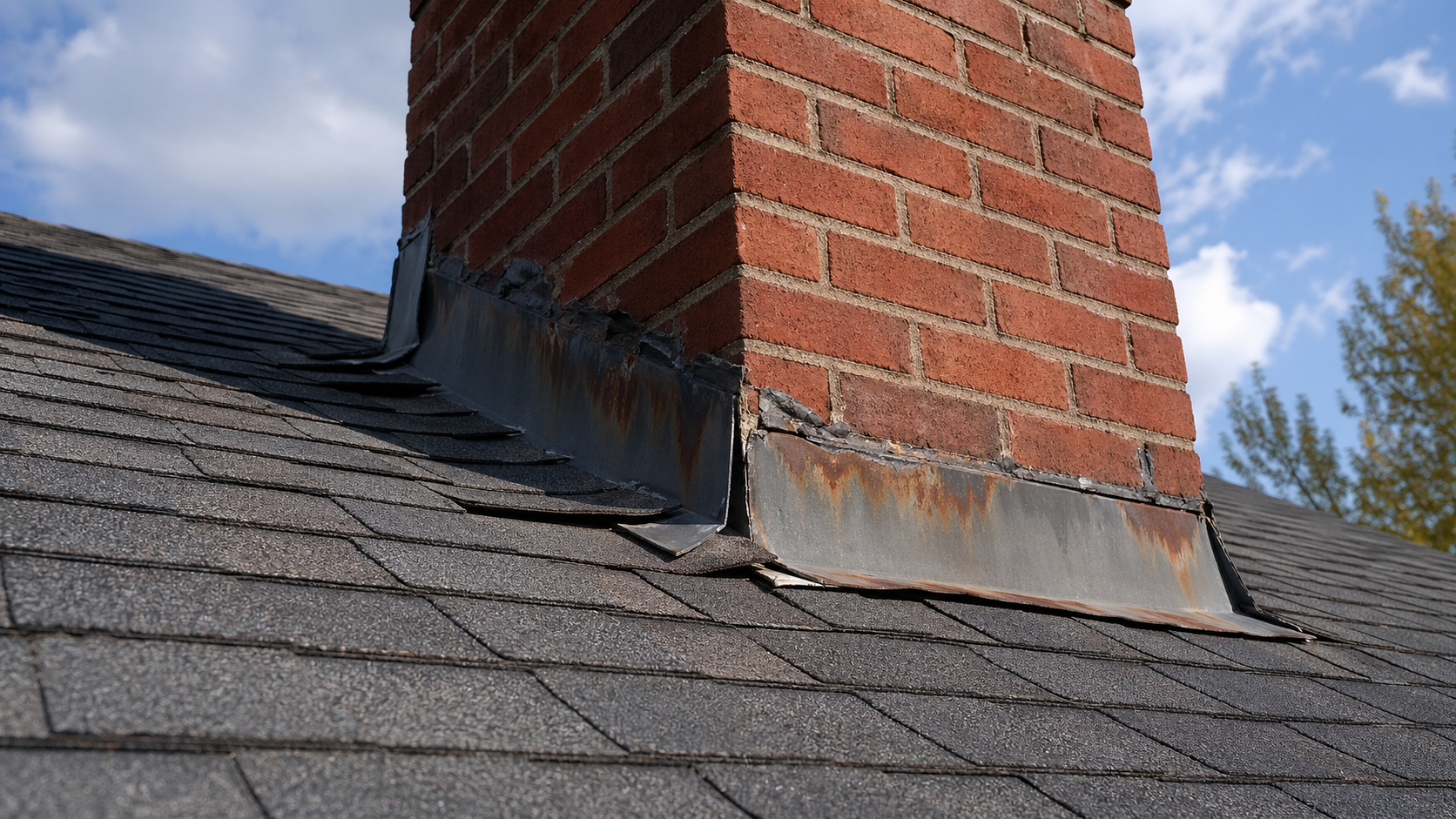
Flashing is the metal that seals the joints around chimneys, skylights, vent pipes, valleys, and roof-to-wall transitions. Inspectors flag flashing that is rusted, lifted, missing, sealed only with caulk, or improperly layered with the shingles.
Bad flashing is one of the leading causes of interior water stains, even on a roof that otherwise looks fine from the ground.
3. Granule Loss on Asphalt Shingles
Granules are the gritty surface that protects shingles from UV damage. Inspectors look for bald spots on the shingles themselves and for piles of granules in the gutters or at the base of downspouts.
Heavy granule loss is a strong indicator that the shingles are near the end of their useful life, even if no leaks are present yet.
4. Sagging Roof Deck or Rooflines
A roof that visibly dips between rafters, sags along the ridge, or shows wave patterns from the street is a red flag. Sagging usually points to one of three issues: undersized framing, long-term moisture damage to the decking, or a structural problem in the rafters or trusses.
This is rarely a cosmetic finding. It almost always triggers a recommendation for a structural or roofing contractor evaluation.
5. Active Leaks and Water Staining
Inspectors check ceilings, attic rafters, decking, and insulation for staining, dark spots, drip trails, and active moisture. A confirmed active leak is one of the most negotiable items in any inspection report because the buyer can point to current, ongoing damage.
Even old, dry stains get flagged because they indicate a past failure that may or may not have been fully repaired.
6. Damaged or Clogged Gutters and Downspouts
Gutters are part of the roof drainage system, so they show up in the roof section of most inspection reports. Common findings include sagging gutters, loose or missing fasteners, separated seams, downspouts that discharge against the foundation, and gutters packed with debris.
Failed drainage pushes water back under the shingles and down the fascia, which leads to rot, basement moisture, and foundation issues over time.
7. Soffit and Fascia Damage
The fascia is the trim board behind the gutter. The soffit is the underside of the eave. Inspectors flag rotted wood, peeling paint, pest entry points, and damaged ventilation panels.
Soffit and fascia damage is almost always a downstream symptom of either a roof leak or a drainage problem, so it should be repaired together with whatever caused it.
8. Improper Attic Ventilation
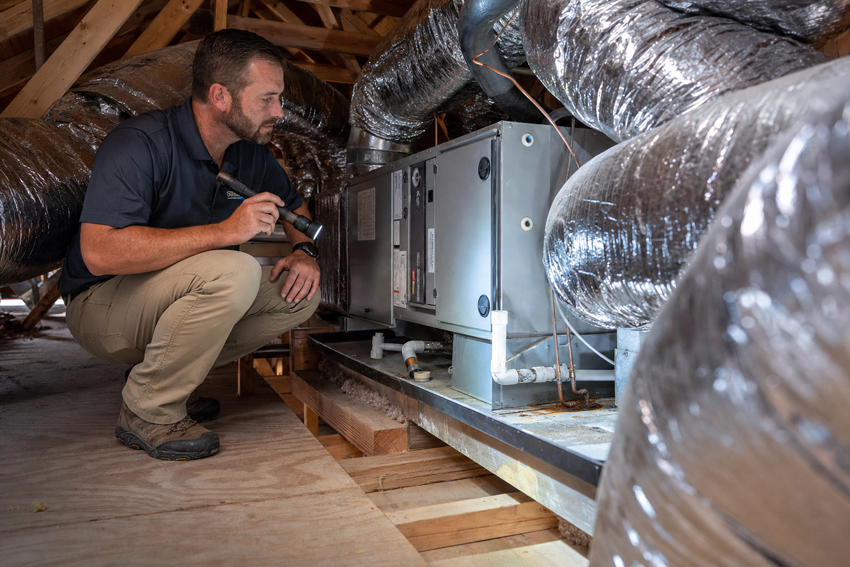
A properly ventilated attic uses a balanced mix of intake vents (usually in the soffits) and exhaust vents (ridge, gable, or roof-mounted) to keep temperature and moisture in check. Inspectors look for blocked soffit vents, missing baffles, mixed exhaust types fighting each other, and signs of condensation or frost on the underside of the decking.
Poor ventilation shortens shingle life dramatically and can cause mold, ice dams, and high cooling costs.
9. Chimney and Chimney Flashing Issues
Chimneys generate a long list of inspection findings: cracked or missing crown, deteriorated mortar joints, missing chimney cap, rusted or lifted step flashing, and gaps where the chimney meets the roof.
Because chimneys are penetrations in the roof, any failure here tends to show up as interior staining on the ceiling near the fireplace or on the wall directly below.
10. Moss, Algae, and Lichen Growth
Black streaks (algae), green patches (moss), and crusty gray spots (lichen) are common on shaded or north-facing roof slopes. Algae is mostly cosmetic, but moss and lichen hold moisture against the shingles and lift them at the edges, which accelerates wear and creates entry points for water.
Inspectors typically recommend cleaning by a qualified contractor, not pressure washing, plus zinc or copper strips at the ridge to slow regrowth.
How to Turn These Findings Into a Clean Repair Request
Most roof issues fall into one of three buckets: cosmetic, maintenance, or structural. The fastest way to keep a deal on track is to sort the inspection report into those buckets, get realistic costs for the items that matter, and submit a focused repair request instead of forwarding the entire report.
That sorting is exactly what InspectionResponse.com automates. The platform reads the full inspection report, surfaces the items most likely to matter to lenders, insurers, and buyers, and produces a professional repair request you can send in minutes.
When you know what a roof finding actually means, you stop reacting to inspection reports and start negotiating from them.
Additional Resources
Briefing Document & Key Takeaways
Title: Briefing: 10 Common Roof Issues Found by Home Inspectors
Audience: Real estate agents, transaction coordinators, listing agents, buyer's agents.
Purpose: Equip agents with a working vocabulary of the most frequently flagged roof items so they can anticipate negotiation points and respond confidently to inspection reports.
Key Takeaways:
- The roof drives more inspection negotiation dollars than almost any other system in the home.
- The ten most common findings are: damaged shingles, worn flashing, granule loss, sagging decking, active leaks and stains, gutter and downspout failures, soffit and fascia damage, poor attic ventilation, chimney and chimney flashing issues, and moss, algae, and lichen growth.
- Most findings fall into cosmetic, maintenance, or structural categories. Sorting them into those buckets is the fastest path to a clean repair request.
- Age of the roof changes the calculus. A finding on a 5-year-old roof is usually a repair. The same finding on a 20-year-old roof often points to replacement.
- Many roof findings (rotted fascia, ceiling stains, chimney leaks) are downstream symptoms. Fixing the symptom without fixing the cause guarantees a callback.
Recommended Use: Share with newer agents during onboarding, attach to listing prep materials, and reference when prepping a buyer for an inspection walkthrough.
Study Guide
Section 1: Roof Surface Issues
- List three visual signs that asphalt shingles are at end of life.
- Why does granule loss matter even if the roof is not currently leaking?
- What does curling at the edges of a shingle typically indicate?
Section 2: Roof Penetrations and Flashing
- Define flashing and list four locations where it is installed.
- Why is caulk-only flashing considered a defect?
- What interior symptoms suggest a chimney flashing failure?
Section 3: Structure and Decking
- What are the three most common causes of a sagging roof deck?
- Why is a sag rarely treated as a cosmetic issue?
- Which professional should evaluate a structural sag?
Section 4: Drainage and Trim
- Explain how a clogged gutter can damage a roof, a fascia, and a foundation.
- Why is rotted fascia often a symptom rather than the root cause?
- Where should a downspout discharge in a healthy drainage setup?
Section 5: Attic Ventilation
- Describe the difference between intake and exhaust ventilation.
- Name two consequences of mixing exhaust vent types on a single roof.
- List three signs of poor ventilation visible inside an attic.
Section 6: Biological Growth
- Differentiate algae, moss, and lichen on a roof.
- Why is pressure washing not recommended?
- What metal strips help prevent regrowth, and where are they installed?
Application Exercise: Take a recent inspection report and classify every roof finding as cosmetic, maintenance, or structural. Then draft a three-item repair request based only on the structural and active-damage items.
Answer Key
Section 1: Roof Surface Issues
- Heavy granule loss, widespread curling or cracking, and brittle shingles that crumble when handled. Bald spots, missing tabs, and blistering are also valid signs.
- Granules are the UV shield for asphalt shingles. Without them, the shingle dries out, becomes brittle, and fails faster, even if no leak is visible yet.
- Curling typically indicates aging shingles, heat damage, or moisture exposure on the underside. It is one of the clearest signs the roof is approaching end of life.
Section 2: Roof Penetrations and Flashing
- Flashing is metal sheeting that seals joints between the roof and other surfaces. Common locations include chimneys, skylights, vent pipes (pipe boots), valleys, and roof-to-wall transitions.
- Caulk is a sealant, not a structural water barrier. It dries, cracks, and shrinks, leaving the joint exposed. Proper flashing layers metal with the shingles to direct water out and over the roof surface.
- Ceiling stains near the fireplace, wall stains directly below the chimney chase, peeling paint or wallpaper near the chimney, and musty odors in the room with the fireplace.
Section 3: Structure and Decking
- Undersized framing, long-term moisture damage to the decking, and structural failure of the rafters or trusses.
- A sag is rarely cosmetic because it points to either undersized lumber, ongoing water damage, or a structural failure. All three require evaluation, not just new shingles.
- A licensed roofing contractor or, in significant cases, a structural engineer.
Section 4: Drainage and Trim
- Water backs up under the shingles (roof damage), overflows onto the fascia (wood rot), and dumps water at the foundation (basement moisture and foundation movement).
- Fascia rot almost always traces back to a drip-edge failure, gutter overflow, or roof leak. Replacing the wood without fixing the source guarantees the rot will return.
- At least four to six feet away from the foundation, ideally onto a splash block, downspout extension, or buried drain leading away from the house.
Section 5: Attic Ventilation
- Intake ventilation pulls cool outside air in, usually through soffit vents. Exhaust ventilation pushes hot, humid air out through ridge, gable, or roof-mounted vents.
- Mixed exhaust types fight each other, short-circuit the airflow, can pull air in through one exhaust vent instead of the soffits, and reduce overall ventilation effectiveness.
- Condensation or frost on the underside of the decking, mold or mildew on rafters, dark moisture stains, hot upstairs rooms, and ice dams on the eaves.
Section 6: Biological Growth
- Algae shows up as black streaks and is mostly cosmetic. Moss is green, holds moisture, and lifts shingles at the edges. Lichen is a crusty gray-green organism that bonds tightly to the surface and is the hardest to remove.
- Pressure washing strips granules from the shingles and forces water under the shingle laps, causing more damage than the growth itself.
- Zinc or copper strips installed at or near the ridge. Rainwater carries metal ions down the roof, inhibiting future moss and algae regrowth.
Application Exercise (sample answer): Classify each finding by category. Cosmetic items (light algae streaks, isolated nail pops) stay off the repair request. Maintenance items (clean gutters, replace one or two tabs) can be bundled or left to the buyer. Structural and active-damage items (active leak in master bedroom ceiling, sagging ridge over the garage, lifted chimney step flashing) become the three-item repair request, each phrased as a specific scope (for example, "Have a licensed roofing contractor repair the chimney step flashing and provide a written invoice prior to closing").
Glossary of Key Terms
- Algae: A microorganism that creates dark streaks on roof surfaces, mostly cosmetic but a sign of moisture retention.
- Asphalt shingle: The most common residential roofing material, made of a fiberglass mat coated with asphalt and surface granules.
- Attic ventilation: The balanced movement of air through the attic using intake (soffit) and exhaust (ridge or gable) vents.
- Crown (chimney crown): The cement or mortar cap at the top of a chimney that sheds water away from the flue.
- Decking: The wood sheathing (plywood or OSB) that sits on the rafters and supports the underlayment and shingles.
- Drip edge: A metal flashing installed along the eaves and rakes that directs water away from the fascia and into the gutter.
- Eave: The lower edge of the roof that overhangs the wall.
- Fascia: The vertical trim board running along the edge of the roof, behind the gutter.
- Flashing: Metal sheeting installed at joints and penetrations to direct water away from vulnerable areas.
- Gable vent: A louvered exhaust vent installed in the triangular wall section at the end of a roof.
- Granule: The colored mineral coating on asphalt shingles that protects against UV damage.
- Ice dam: A ridge of ice that forms at the eave when snow melts on a warm roof and refreezes at the cold edge, trapping water behind it.
- Kickout flashing: A small piece of flashing installed where a roof meets a sidewall, redirecting water into the gutter instead of behind the siding.
- Lichen: A crusty gray-green organism that bonds tightly to roof surfaces and damages shingles.
- Moss: A green plant that holds moisture against the shingles and lifts them at the edges.
- Pipe boot: A flexible flashing that seals around a vent pipe penetrating the roof.
- Rafter: A sloped structural beam that supports the roof decking.
- Ridge: The horizontal line at the highest point of a roof where two slopes meet.
- Ridge vent: An exhaust vent installed along the ridge to release hot air from the attic.
- Soffit: The horizontal underside of the roof's overhang.
- Soffit vent: An intake vent installed in the soffit to draw cool air into the attic.
- Step flashing: L-shaped pieces of flashing layered with each shingle course where the roof meets a vertical wall.
- Truss: A pre-engineered structural unit that supports the roof, replacing traditional rafter-and-joist framing.
- Underlayment: A water-resistant or waterproof barrier installed directly on the decking before the shingles.
- Valley: The angled junction where two roof planes meet and shed water.
Frequently Asked Questions
1. What is the most common roof issue found by home inspectors?
Damaged, curling, or missing shingles. It appears in the majority of reports, and severity ranges from a single wind-lifted tab to widespread end-of-life wear.
2. Does every roof issue require repair before closing?
No. Most cosmetic and minor maintenance items can be left as-is or addressed by the new owner. Active leaks, structural sagging, and significant flashing failures are the items that typically drive repair negotiations.
3. How long should an asphalt shingle roof last?
Most three-tab asphalt roofs last 15 to 20 years. Architectural shingles often last 25 to 30 years. Climate, ventilation, and installation quality affect actual lifespan more than the manufacturer warranty does.
4. Can a roof pass inspection and still need replacement soon?
Yes. Inspectors report current condition, not remaining lifespan. A roof can be free of active leaks while still showing heavy granule loss, brittle shingles, or extensive moss, all of which point toward replacement within a few years.
5. What is the difference between a leak and a stain on the inspection report?
A leak means active moisture was detected at the time of inspection. A stain means evidence of past moisture was visible. Stains still get flagged because the cause may not have been resolved.
6. Are moss and algae actually a problem?
Algae is mostly cosmetic. Moss and lichen hold water against the shingles and lift them at the edges, which shortens roof life and creates entry points for leaks. Both should be professionally cleaned, not pressure washed.
7. Who pays for roof repairs after a home inspection?
That is fully negotiable. Common outcomes include seller-completed repairs before closing, a credit at closing, a price reduction, or the buyer accepting the roof as-is. The repair request is where that conversation starts.
8. What is the fastest way to respond to a roof finding in an inspection report?
Sort the findings into cosmetic, maintenance, and structural buckets, get a realistic estimate on the items that matter, and submit a focused repair request. Tools like InspectionResponse.com automate this entire step.
9. Should the seller get a roof inspection before listing?
For homes with roofs older than 12 to 15 years, yes. A pre-listing roof inspection lets the seller fix small issues, document condition, and avoid surprises during the buyer's inspection.
10. Does a new roof guarantee a clean inspection?
No. Even new roofs get flagged for missing kickout flashing, exposed fasteners, improper ventilation, or damaged shingles from the install crew. The age of the roof reduces risk but does not eliminate findings.