Kickout Flashing Inspection: How to Spot Defects and Draft Repair Requests
Podcast Overview
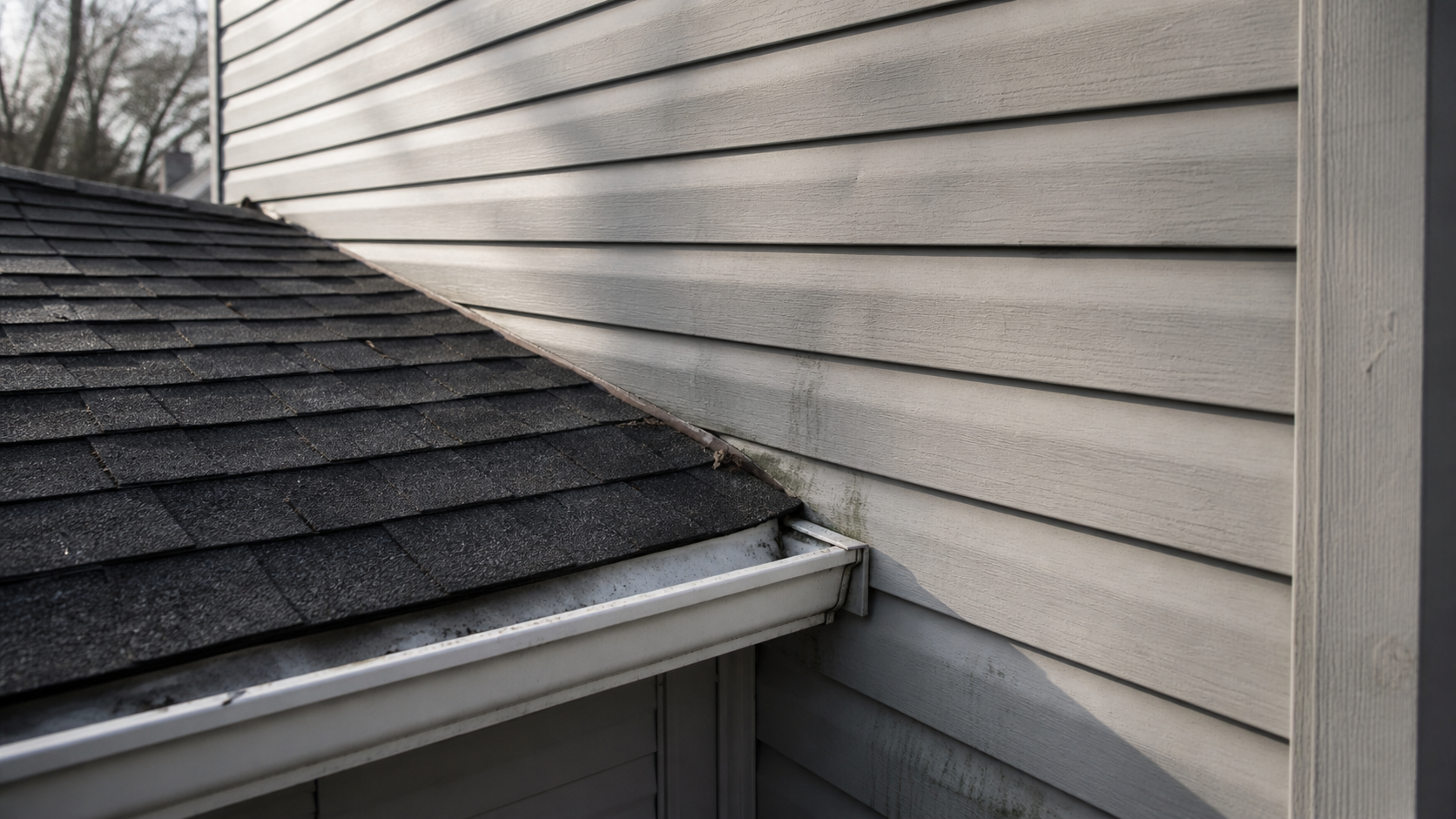
When a roof meets a wall, the junction needs protection. Kickout flashing is the metal piece designed to redirect water away from the wall and into the gutter system. When it fails, water migrates into the wall, causing rot, mold, and structural damage that can cost buyers thousands in remediation.
As an agent, understanding kickout flashing defects helps you identify legitimate repair requests, defend them in negotiations, and protect your client's interests before closing.
What Kickout Flashing Does
Kickout flashing sits at the intersection where a sloped roof meets a vertical wall, typically on the side of a house where a roof line ends. Its job is simple: catch water running down the roof plane and channel it into the gutter, preventing it from spilling down the wall.
The flashing is usually L-shaped, made of galvanized steel or aluminum, and installed over the roof shingles and under the wall cladding or siding. When installed correctly, water flows over the roof, hits the flashing, and drops into the gutter. The flashing stays in place, sealed and secured, for decades.
How Defects Develop
Kickout flashing fails in three main ways: separation, corrosion, and improper installation.
Separation happens when fasteners rust or the sealant deteriorates. The flashing pulls away from the wall, leaving a gap. Water finds that gap and runs behind the flashing instead of into the gutter. Once behind, it wicks into the wall cavity, wetting framing, insulation, and sometimes interior drywall.
Corrosion occurs when galvanized steel loses its protective coating, usually from age, contact with incompatible materials, or standing water. Aluminum can corrode too, though it is more resistant. A corroded flashing becomes brittle and fails to seal properly.
Improper installation is common in older homes or after reroofing. Sometimes installers omit kickout flashing entirely, relying on siding and gutters alone to handle the water. Other times, the flashing is installed backwards, installed over exterior cladding instead of under it, or sealed with tar instead of proper metal flashing sealant.
What an Inspection Report Typically Notes
Home inspectors look for three red flags:
Visible separation or gaps. The flashing pulls back from the wall, creating daylight space. This is the clearest sign of failure.
Rust staining or corrosion. Orange or gray discoloration on the metal itself, or rust stains running down the adjacent wall, indicate active corrosion and water penetration.
Missing flashing. Some roofs have no kickout flashing at all. Water simply flows down the wall. This is the most dangerous scenario long-term.
Inspectors may also note improper material (tar sealant instead of metal flashing) or lack of a gutter system to catch redirected water.
Why Agents Should Care
Kickout flashing defects are not cosmetic. The cost to repair is moderate (typically $300 to $500 for a single junction, more if wall damage is present), but the cost of ignoring it can balloon to thousands if water damage extends into framing or interior spaces.
From a negotiation standpoint, kickout flashing defects are defensible repair requests. Inspectors flag them, insurance companies care about them, and future buyers will ask about them. If you do not address it now, the buyer walks away with a known water risk, and the seller faces disclosure liability down the road.
How to Discuss the Issue with Your Client
When explaining kickout flashing to a buyer client, use this framing: "The roof meets the wall here. There is supposed to be a metal piece that catches roof water and sends it into the gutter. If that piece is missing, separated, or rusty, water runs down the wall instead. That is expensive to fix after the fact because it damages siding and wall framing. The inspection found this issue. We should ask the seller to repair it before we close."
Keep it factual and specific. Do not overstate the risk, but do not minimize it either. Show the client the inspection report photo if one exists.
With a listing side (the other agent), lead with the repair cost and timeline. "We found a separation at the roof-to-wall junction on the east side. Standard repair is a new kickout flashing, which a roofer can install in an hour or two. Cost is typically three to five hundred dollars. We are asking the seller to address this before closing." Frame it as a simple fix, not a catastrophe.
When You Should Request Repair
Request repair for:
- Any missing or completely separated flashing.
- Visible corrosion with evidence of water staining.
- Improper installation (tar sealant, backward flashing, no flashing).
Do not automatically request repair for minor cosmetic rust on otherwise intact flashing that shows no water staining. A qualified roofer can inspect in person and confirm the seal is still effective. If the defect is purely aesthetic and no water entry has occurred, the repair can sometimes wait.
However, if the home is in a high-rain climate or the property has a history of water issues, be more aggressive. Small flashing problems compound in wet climates.
Common Pushback from Listing Side
Expect listing agents to argue:
"The flashing still looks intact. There is no water damage yet." Remind them that flashing defects are progressive. Separation gets worse; corrosion spreads. By the time water damage is visible inside walls, remediation cost jumps ten-fold. Prevention is cheaper than cure.
"We will credit the buyer instead of repairing." Resist this. Credits do not solve the problem. The buyer inherits a known defect and potential liability. Repair is the cleaner, more professional solution.
"A handyman can seal this with caulk." Not reliably. Kickout flashing needs to be removed, inspected for rust or gaps in the substrate, and reinstalled or replaced. Caulking over the problem is a temporary band-aid.
Documenting the Defect
When drafting your repair request, reference the inspection report specifically: "The home inspection identified separation of the kickout flashing at the roof-to-wall junction on the [east/west/north/south] elevation of the [roof section name]. The flashing should be removed, inspected for damage to underlying materials, and reinstalled or replaced by a licensed roofer to restore the water barrier." Include the page number or photo from the inspection report.
If the inspection does not include a photo, ask your client to email the inspector for the specific photo or report section. Visual evidence closes down negotiation disputes.
The Repair Process
A standard repair takes a licensed roofer less than a day for a single junction. The roofer removes surrounding shingles, extracts the old flashing, inspects the underlying roof deck and wall for damage, installs new flashing, reseals all joints, and replaces shingles. Cost runs $300 to $500 for labor and materials on a straightforward job. If underlying rot or fastening issues emerge, cost rises.
When a seller agrees to repair, ask for a scope of work and completion timeline before closing. Ensure the contractor pulling the permit is licensed and insured. After repair, request photos of the new flashing before you close.
Moving the Repair Request Forward
Once you identify a kickout flashing defect, treat it the same as any other inspection finding. Prepare clear, professional repair request language grounded in the inspection report. When an agent uses InspectionResponse, the platform reads the inspection PDF, extracts findings like kickout flashing defects, and generates prioritized, professionally worded repair requests that the agent reviews and sends to the listing side. This speeds the negotiation and reduces back-and-forth on wording.
For repair requests you draft yourself, stay specific, reference the inspection, and avoid emotional language. Let the defect speak for itself.
Additional Resources
Briefing Document & Key Takeaways
Title: Kickout Flashing Inspection: A Quick Reference for Agents
Audience: Licensed real estate agents negotiating inspection findings on buyer-side or listing-side transactions.
Purpose: Equip agents with the technical knowledge and negotiation language to address kickout flashing defects confidently, defend repair requests, and protect client interests.
Key Takeaways:
- Kickout flashing is the L-shaped metal piece at roof-to-wall junctions that directs water into gutters; when it fails, water runs down walls and into wall cavities, causing expensive rot and mold.
- Defects appear as separation, corrosion, or missing flashing; all three warrant repair requests and should not be ignored or deferred with credits.
- Repair cost is modest ($300 to $500 typically) compared to the cost of water damage, making it a strong defensive repair request in negotiations.
- Listing-side pushback often centers on lack of visible water damage, desire to credit the buyer, or suggestion to caulk instead of repair; counterarguments focus on prevention and long-term liability.
- Proper repair requires removal of old flashing, inspection of substrate, and installation of new flashing by a licensed roofer; ensure a scope of work is agreed before closing.
Recommended Use: Review this content before the inspection, share with a client who has received an inspection with a flashing defect, or reference during negotiations when the other side resists a repair request. Use the key talking points verbatim when communicating with clients or listing agents.
Study Guide
Understanding Kickout Flashing
- What is the primary function of kickout flashing at a roof-to-wall junction?
- Name three materials commonly used for kickout flashing, and explain why material choice matters for longevity.
- Why do roofers install kickout flashing under the wall cladding rather than over it?
- What is the consequence of a home having no kickout flashing at the roof-to-wall junction?
Identifying Defects
- Describe the appearance of kickout flashing that is beginning to separate from the wall.
- What evidence of water penetration might an inspector document alongside a corroded flashing?
- How can you tell if kickout flashing was installed incorrectly, and why does improper installation matter?
- When is minor surface rust on flashing not an immediate repair concern?
Negotiation and Repair
- What should you tell a buyer client when the inspection reveals a separated kickout flashing?
- When a listing agent suggests crediting the buyer instead of repairing, what is your main counterargument?
- What does a typical scope of work for kickout flashing repair include, and how long should the job take?
- What documentation should you request from the seller's contractor after kickout flashing repair is complete?
Application Exercise
You are representing a buyer in a residential transaction. The home inspection identifies missing kickout flashing on the east elevation of the main roof line where it meets the secondary wall. The report notes no visible water damage to the wall or siding, but notes the junction in that area. The listing agent initially balks and offers a $400 credit to the buyer at closing instead of repair.
Draft a brief response to the listing agent explaining why repair is preferable to a credit, what you are asking for (material scope and timeline), and what documentation you will request from their contractor if they agree to repair. Ground your response in the business and liability logic that would persuade a professional agent.
Answer Key
Understanding Kickout Flashing
- Kickout flashing redirects water that runs down a sloped roof toward the gutter system, preventing it from spilling down the adjacent wall and entering the wall cavity.
- Galvanized steel, aluminum, and copper are the most common materials. Galvanized steel is affordable and durable; aluminum resists corrosion well and is lighter; copper is expensive but extremely durable and ages gracefully. Material choice affects how long the flashing performs and how it handles weathering and incompatible metals.
- Installing under the wall cladding ensures that water running down the roof hits the flashing first and is directed into the gutter. If flashing is installed over the siding, water can still run behind it, negating its function.
- Without kickout flashing, water running down the roof plane at that junction will spill directly down the wall exterior. Over time, this causes siding rot, damage to wall sheathing and framing, and potential interior mold and water damage, leading to expensive remediation.
Identifying Defects
- Separated flashing pulls away from the wall, creating visible gaps or daylight space between the metal and the wall surface. The edge may be raised, bent, or pulling back several inches.
- Rust staining running down the wall below the flashing, or discoloration and corrosion visible on the metal itself, indicates active water penetration and oxidation of the metal.
- Improper installation might be evidenced by flashing installed over (not under) the siding, flashing sealed with tar or caulk instead of proper sealing methods, or absence of flashing entirely where it should be present. Improper installation negates the flashing's ability to perform its function and is a legitimate repair item.
- Minor surface rust that shows no evidence of water staining, is not spreading, and appears to be purely cosmetic may not require immediate repair if the flashing is otherwise intact and properly sealed. However, if the home is in a wet climate or has a history of water issues, monitor it closely or request repair as a precaution.
Negotiation and Repair
- Frame it as a straightforward issue: "The roof meets the wall here. There is supposed to be a metal piece that catches roof water and sends it into the gutter. The inspection found that this flashing is separated. When that happens, water runs down the wall and can damage the wall structure. We need the seller to repair this before we close."
- The main counterargument is that a credit does not solve the problem; it passes the known defect and liability to the buyer. Repair is the professional solution. Resist credits; they do not solve the problem.
- A standard scope of work includes removal of the roof shingles around the junction, extraction of the old flashing, inspection of the roof deck and wall for damage, installation of new kickout flashing, sealing of all joints, and replacement of shingles. A licensed roofer typically completes this in one day for a single junction.
- Request photos of the new flashing installed and sealed, a copy of the repair invoice or receipt, and confirmation that the work was inspected (if a permit was pulled). These documents protect the buyer and create a record for future disclosure.
Glossary of Key Terms
- Cladding: The outer layer of wall material, such as siding, stone, or brick, that covers the structural wall.
- Corrosion: The process by which metal deteriorates due to oxidation or reaction with moisture and other elements, resulting in rust or structural weakness.
- Drip edge: A metal flashing installed along roof edges to direct water into the gutter system.
- Fasteners: Nails, screws, or bolts used to secure flashing and roofing materials to the underlying structure.
- Framing: The structural skeleton of the wall, made of wood or steel studs that support the wall's weight and the roof above.
- Galvanized steel: Steel coated with a protective layer of zinc to resist corrosion and rust.
- Gutter: The channeling system installed along roof edges and downspouts that collects and directs rainwater away from the house.
- Inspection report: The formal document completed by a home inspector detailing findings, defects, safety issues, and repair recommendations.
- Juncture: The point where two building elements meet, such as where a roof meets a wall.
- Kickout flashing: The L-shaped metal piece installed at roof-to-wall junctions to redirect water from the roof plane into the gutter system.
- Resealing: The process of applying new weatherproof sealant to joints and seams to restore water protection.
- Roof deck: The structural surface of the roof, typically plywood or similar material, upon which shingles and flashing are installed.
- Rot: Decay of wood caused by prolonged moisture exposure and fungal activity, resulting in structural weakness.
- Sealant: A flexible, waterproof material applied to joints and seams to prevent water infiltration.
- Separation: The condition in which a flashing pulls away from the surface it is meant to seal, creating gaps or exposed edges.
- Sheathing: The structural layer of material (plywood, OSB, or wood boards) that covers the wall framing and provides the base for exterior cladding.
- Shingles: The overlapping exterior roofing material (typically asphalt, wood, or composite) that covers the roof deck.
- Substrate: The underlying material or surface to which a flashing or finish is applied.
- Water barrier: A material or assembly designed to prevent water from entering the wall cavity or structural components.
- Water wicking: The process by which water is drawn into porous materials such as wood or insulation through capillary action.
Frequently Asked Questions
1. What exactly is kickout flashing, and where should it be located?
Kickout flashing is an L-shaped metal piece installed at roof-to-wall junctions to redirect water from the roof into the gutter system. It is located where a sloped roof meets a vertical wall, typically on the sides or back of a house where a roof line terminates. The flashing sits under the wall cladding and over the roof shingles, creating a physical barrier that forces water sideways into the gutter rather than allowing it to run down the wall.
2. How do I know if kickout flashing is present and working on a property I am showing?
From ground level, kickout flashing is often difficult to see without binoculars or a close inspection. It is hidden under siding. The best indicator is the inspection report. If the inspector notes the presence or absence of flashing, and whether it is intact, that is your primary source of truth. If no flashing is present or the report notes separation or corrosion, those are the red flags.
3. What does separation of kickout flashing look like in an inspection report?
Separation typically appears as visible gaps between the flashing and the wall, sometimes with rust staining running down the wall below the gap. The inspection report photo will show daylight between the metal and the cladding. Some reports note the flashing as "pulled away," "gapping," or "not properly sealed." If the inspector used those terms, separation is present.
4. Is missing kickout flashing a serious defect?
Yes. Missing flashing means water running down the roof at that junction flows directly down the wall and can penetrate the wall cavity, causing rot, mold, and structural damage over time. This is one of the clearest cases for a repair request. The seller should install flashing before closing.
5. Can a seller fix a kickout flashing defect with caulk or sealant?
No. Caulking over a separated or missing flashing is a temporary patch, not a repair. The underlying flashing needs to be removed, inspected for damage, and properly reinstalled or replaced by a licensed roofer. Caulk alone will not hold the water barrier long-term and will degrade within a few years.
6. What is the typical cost to repair a defective kickout flashing?
A straightforward repair by a licensed roofer typically costs between $300 and $500 per junction for labor and materials. If the roof deck or wall has suffered water damage, additional repair costs may apply. Get an estimate from a licensed roofer before finalizing the repair request with the seller.
7. Should I always request repair for kickout flashing defects, or are there cases where the buyer can live with it?
Always request repair for missing flashing, complete separation, or visible corrosion with water staining. These are legitimate structural issues. Minor surface rust with no evidence of water penetration might not require immediate repair, especially in a drier climate. However, in wet climates or if the property has a history of water issues, request repair or credit. Do not let a known defect pass to the buyer without disclosure and documentation.
8. What pushback should I expect from the listing side on a kickout flashing repair request?
Common arguments are that there is no visible water damage yet, the flashing is still intact, or they will offer a credit instead of repair. Counter by explaining that flashing defects are progressive; waiting for visible water damage is waiting for the problem to become expensive. Repair is the professional solution. Resist credits; they do not solve the problem.
9. After a seller agrees to repair the kickout flashing, what should I ask for before closing?
Request a scope of work and timeline upfront. After repair is complete, ask for photos of the new flashing and copies of the repair invoice or receipt. If a permit was pulled, request proof that the work was inspected. This documentation protects the buyer and creates a record for future disclosure.